Hermes Agent v0.18 just dropped.The Judgment Release.
The whole update is about how well your agent thinks — and how it knows when its work is actually done. A committee of models you can pick like one model. An agent that proves its work instead of claiming it. /learn, /journey, background fan-out, coding Projects, and four new brains. I already built a full guide for every part of this — so I'll walk you through it and link each one as we go.

The official sources. Read it, and run it, yourself.
Everything below comes from the Hermes team's own release notes — not second-hand. Here's where to read it and update:
"This release is about how well Hermes thinks and how it knows when its work is actually done… and every single P0 and P1 across the whole repo is now closed. Zero open P0s. Zero open P1s."
— Hermes Agent v0.18.0 release notes, 1 July 2026
To update, it's one command: hermes update.
I already built a guide for every part of this release.
Here's the thing about v0.18. Almost nothing in it is brand new to me.
All week I've been building guides — one at a time — for the exact features Nous just shipped as the headline of this release.
The mixture of models. The self-verifying loop. Teaching your agent a skill. Watching its memory grow. Firing a whole fleet of agents in the background.
So instead of just reading you the patch notes, I'm going to walk through each big feature, show you the example I already built, and link you straight to the full guide for it. One release. A map of everything I've been showing you all week.
I used to dread the Hermes release notes.
Before
Hermes ships a big release almost every week.
I'd open the notes and feel behind before I'd read three lines.
New feature, new command, new setting — and no time to actually try any of it.
By the time I figured one out, the next release had already landed.
The tools were moving faster than I could keep up.
Then I changed how I do it. I stopped waiting for the big release and started building a guide for each feature the week it shipped.
After
Now a release like v0.18 lands and I've already used most of it.
The mixture of models? Built a guide on it.
The self-verifying loop? Guide on it.
Teaching it a skill, watching its memory, firing a fleet of agents? Guides, guides, guides.
So the release notes stopped being homework. They became a checklist of things I already know how to run.
That's what this whole page is. Every part of v0.18, with the guide I already made for it.
Why listen to me on this.
I run an AI agency with 70+ people where AI handles about 80% of the ops. And I've got a room of operators doing the same across every kind of business.
I'm not going to paste invented quotes here. The wins are real and written by the members themselves — agency owners, ecom founders, course creators, solo operators across 38 countries running this exact stack. Read them in their own words.
Read the 158-page wins doc →Commit to actually running one of these today. Not tomorrow.
You've seen the map above. Six big features. Six guides already built.
Here's the deal I want to make with you.
Don't just read this and nod. Pick ONE feature from this release — the mixture of models, the self-verifying loop, whatever grabs you — and set it up before you sleep tonight. Just one.
Because the people who play with each feature the week it ships are the ones who look unstoppable six months from now. The people who "read it later" never do.
Be one of the people who runs it today.
Commit to the transition. One feature, running, tonight. That's how the whole thing compounds.
A committee of models you can pick like one model.
Let me start with the big one. Mixture-of-Agents.
The idea has been around a while — instead of asking one model, you ask several, then a final model reads all their answers and writes the best one. A committee. On a hard question it beats any single member.
The problem was it used to be a mode you had to toggle on and fiddle with. Most people never bothered.
In v0.18 that changes. A mixture is now a first-class model. You name your ensemble — say "my-council" — and it shows up in the model picker right next to Claude, GPT and Grok. Pick it like you'd pick any model, and Hermes quietly routes your prompt through the whole committee.
And here's the part I love: when it runs, you see every model's reasoning in its own labelled block — what GPT thought, what Claude thought, what Grok thought — and then the final answer streams in live. You watch the committee deliberate, then reach a verdict. You're not staring at a spinner anymore.
You've got one gnarly decision — a pricing page, a tricky email, a strategy call. You pick your council instead of a single model. Three frontier brains argue it out, you read each take, and one clean answer lands. On the stuff that matters, that's the difference between "an answer" and "the right answer."
I already built this — full guides ↓


The agent now proves its work instead of claiming it.
This is my favourite change in the whole release, and it fits the name perfectly.
If you've used AI agents for anything real, you've hit this. The agent says "done — all fixed!" and it isn't. It felt finished, so it stopped. That gap between "I think I fixed it" and "the tests actually pass" is where a lot of trust gets lost.
v0.18 closes it. Hermes now records evidence for coding work and decides it's finished by actually running your project's checks — not by asserting success. And /goal got completion contracts: you state what "done" looks like up front, and the standing-goal loop keeps judging its work against that evidence instead of stopping when the model feels good about it.
"Done" now means proven. Here's the tests passing, here's the proof.
You tell your agent: "the goal is done when the report actually sends and the page loads with no errors." Then you walk away. It doesn't come back saying "should be working now." It comes back when the report has sent and the page loaded — because that was the contract.
I already built this — full guides ↓



/learn — turn anything into a reusable skill.
This one's small to type and huge to use.
You know that workflow you just walked your agent through — the one you'll need again next week? Before, saving it as a reusable "skill" meant sitting down and authoring one by hand. Most people never did, so they re-explained the same thing over and over.
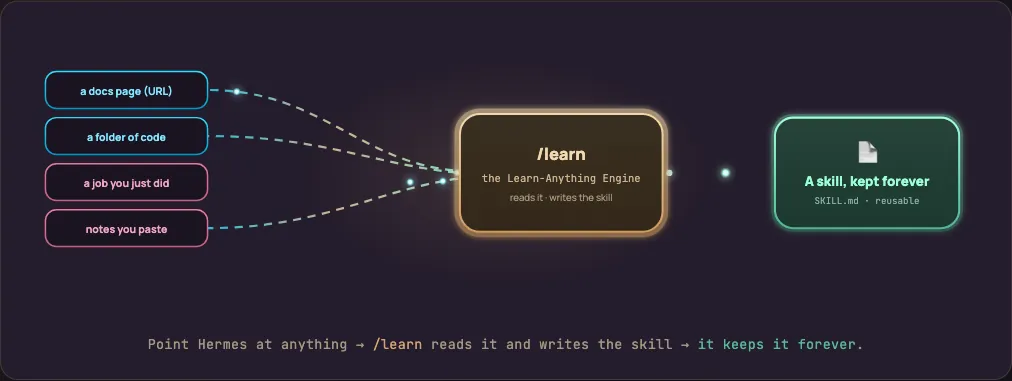
Now you run /learn and point it at whatever you want — a folder, a URL, or just "that thing we did five minutes ago." Hermes distils it into a proper reusable skill, written to your own standards, on its own. Next time you need it, it's already there.
Teaching your agent a new trick went from a chore to a single command.
You just walked Hermes through how you like your weekly client report — the sections, the tone, where the numbers go. You type /learn how I do the weekly report. Done. Next Friday you just say "do the weekly report" and it already knows your format.
I already built this — full guides ↓

/journey — watch everything your agent has learned about you.
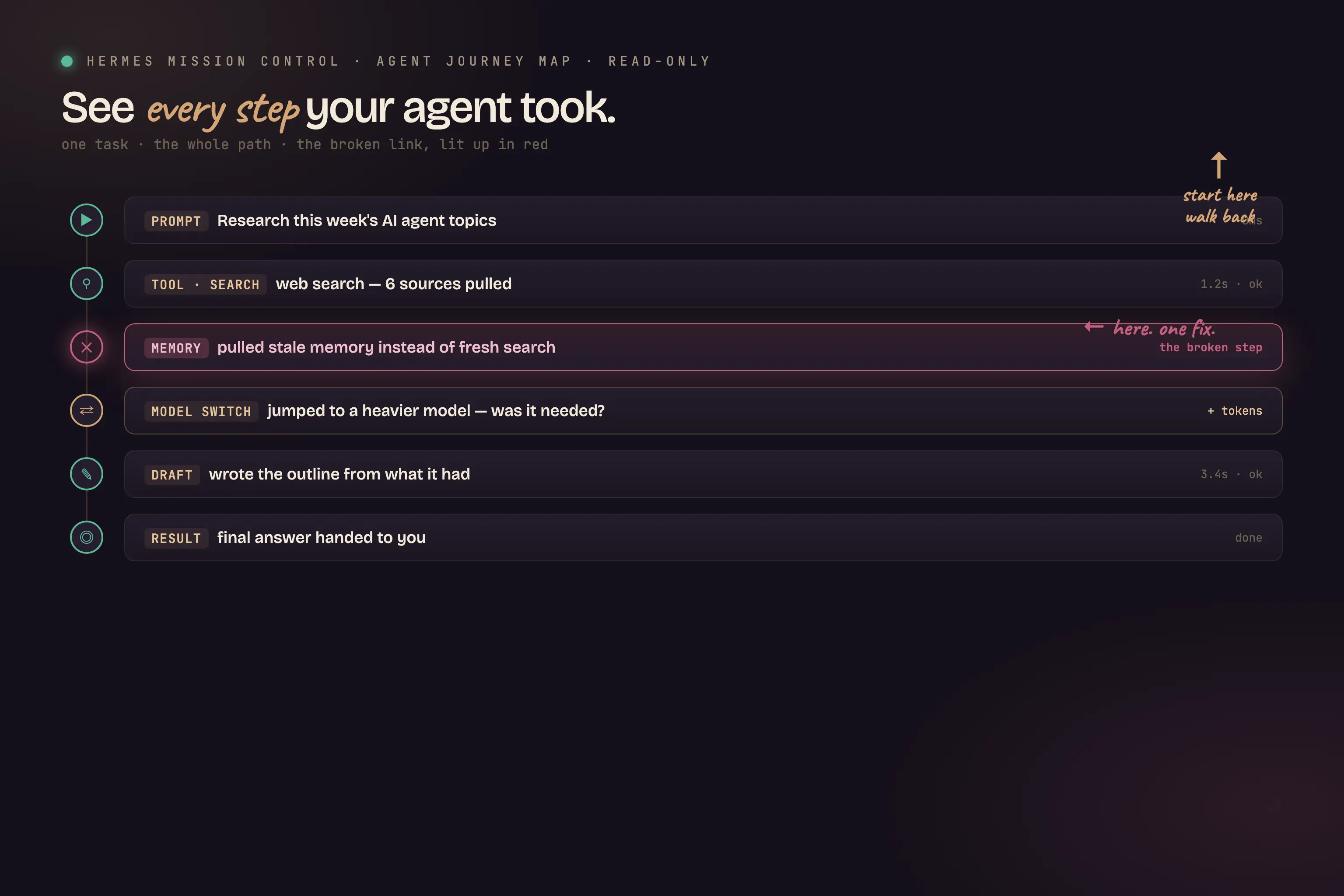
Most people's biggest complaint about AI is "it doesn't remember me." Hermes has had memory for a while — but it was a black box. You couldn't see what it knew.
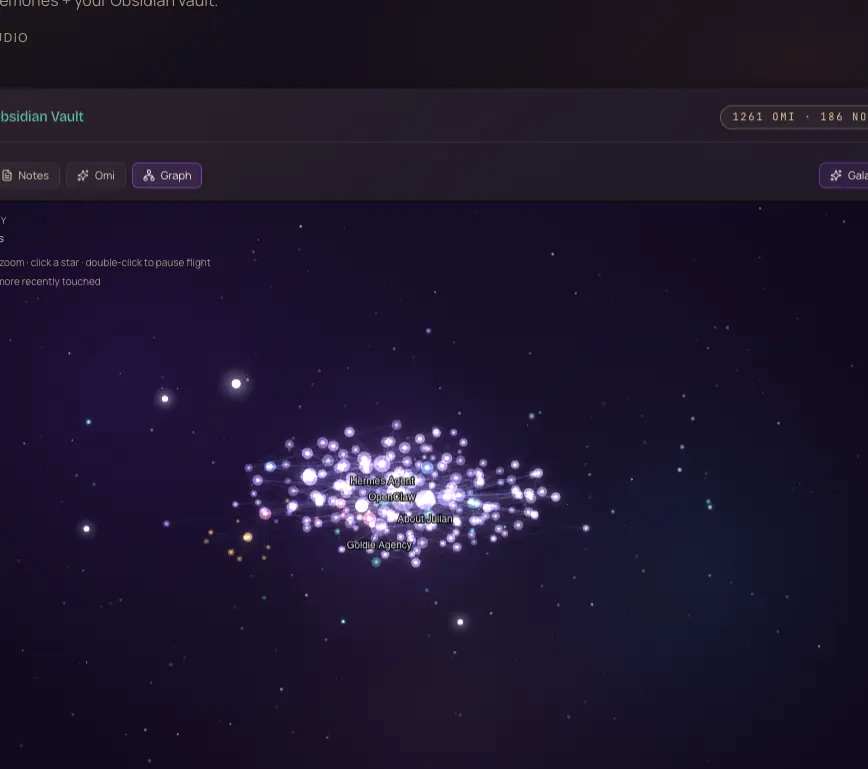
v0.18 opens the box. /journey is a learning timeline — every memory and every skill Hermes has picked up about you, over time. And you can edit or delete any of it right there. Pair it with the desktop's new memory graph — a top-down, playable map of your agent's memories and skills — and for the first time you can actually watch your agent's brain grow, and prune the bits that are wrong.
Your agent's memory stops being a mystery and becomes something you steer.
You open /journey and scroll the timeline of what Hermes has learned about your business. You spot one wrong assumption it picked up weeks ago, delete it in one click, and every future answer gets sharper. You're grooming the brain, not guessing at it.
I already built this — full guides ↓

Fire off a pile of work — and keep going.
If you've ever handed an agent a big job and then just sat there watching it churn, this one's for you.
In v0.18, delegate_task can fan out several subagents that all run in the background at once. Your chat is never blocked. You kick off "research these five competitors" or "audit these three modules," then go do something else. When every subagent finishes, their results come back as one clean, consolidated turn — instead of you babysitting each one.
It's the difference between one worker you supervise and a small fleet that reports back when it's all done.
You say "go research my five biggest competitors — pricing, offers, where they're weak." Five agents spin up in the background. You go make coffee, answer emails, take a call. You come back to one tidy summary of all five, done in parallel.
I already built this — full guides ↓

First-class coding Projects on the desktop.
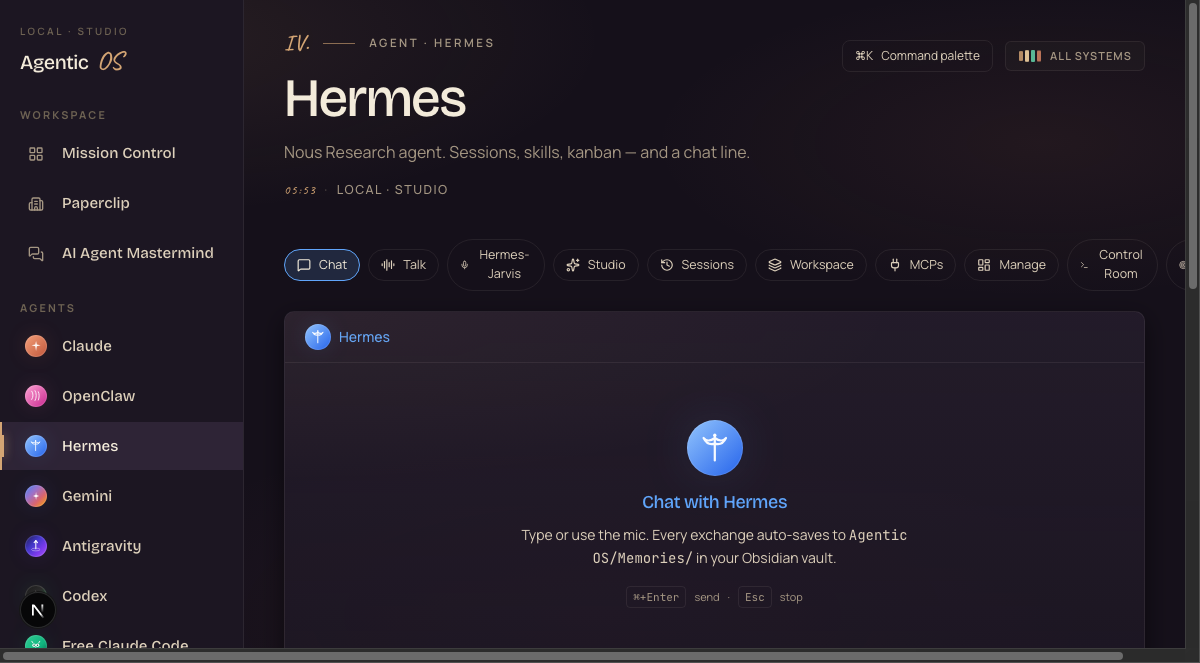
If you code with Hermes, the desktop app just turned into an actual cockpit.
Before, your work was scattered across chat sessions. v0.18 adds real Projects — a sidebar of your codebases, a coding rail, a review pane, git worktree management, and project tools the agent understands. Your work is organised into projects it can act on, instead of a pile of loose chats.
Even if you're not a coder, this matters — because the same "one screen that runs everything" idea is exactly how the Agent OS is built.
You open the desktop app and there's your project in the sidebar — code, reviews, and the agent all in one place. You point it at the project and say "add this feature," and it works inside the project it already understands. No re-explaining what you're building every time.
I already built this — full guides ↓

New models you can drop straight in.
Every Hermes release wires in new brains you can pick, and v0.18 added a strong batch: Claude Sonnet 5, Fable 5, Sakana Fugu, and Gemini via Google Vertex AI (through your Google Cloud service account, with the short-lived tokens minted and refreshed for you — no more mid-session expiry).
The point of Hermes is you're never married to one model. A better one launches, you point Hermes at it, and your whole setup gets an upgrade — same agent, same workflows, sharper brain. I've already put most of these through their paces.
Sonnet 5 lands on a Tuesday. You don't rebuild anything. You open the picker, choose it, and your agents are running on the new model by lunch. Next week a cheaper one beats it — you switch again. That's the whole game.
I already tested these — full guides ↓



Run every v0.18 feature inside the Agent OS.
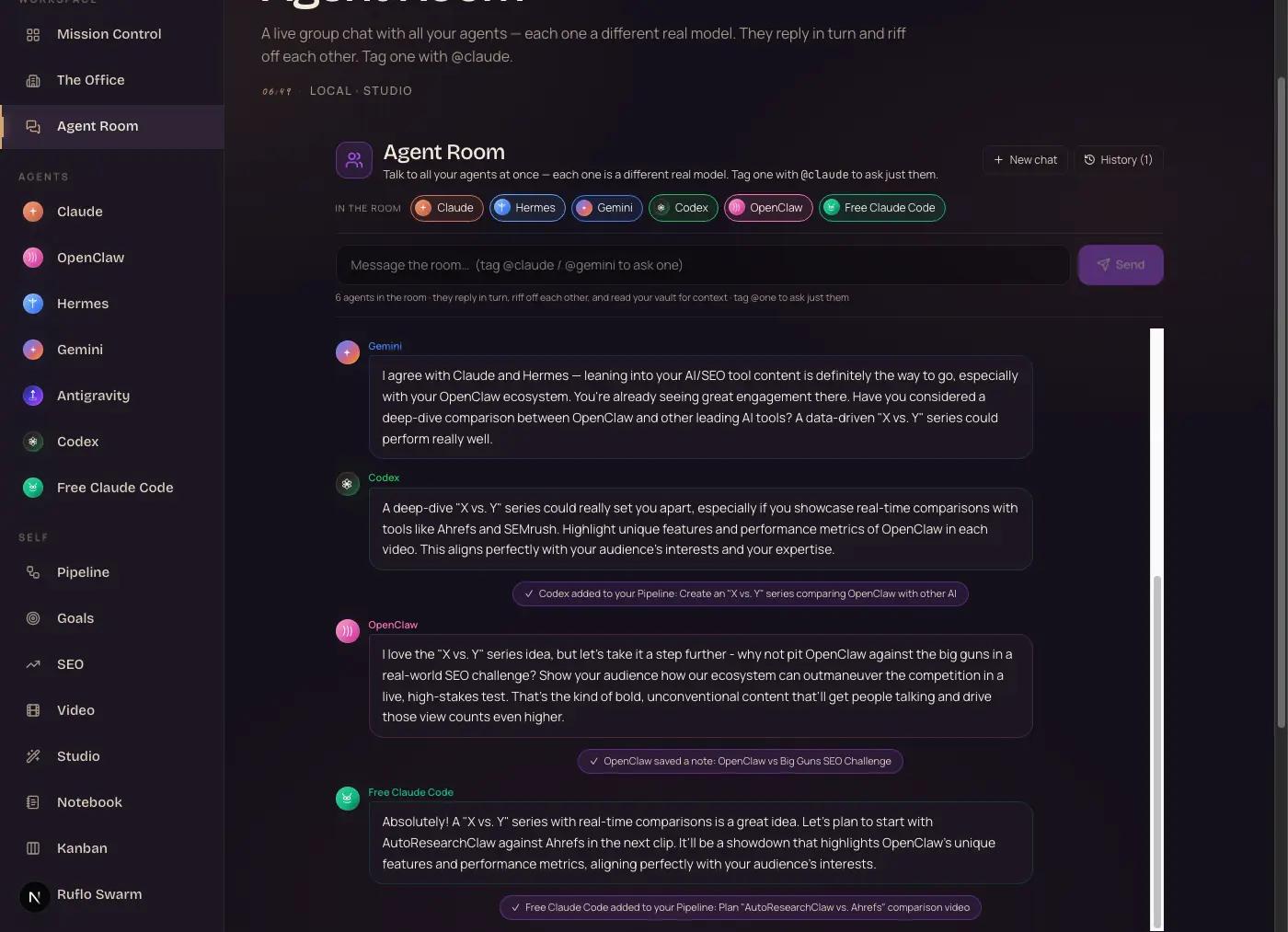
Everything I just walked through — the mixture of models, the self-verifying loop, /learn, /journey, background fan-out — is a separate feature you'd have to set up one by one. The Agent OS is where I've wired them into one system that shares one memory and knows your business.
You're not buying a tool. You're getting the whole operating system I run a seven-figure business on.
Get the Agent OS →No — that's the biggest myth about it. The Agent OS runs the everyday 90% on a free local model on your own machine, so most work costs $0 and never leaves your Mac. Free APIs slot in for more. And for the frontier stuff, it drives the CLIs you already pay for — your Claude subscription already includes the Claude CLI, and the Agent OS plugs straight into it, so you're not paying twice.
It's a layer on top of what you already own, not a new meter. And inside the Boardroom there are full token-optimisation tutorials, so you learn to cut usage to the bone and stop thinking about it.
How most people handle a Hermes release. And how I do it now.
- Open the notes, feel behind, close the tab
- Bookmark "MoA" to figure out someday
- Keep trusting "done!" that isn't actually done
- Re-explain the same workflow every single time
- Sit and watch one agent churn on a long job
- Next release lands before you touched this one
- Pick your council of models like one model
- Set a goal with a done-contract, walk away
- /learn a workflow once — it's saved forever
- /journey shows what it knows; you prune the wrong bits
- Fan out a fleet in the background, get one summary
- Every new model drops straight in — same setup, sharper brain
What's actually holding you back.
Wrong: "I can keep up with these releases on my own."
Right: Hermes ships a big release most weeks. Nobody keeps up solo. The people who stay ahead have a system — and a room — that turns each release into something they actually run, the week it drops.
Wrong: "I'll figure it out when I need it."
Right: By then you're reading patch notes at midnight while a job's already broken. The people running agents in production learn each feature before they need it — so it's ready when they do.
Wrong: "This is for coders. I can't use this stuff."
Right: Picking a model, setting a goal, typing /learn, reading a memory timeline — none of that is coding. If you can paste one command, you can run every feature in this release.
158 pages of members already running this stack — real businesses, real wins, in their own words.
Read the 158-page wins doc →The changes that don't make headlines — but matter.
Every release has a batch of these. Most people skip them. The people who actually run agents in production read them all. Here's what else landed in v0.18:
Yes — and here's the one-liner that matters.
Update. It's one command — hermes update — and with every P0 and P1 closed, this is the most stable Hermes has ever been. If you run it for a team, glance at the scale-to-zero and drain notes first; for everyone else, just update.
The people who figure out AI agents now, while the tools are moving this fast, are going to be miles ahead when everything settles. Every update you learn. Every feature you actually run. Every workflow you build. It all compounds.
And the fastest way to compound it is to not learn each feature alone.
Don't let v0.18 become another tab you meant to read.
You just saw the whole release mapped onto guides I already built. That's the difference between watching the tools race ahead and running out in front of them.
Inside the AI Profit Boardroom you get the full Agent OS — the mixture of models, Goal Mode, the Agent Hive, the memory vault, the Skill Vault, every CLI you already pay for wired into one dashboard, free local models for the everyday work, a 30-day roadmap, daily tutorials, coaching calls, and 3,900+ founders across 38 countries building right alongside you. Every new Hermes release — like this one — gets added the week it lands, so your system only gets more powerful over time.
It's the operating system I run a seven-figure business on. You get the whole thing.
Get the Agent OS →Run hermes update first. Then pick one feature and run it tonight. I'll see you in the next one.