Claude 5 is here.
And it's the most powerful Claude ever released.
On June 9, 2026, Anthropic dropped two models at once — Claude Fable 5 and Claude Mythos 5. Anthropic's own words: "Fable 5's capabilities exceed those of any model we've ever made generally available." It beats Opus 4.8 by double digits on the hardest coding benchmarks. And here's the part nobody's talking about — it's included free on paid Claude plans until June 22.

What actually dropped. All the receipts.
I went deep on this so you don't have to.
Here's every verified fact from the announcement, the benchmarks, and the coverage — front-loaded, before we get to what it means for you.
1.It's a brand new model CLASS — not just a new version
For years, Claude came in three sizes: Haiku, Sonnet, and Opus.
There's now a fourth class sitting above Opus: Mythos.
Claude Fable 5 is the first Mythos-class model the public has ever been allowed to touch.
Fable 5 and Mythos 5 are the same underlying model. The only difference is safeguards. Fable 5 has them. Mythos 5 doesn't — and it's restricted to vetted partners.
2.The benchmark numbers are a generation jump
That last one isn't a typo. On Cognition's frontier coding eval, Fable 5 scored more than double Opus 4.8.
It's also the first model ever to break 90% on Hex's core analytics benchmark — a 10-point jump over Opus.
On CursorBench it beat GPT-5.5 by 8.6 points.
And on frontier physics research, it matched or beat GPT-5.5 using one-third the tokens.
3.It's built for long, real work — not party tricks
1 million token context window. 128K max output per request.
On long-context retrieval (GraphWalks BFS at 1M tokens), the Mythos-class model scored 79.4 F1 versus Opus 4.8's 68.1.
On Toolathlon — a tool-use marathon — Fable 5 scored higher than Opus 4.8 and finished in fewer turns: 61.7% in 19.8 average turns versus 59.9% in 24.5.
Better results. Fewer steps. That means cheaper agent runs.
The benchmark analysts put it one way that stuck with me: "the lead widens as tasks get longer and more complex."
4.The wild stuff (all verified)
🎮 It plays Pokémon FireRed using vision alone — reading the raw screen. Previous models needed special helper harnesses.
🧬 Anthropic's internal experts used it to accelerate drug design by roughly 10x — 9 of 14 protein targets produced real drug design candidates.
🔬 It ran novel genomics research autonomously for a week.
🧪 In blind tests, biologists preferred its novel molecular hypotheses 80% of the time over Opus-class models.
💳 Stripe used it on a 50-million-line codebase migration.
"Fable 5's capabilities exceed those of any model we've ever made generally available."
— Anthropic, official announcement, June 9, 2026
"Compressed months of engineering into days."
— Stripe's CEO, on the 50-million-line codebase migration, June 2026
"Highest-scoring model on FrontierBench... excels at long-horizon reasoning."
— Scott Wu, CEO of Cognition, June 2026

5.The safety story behind it is genuinely strange
Days before this launch, Anthropic publicly urged the big AI labs to build a "coordinated brake pedal" for frontier AI.
They warned that systems are advancing so fast they may soon improve themselves without human input.
Then they released their most powerful model ever. Here's how they squared that:
Fable 5 ships with classifiers watching three areas — offensive cybersecurity, biology & chemistry, and model distillation.
If your request trips one, Fable 5 quietly hands the question to Opus 4.8 to answer safely. You get told when it happens.
Anthropic's data: this triggers in under 5% of sessions. 95%+ of sessions never see it.
Red-teamers spent 1,000+ hours trying to find a universal jailbreak. None found. Across 30 public jailbreak techniques, it complied with zero harmful requests.
6.Mythos 5 — the unrestricted twin you can't have
The same model with the safeguards lifted is called Claude Mythos 5.
It's only available to vetted partners in Project Glasswing — Anthropic's collaboration with government cyber-defenders and critical infrastructure providers.
That program is expanding to roughly 150 organizations across more than fifteen countries.
Trusted biology researchers get access "in the coming weeks."
The timeline tells the story: Mythos Preview launched to a handful of partners in April 2026. Expanded June 2. Went public as Fable 5 on June 9.

7.Pricing, access, and the deadline that matters
💰 $10 per million input tokens, $50 per million output. Exactly double Opus 4.8 ($5/$25). Less than half the old Mythos Preview price ($25/$125).
📦 Batch pricing halves it again: $5 in / $25 out.
🔑 API model ID: claude-fable-5. Live everywhere from day one — Claude API, Claude Code, and Amazon Bedrock.
🎛️ New effort dial: low, medium, high, and a new "xhigh" for the hardest jobs.
🔒 All Mythos-class traffic has 30-day retention and is not used for training.
⏰ And the big one: Fable 5 is included in Pro, Max, Team, and Enterprise plans at no extra cost — but only until June 22. From June 23, it needs usage credits.
If you pay for Claude in any form, you have until June 22 to run the most powerful public model on Earth for free.
Until June 22, it costs you nothing extra — it's included in every paid Claude plan.
After that, batch pricing brings it back to Opus money ($5/$25).
And remember the Toolathlon result: it finishes jobs in fewer turns. Fewer turns means fewer tokens. The sticker price is higher; the finished-job price often isn't.
I was you. Then I wired Claude 5 into everything.
Before
Every model launch used to mean a week of confusion for me.
Which Claude do I trust with the big jobs?
Is the new one actually better, or just louder marketing?
I'd test it in one chat tab, forget the results, and keep running the old model everywhere out of habit.
My agents stayed a generation behind because switching felt like work.
Then Fable 5 dropped — and this time I had an Agent OS.
After
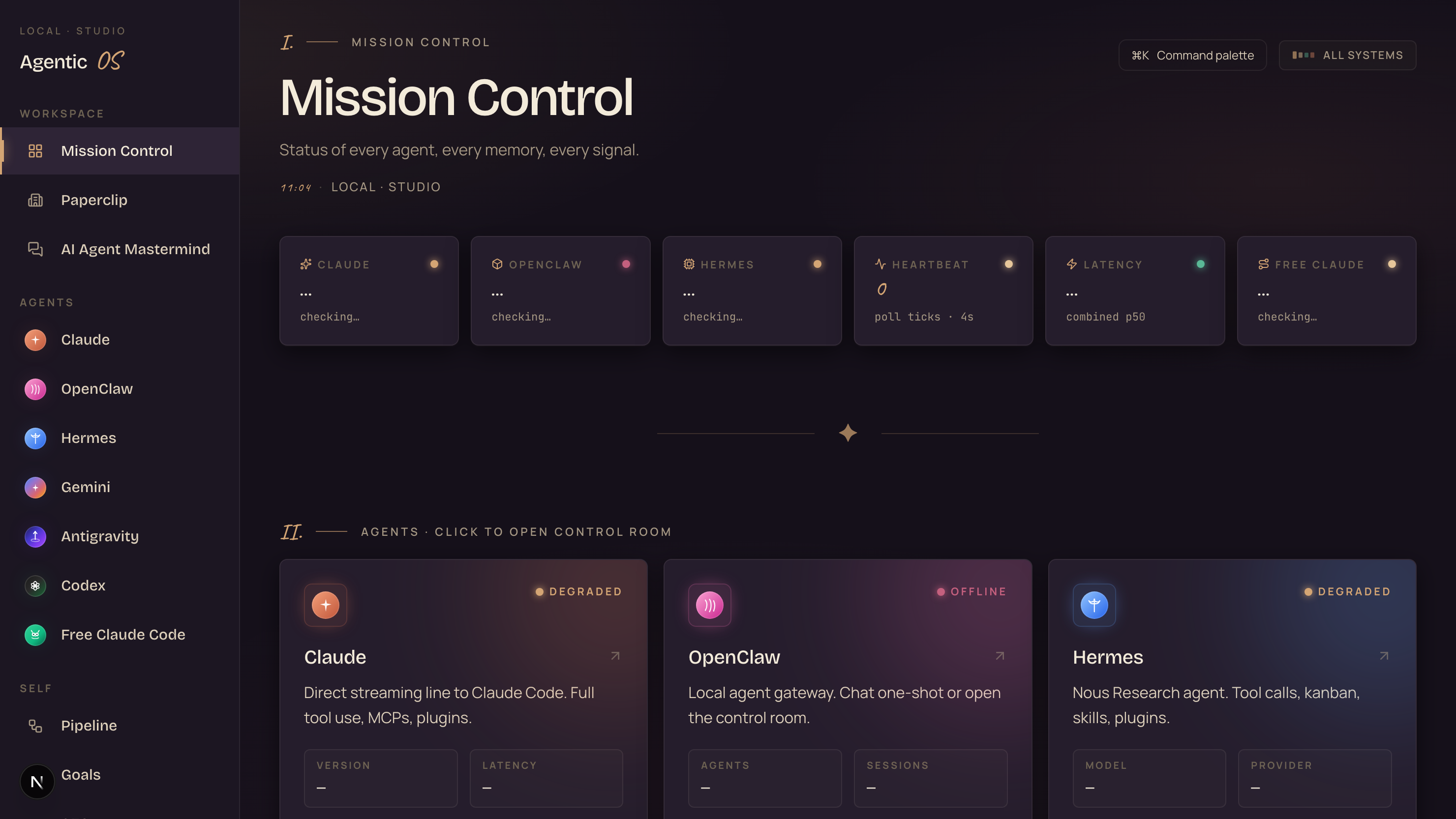
The morning it launched, I switched one line in my Agent OS config.
Now every Claude surface I run — the Claude chat tab, my agent group chat, my SEO engine — runs Fable 5.
One change. The whole system got a generation smarter while I drank my coffee.
That's the difference between using AI tools and owning an AI system.
You can have this too. Same tools. Same path.
Commit to transitioning today. Not tomorrow.
You've seen the research above. This is the biggest Claude release ever, and the free window closes June 22.
The next few minutes show exactly what to do with it.
So here's the deal.
If you're reading this — promise yourself one thing right now. You're going to finish this guide AND run one real job on Fable 5 before you sleep tonight. Just one.
Because the moment you make this transition, everything about how you work with AI changes.
The people sitting still are getting passed. The people implementing today are the ones who'll look back in six months and say "that was the moment."
Be one of those people.
Commit to the transition. Commit to taking action today. This changes everything about your workflow.
Your coding agent just got a generation smarter.
Let me start with the thing that changes your week.
Every agent you run on Claude — Claude Code, your dashboard, your automations — gets the upgrade the second you point it at claude-fable-5.
The benchmark that matters here is SWE-bench Pro: 80% versus 69% for Opus 4.8.
In plain English — the jobs your agent used to fumble, it now finishes.
You ask for a feature in your app. The old model got you 70% there and you cleaned up the rest. The new one hands you working code more often, in fewer steps.
And because it finishes in fewer turns, long agent runs get cheaper even at the higher token price.
You don't install anything. If you pay for Claude, Fable 5 is already in your model picker right now.
Open Claude, click the model menu, pick Fable 5. That's the whole tutorial.
One million tokens of context. Your whole business fits.
Next big one.
A 1M token window means roughly 700,000 words in a single conversation.
That's your entire codebase. Or every note you've written this year. Or fifty client documents at once.
You're an agency owner. You drop every client brief, every report, every email thread into one conversation — and ask "which clients are at risk this month, and why?"
The old way was answering from fragments. This answers from everything.
And the retrieval numbers say it actually uses the window — 79.4 F1 at full 1M depth versus 68.1 for Opus.
The effort dial — pay for genius only when you need it.
This one's quietly my favourite.
Fable 5 has an effort setting: low, medium, high, and a new xhigh.
Routine job? Run it on low and it's fast and cheap.
Gnarly migration, hard analysis, something Opus kept failing? Crank it to xhigh and let it think.
You're not choosing between a cheap model and a smart model anymore. You're choosing per task.
One practical tip from the early prompting guides: stop telling it to "show your reasoning step by step." It doesn't need the scaffolding — and over-prompting can actually trip its classifiers.
Shorter prompts. Clearer boundaries. Let the model work.
The fallback fires in under 5% of sessions — and when it does, Opus 4.8 answers instead. You still get an answer.
Unless your day job is offensive hacking or bioweapons research, you will likely never see it.
Most people will waste this model. Here's the split.
Fable 5 in a lonely chat tab is a Ferrari in a parking garage.
The model is only half the story. The system around it is the other half.
- Open a chat tab, paste context, ask, copy the answer out
- Re-explain your business to the AI every single session
- Outputs scattered across tabs — built once, lost forever
- One conversation at a time, you babysitting each one
- New model drops → weeks of "should I switch?" dithering
- Paying $10/$50 per million tokens to re-send the same context
- Fable 5 wired into one dashboard with every other agent
- Shared Obsidian memory — it already knows your business
- Every build, file, and answer saved to your workspace
- Multiple agents running in parallel while you film, sell, sleep
- New model drops → change one line, whole system upgrades
- Context lives in memory — you pay to think, not to repeat yourself

Run Claude 5 inside the Agent OS.
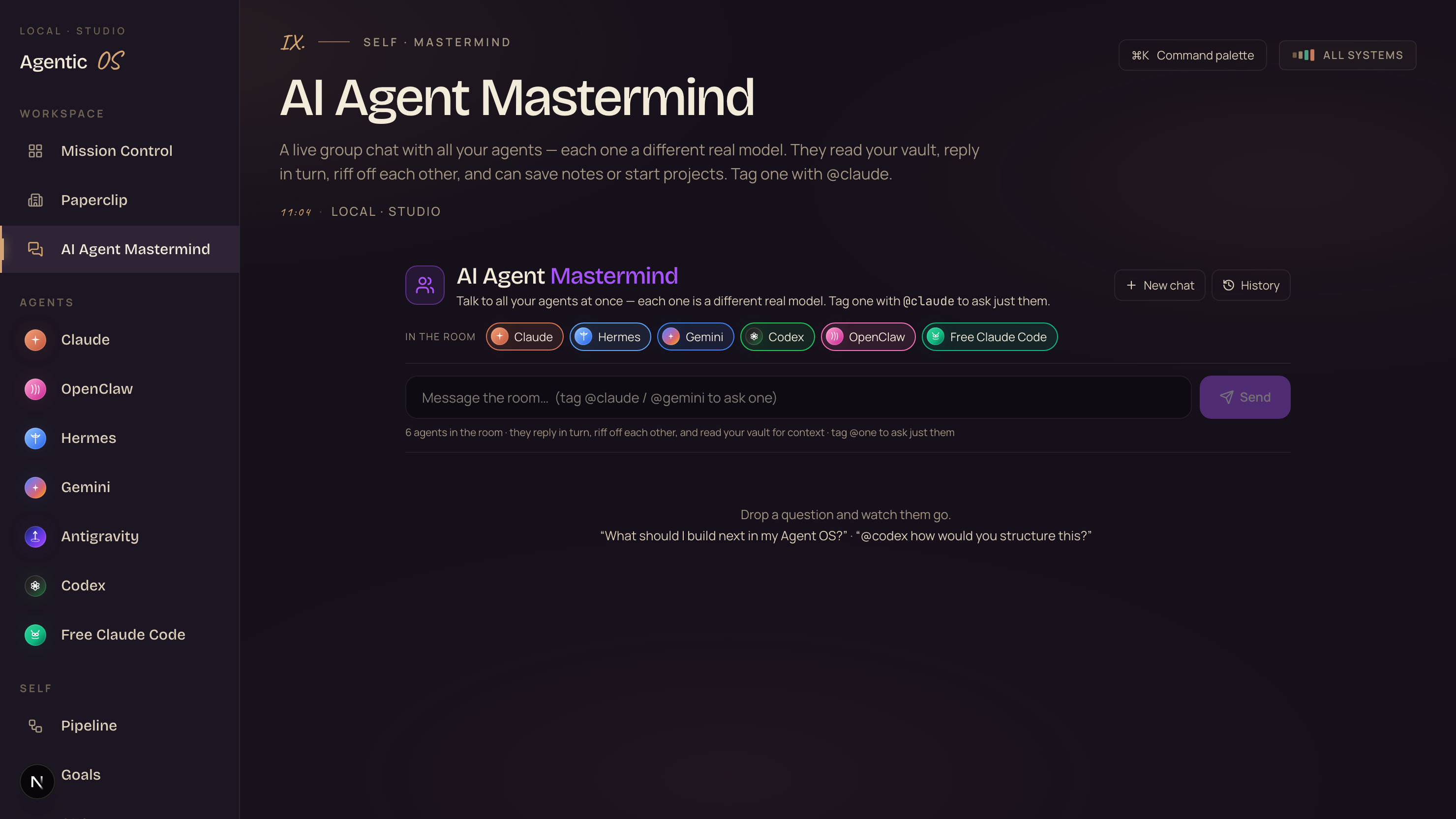
If you want what I showed above — Fable 5's coding power, the 1M context, the effort dial — actually working FOR your business, check out the Agent Operating System inside the AI Profit Boardroom.
It's the full operating system I built that connects Claude, OpenClaw, and Hermes into one dashboard.
Your agents share one memory. They know your goals. They know your business. So when Fable 5 needs context, it already has it. Every upgrade compounds.
- The full Agent OS zip — the same system you've seen in every screenshot above
- A 30-day Claude 5 roadmap — set it up, wire the memory, run your first agents
- Every prompt + the Obsidian memory setup
- Coaching calls — we set it up together, step by step
- 3,100+ founders building with this stack right now · someone's online 24/7
Should you switch today? Honest answer.
Yes — and here's the no-hype version of why.
Until June 22, Fable 5 is included in every paid Claude plan. Testing the most powerful public model on Earth currently costs you nothing extra.
So the move is simple.
Pick the model in Claude or Claude Code today. Run your three hardest real tasks — the ones the old model kept fumbling. Compare.
If you run agents through the API, point one workflow at claude-fable-5 and watch the turn counts drop.
Keep Opus 4.8 as your fallback — that's literally what Anthropic does inside Fable 5 itself.
And if a response ever comes back refused, check the category. It's almost certainly the cautious classifier, and the same ask phrased plainly sails through.
The people who figure out AI agents now, while the tools are evolving fast, are going to be way ahead when everything settles. Every update you learn. Every workflow you build. It all compounds.
The free window closes June 22. That part isn't marketing — it's Anthropic's published rollout date.
After that, the same experiment costs real usage credits. The cheapest day to learn this model is today.
What you just gained.
You got a generation jump.
Fable 5 beats Opus 4.8 by 11 points on SWE-bench Pro and doubles it on frontier code.
You got it free (for now).
Included in every paid Claude plan until June 22. Then it's usage credits.
You fit your whole business in.
1M tokens of context — every doc, every note, one conversation.
You pay for genius per task.
The effort dial: low for routine, xhigh for the impossible.
You know the safety story.
Mythos-class power, with risky topics auto-handled by Opus 4.8 in under 5% of sessions.
You know what's coming.
Mythos 5 is already in government and research hands. This class only goes up.
You stopped re-explaining.
Wired into an Agent OS with shared memory, the model knows your business cold.
You have a deadline.
Run one real job on Fable 5 before June 22. Today beats tomorrow.
"Own the system — and every new model makes it stronger."
Make Claude 5 yours.
If you want your Claude setup to actually save you time every day — not just be another tab you check — go grab the Agent Operating System inside the AI Profit Boardroom.
It turns Claude, OpenClaw, and Hermes into one system with shared memory, shared context, and one dashboard you control.
Your agents understand your business. They remember everything. And every new release — like Fable 5's 1M context and effort dial — makes the whole system more powerful automatically.
You get the zip file. Every prompt. The Obsidian memory setup. Coaching calls where we set it up together step by step.
3,100+ members. Daily tutorials. A 30-day Claude 5 roadmap. A member map to find builders near you.
Get the Agent OS → Inside the AI Profit Boardroom · aiprofitboardroom.com link in the description ↓Try Fable 5 on your hardest task first. Decide second.
I'll see you in the next one.