Stop prompting. Start looping.You don't write the prompt anymore — you write the loop.
The biggest names in AI are all pointing the same way: the future isn't a cleverer prompt. It's a better loop. You define what "done" looks like, an agent acts, an independent judge checks it, and it repeats until it passes — while you do something else. Here's why looping beats prompting, and the four loop systems we built into the Agent OS.

The smartest people in AI just stopped prompting.
It started with two sentences. On 8 June 2026, Peter Steinberger — the developer behind the OpenClaw agent, now at OpenAI — posted this. It hit 6.5 million views in days and ran the agent conversation for a week.
the post that kicked it all off ↓
The next day, Google engineer Addy Osmani published an essay that gave it a name — loop engineering — and an anatomy. His line says it plainer than I can:
This isn't one corner of the internet. The man who built the coding agent everyone uses says the same:
And on the biggest stage in the industry — NVIDIA's GTC keynote — Jensen Huang declared the age of agents. He didn't describe a better prompt box. He described a loop:
And this isn't theory. It's already how the best shop in the world ships code:
Observe. Reason. Plan. Act. Verify. Repeat. That's not a prompt. That's a loop running on its own — and it's the new default.
One makes you the engine. The other makes you the architect.
Here's the difference in plain terms, because it changes everything about how your day looks.
- You type a prompt and wait
- You read the answer, spot what's wrong
- You type again. And again. And again
- Nothing moves unless you're sitting there
- One mistake and you start the thread over
- Your output is capped by your attention
- You define what "done" actually looks like
- An agent acts — builds, writes, searches
- An independent judge checks it against the goal
- If it's not done, it loops again on its own
- It keeps going until the goal is truly met
- It runs while you sleep — and you wake to it done
The catch most people miss: a loop only works if something other than the agent decides when it's done. The agent that wrote the code can't be the one that grades it — it'll always say "looks good to me."
So every real loop has two halves: a doer and a judge. That's the whole secret. And it's exactly what we built — four different ways — into the Agent OS.
Every loop system shares the same skeleton.
Before the four systems, see the bone they're all built on. Once you spot it, you'll see it in every one.
Doer → judge → repeat → until the gate passes. Hold that shape in your head. Here are the four systems that run it.
Four loops. One operating system.
We didn't build one loop. We built four — each tuned for a different kind of work. All of them live inside the Agent OS, sharing the same memory and the same dashboard.
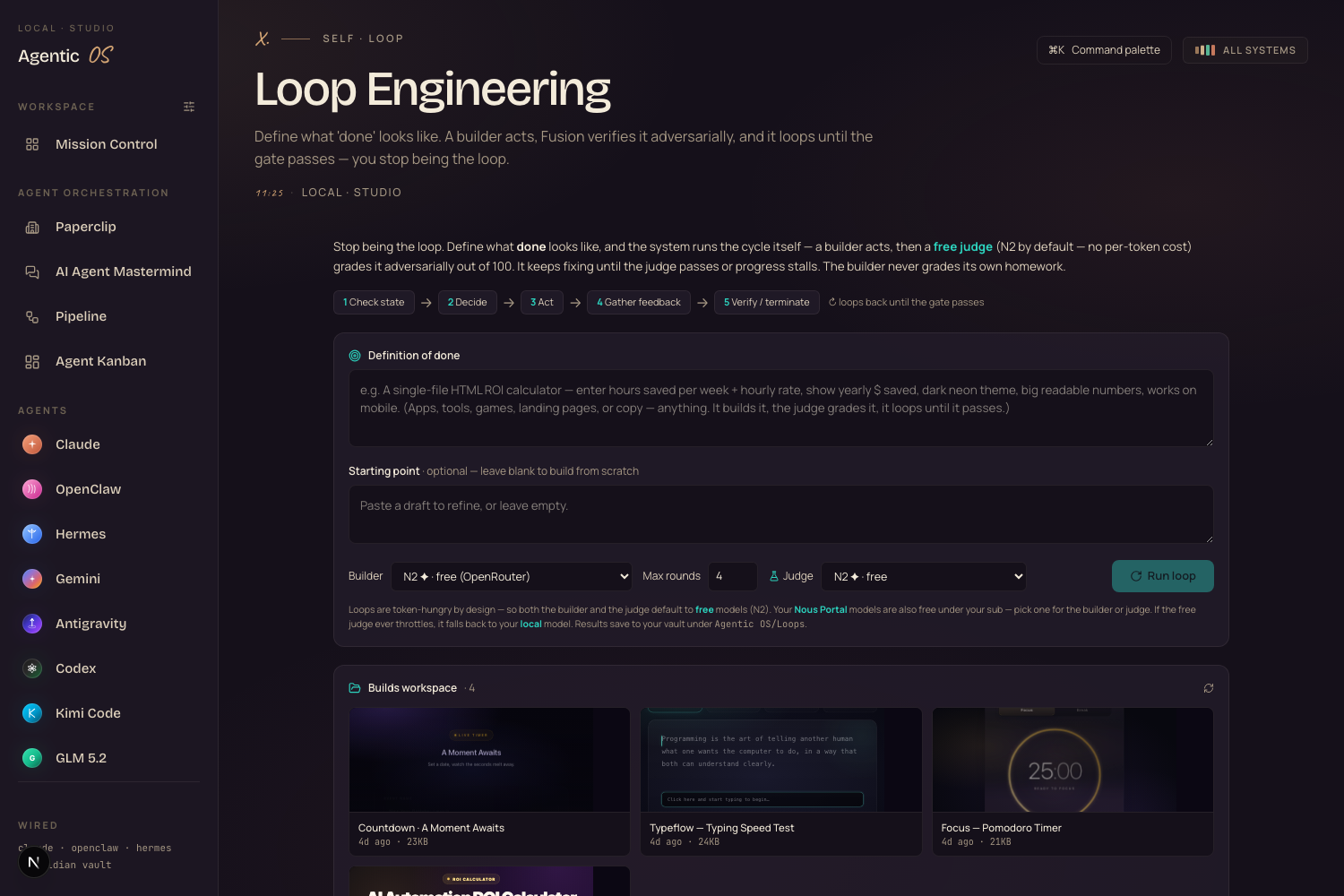
Loop Engineering — build → verify → repeat, until it passes
This is looping in its purest form. You write what "done" looks like — "a working countdown timer, centered, that actually counts down." A builder agent makes it. Then Fusion adversarially checks it against your definition. If it fails, it loops and tries again. You stop being the loop — the system is.
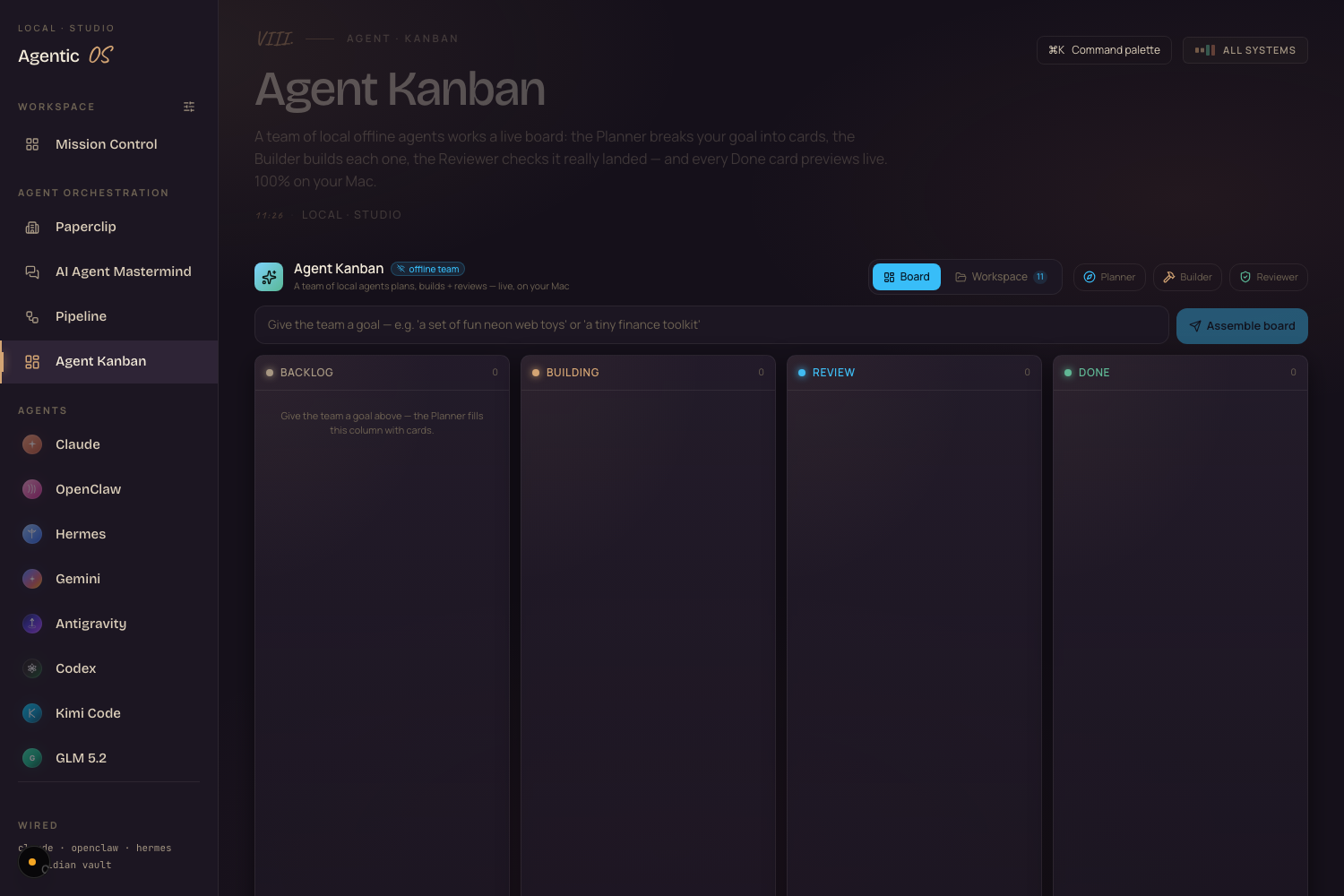
Agent Kanban — a Planner, a Builder, and a Reviewer who won't pass junk
Sometimes one loop isn't enough — you want a team. Drop in a goal and a board of local, offline agents goes to work: the Planner breaks it into cards, the Builder builds each one, and the Reviewer — your judge — checks each card really landed before it's allowed into Done. Fail review, and the card loops back. Every Done card previews live, right on the board.
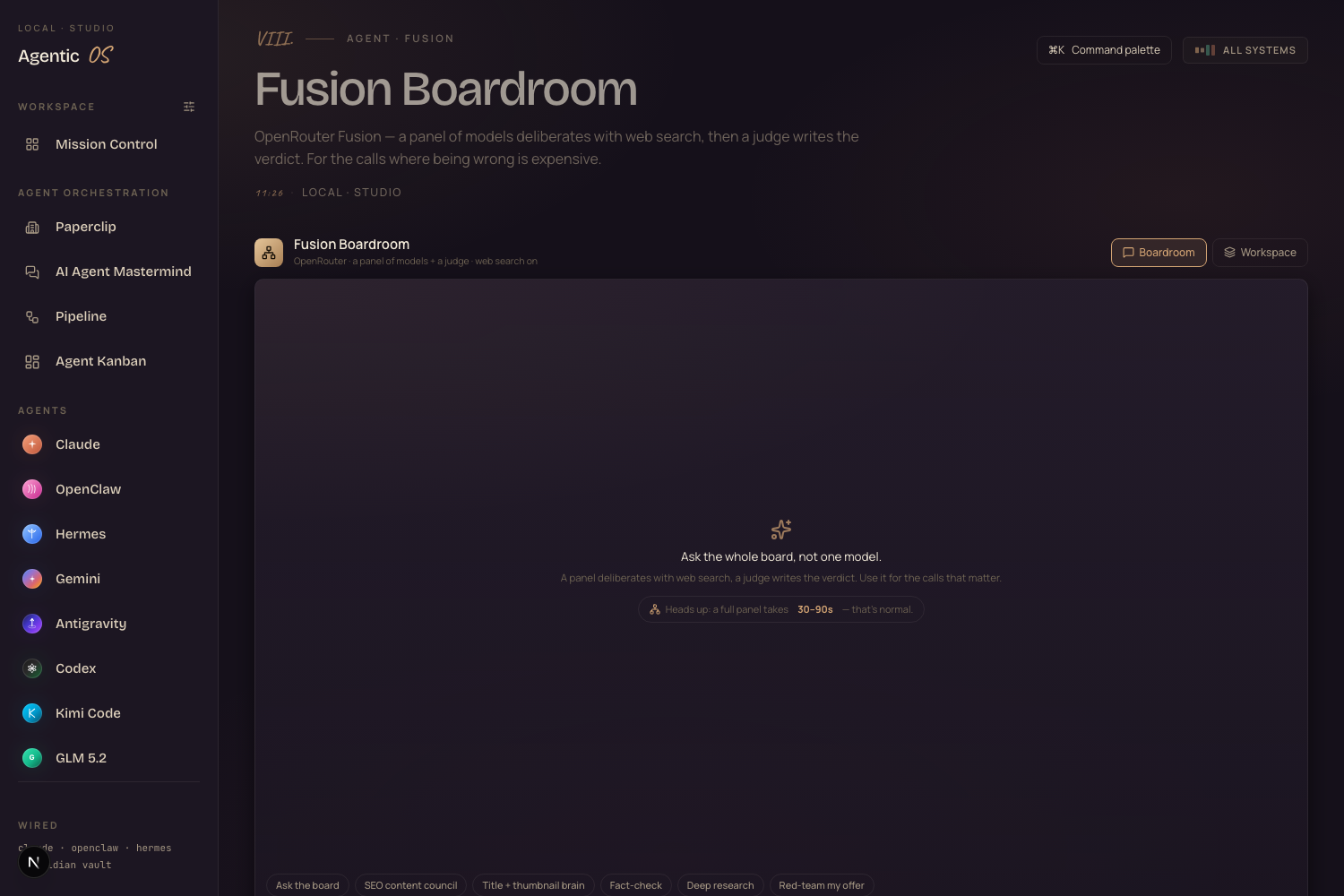
Fusion Boardroom — a panel of models argues, a judge writes the verdict
For the calls where being wrong is expensive, one model's guess isn't enough. Fusion sends your question to a whole panel of models that deliberate in parallel, search the web to check themselves, and then a judge model weighs all of it and writes a single verdict. It's a loop of cross-examination — disagreement gets resolved before you ever see the answer.
Sakana Fugu — vendor-agnostic collective intelligence
Sakana Fugu takes the council idea and makes it vendor-agnostic — a panel drawn across providers, deliberating in parallel, searching the web, then a judge weighing it all into one verdict. It runs on Sakana's multi-agent panel API and comes in roughly 4× cheaper than Fusion. The point is collective intelligence: not one model's opinion, but the cross-checked result of many.
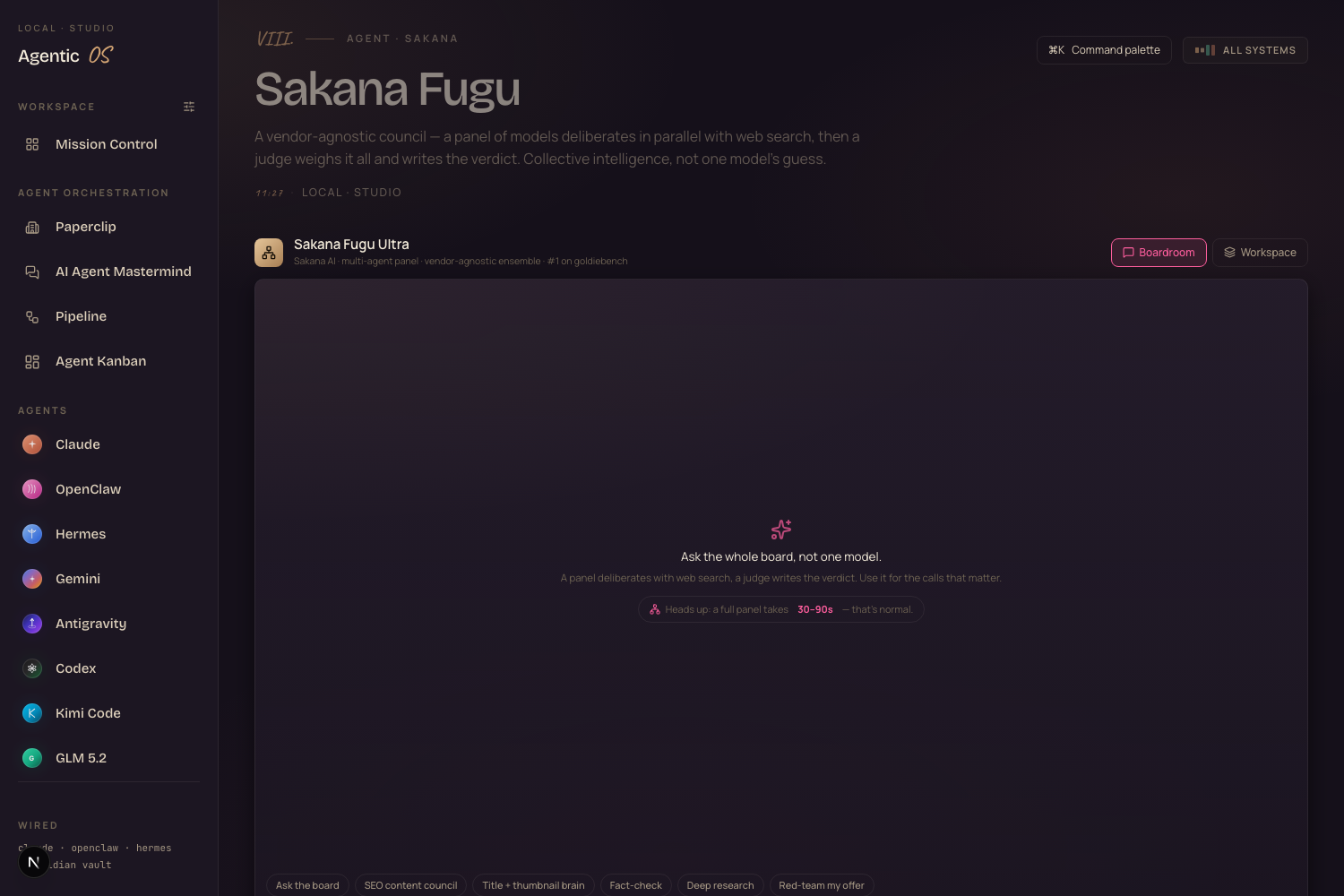
Every loop system lives inside the Agent OS.
You don't wire four separate tools together. Loop, Agent Kanban, Fusion and Sakana Fugu all run inside the Agent Operating System in the AI Profit Boardroom — one dashboard, shared memory, shared context. You pick the loop that fits the job and let it run.
- All four loop systems — pre-built, wired in, ready to run
- Shared memory — every loop knows your business, your goals, your voice
- 4 coaching calls a week + daily tutorials as we ship new loops
- A 30-day roadmap + every prompt + the full setup
- 3,900+ members across 38 countries — someone's online 24/7
It's not that loops are fancier. They just win.
Strip away the hype and here's why the whole industry is moving this way — and why it matters for what you can get done.
Prompting caps your output at how much you can personally sit and type. Looping uncaps it. That's the whole game.
What to take away.
The future isn't a better prompt. It's a better loop.
Stop being the loop. Start writing them.
The people who win the next year won't be the ones with the cleverest prompt. They'll be the ones whose loops run while they sleep. The Agent Operating System inside the AI Profit Boardroom hands you all four loop systems, wired in and ready — so you start designing loops today instead of babysitting prompts.
- The full Agent OS zip — Loop, Kanban, Fusion + Sakana, in one dashboard
- The setup walkthrough, done with you, step by step
- 4 weekly coaching calls, daily tutorials, a 30-day roadmap
- 3,900+ members, a member map, a 24/7 community
- 158 pages of member wins — read them here →