Hermes Loop Engineering.
Set the bar once. Walk away. A builder writes it, a separate free judge grades it out of 100, and it fixes itself round after round — until it passes. You stop being the loop.
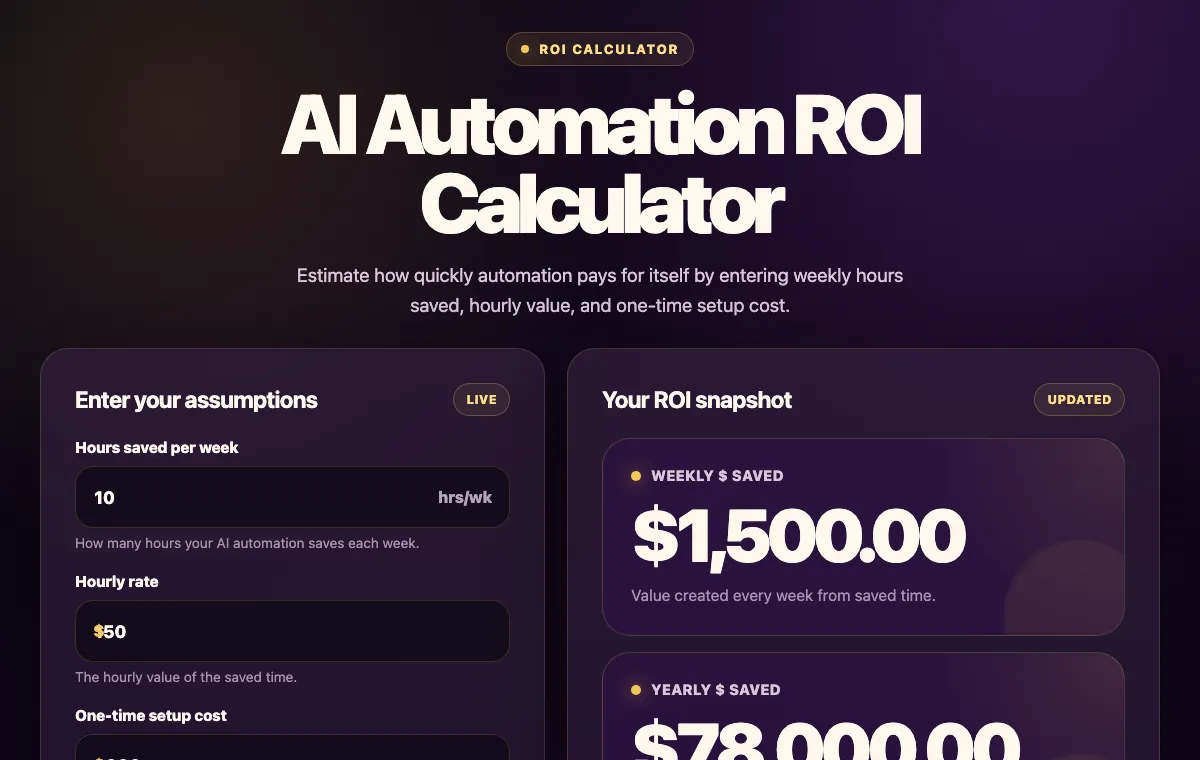
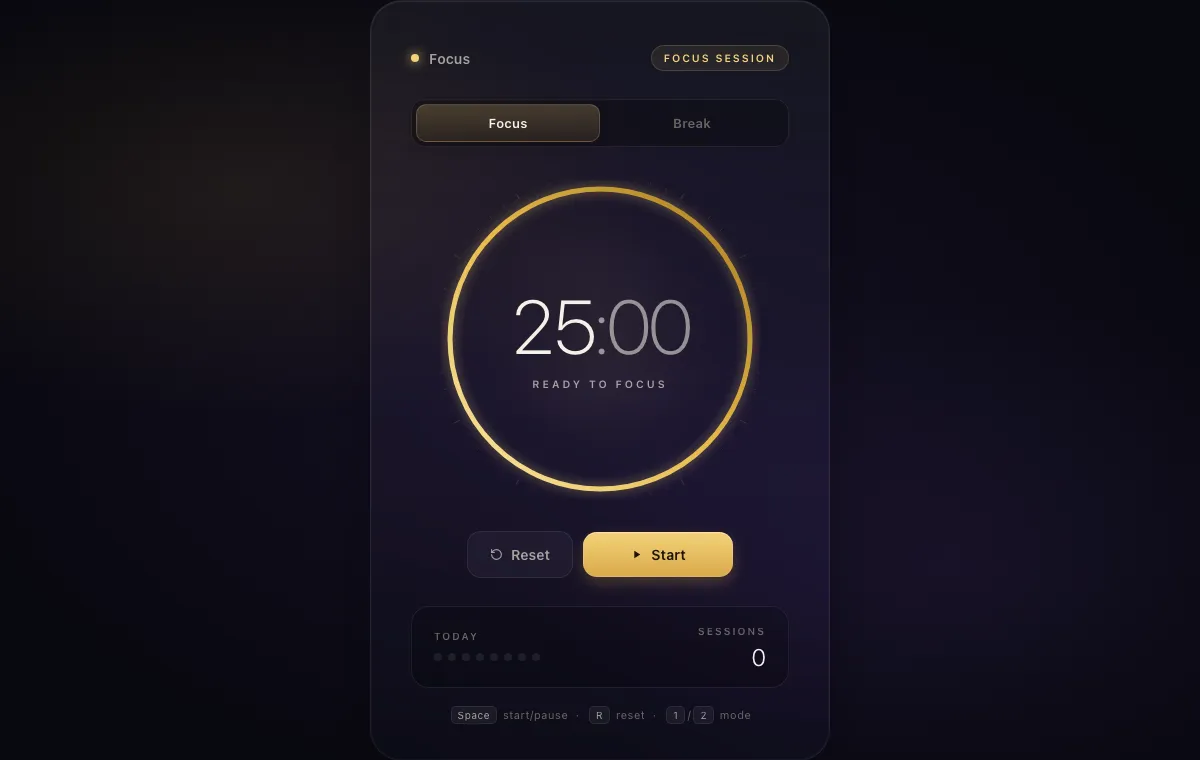
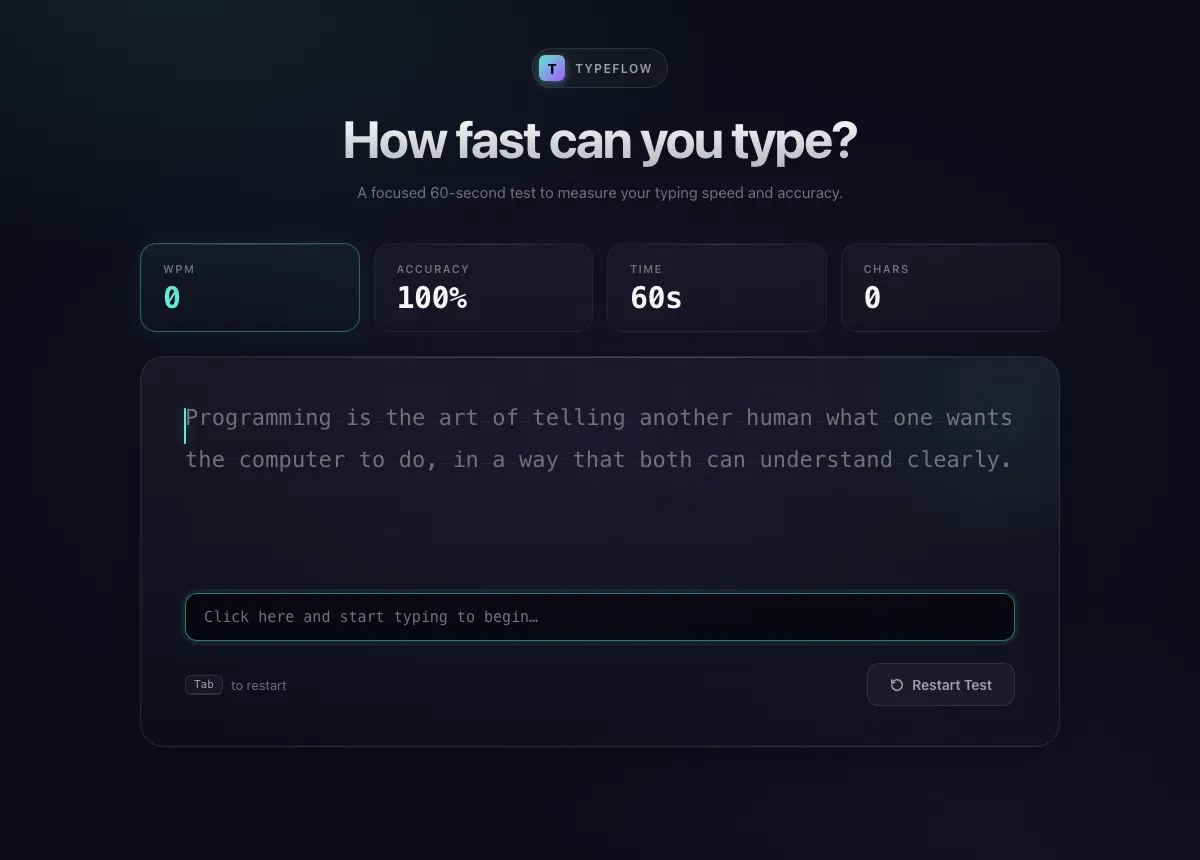
Things it actually built. Open any of them.
Every one of these was built end-to-end by the loop on this page — a free model writing it, a separate judge grading it, looping until it ran clean in a real browser and met the goal. No hand-coding. Click a card to open the live, working build.
I was you. Then I stopped being the loop.
Before
I'd ask AI for a cold email. Read it. Not good enough.
So I'd tell it what was wrong. It tried again. I read it again.
Round after round, me in the middle every single time — the judge, the note-taker, the one pressing go.
Five rounds later I had something okay. And I'd burned an hour I'll never get back.
Then I wired the loop to run itself.
After
Now I write down what "done" looks like — once.
A builder writes it. A separate free judge grades it hard and lists what's wrong.
It fixes itself, round after round, while I'm doing something else.
I come back to a finished result and a full record of every round.
You can have this too. Set the bar, walk away.
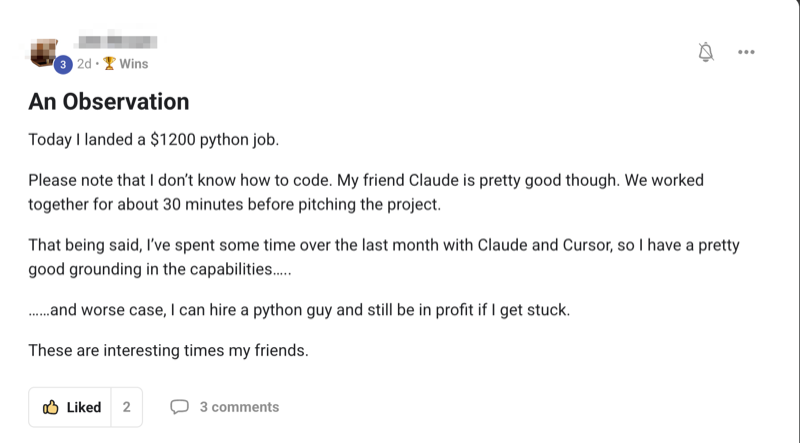
Real people. Real wins. Inside the Boardroom right now.
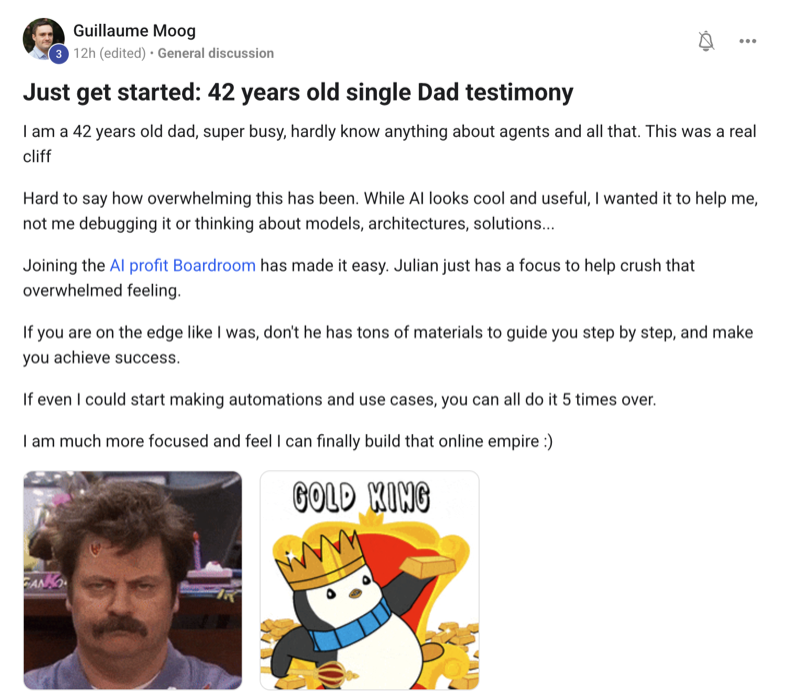
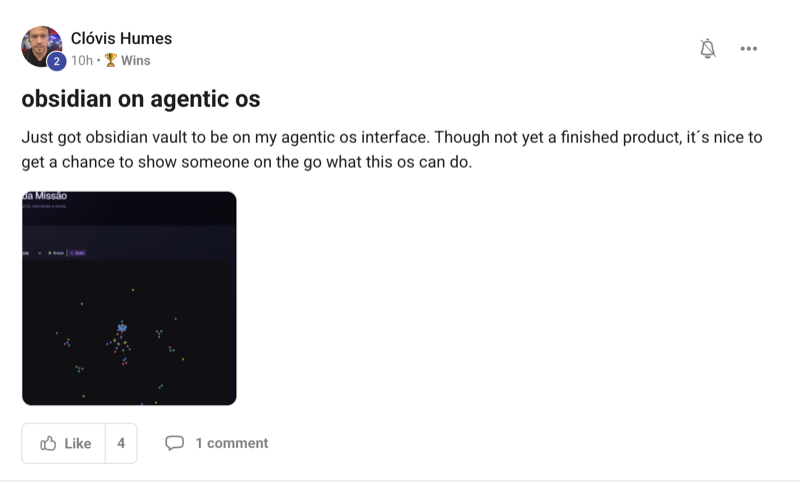
Here's what's happening for the members already building with this stack — agency owners, ecom founders, course creators, solo operators. Different businesses. Same result: they stopped doing the work AI should be doing for them.
Commit to transitioning today. Not tomorrow.
You've seen the proof. Real people. Real results.
The next few minutes show exactly how the loop runs itself.
So here's the deal.
Promise yourself one thing right now. You'll finish this guide AND set up one loop before you sleep tonight. Just one. Because the moment you stop being the middle of every AI cycle, the way you work changes for good.
The people sitting still are still reading drafts at midnight. The people who make this transition today get their evenings back.
Be one of those people.
Commit to the transition. Commit to taking action today. This changes how you work with AI forever.
Hermes Loop Engineering™ — the five parts.
Every loop is the same five parts, working together so you don't have to. You only ever touch the first one.
The Bar
You write what "done" looks like — once. That one paragraph becomes the law every round is measured against. This is the only part you touch.
The Builder
A model does the actual work — writes the draft, fixes the code, rewrites the email. Run it on a free Nous Portal model so the building costs you nothing.
The Judge
A separate model — a free one by default (N2, or your local model on the Mac) — grades the work out of 100 and lists exactly what's wrong. It's told to be tough. The builder never grades its own homework. (You can swap in a premium judge like Fusion any time, but free is the default.)
The Return Path
Failed work doesn't stop the line — the judges' notes go straight back to the builder, which fixes them and tries again. That's the loop. It runs on its own until the bar is cleared.
The Memory
The finished result and every round — the scores, the fixes — save to your Obsidian vault. You get the answer and the receipts, kept forever.
You used to be the loop. Now the machine is.
- Ask AI for the thing
- Read it — spot what's weak
- Type out what's wrong
- Paste it back, wait, re-read
- Repeat five times, losing focus
- Settle for "okay" because you're tired
- Write what "done" means — once
- Hit Run, close the tab
- The builder drafts it for you
- The judges grade it hard, list fixes
- It re-does itself until it passes
- Come back to a graded, finished result
The cycle, in five plain steps.
This is the whole engine. It runs every round on its own. You watch it if you want — or you don't.
1. You set the bar
In the Definition of done box, you write what a great result looks like. Be specific. "A 5-line cold email for agency owners that names one real pain, has one clear call-to-action, and reads like a human wrote it." The more honest your bar, the better the judges can grade.
Optionally paste a starting point — a rough draft to improve — or leave it blank to build from scratch.
It's a text box. You type a sentence about what "good" looks like and press a button.
No code. No setup. If you can write a brief for a freelancer, you can run a loop.
2. Pick your builder + how many rounds
Choose the builder model — MiniMax M3 on your Hermes OAuth is the reliable free default, or pick N2 (free), a free Nous Portal model, or a premium one like Claude Opus 4.8. Pick the judge too — it defaults to a free model (N2), with your local model as an instant fallback if a free endpoint is busy. Set the max rounds (2–8).
They're token-hungry on purpose — you're handing the hard part to the models.
That's why you run the builder on a free Nous Portal model. The building costs nothing; only the once-per-round grade uses your key.
3. Hit Run — and leave
The builder writes a first version. The free judge grades it out of 100 and lists what's wrong. If it fails, those exact notes go back to the builder, which fixes them. Round two. Round three. You watch the scores climb live, or you go do something else.
No. It stops the second the judges pass it.
If the score stops improving for two rounds running, it bows out and tells you to sharpen the bar. And your max-rounds cap is a hard ceiling. It can't run away.
4. Come back to a graded, finished result
When the judges pass it, you get the final result plus a full record of every round — the scores, the issues fixed each time. It all saves to your vault under Agentic OS/Loops, so the work — and the proof of how it got there — is yours forever.
Neither do I — which is the whole point. The model that writes it never grades it.
A separate panel does, and they're told to be adversarial — to find the holes. That gap between builder and judge is exactly why the final result is actually good.

Get the Agent Operating System inside the AI Profit Boardroom.
The Loop is one room in a full operating system I built — it connects Claude, OpenClaw and Hermes into one dashboard. Your agents share one memory. They know your goals. They know your business. So when you run a loop, the builder already has your context, and the judges grade against your standards.
- The full Agent OS zip — the Loop, the agents, every panel
- The Obsidian memory setup so your loops know your business
- 4 coaching calls a week with people running this in production
- A 30-day roadmap + daily tutorials + every prompt
- A room of 3,900+ builders across 38 countries — someone's online 24/7
Anything where "good enough" is hard.
If you'd normally babysit the AI through five rounds, point a loop at it instead. Set the bar, walk away.
"Names a real pain, one CTA, doesn't sound like AI." Loop it until it reads human.
Set the hook, the angle, the length. Let it grind to a scroll-stopper.
"Clear, specific, no hype, under 10 words." It tries dozens, you get the winner.
"Handles these edge cases, has tests, reads clean." It fixes itself to the spec.
"Covers these cases, plain English, no gaps." Judged hard until it's airtight.
"Hooks in 3 seconds, one idea per line, ends on a CTA." Loop to a tight draft.
The machine doesn't decide what's good — you do, when you write the bar.
The judges just check the work against your standard, hard, every round. The more honest your definition of done, the sharper the result.
Three things in the way — and the truth.
158 pages of members who already stopped being the loop. Real businesses, real wins, documented.
Read the 158-page testimonials doc →What changes the moment you use it.
The judges read them. You read the final.
It won't pass until it clears your bar — not "okay," good.
The builder runs on a free Nous Portal model.
A separate adversarial panel grades every round.
Every loop + its receipts save to your vault.
Set the bar once. Walk away. Come back to done.
Stop grading the AI's homework. Set the bar, and let it earn the pass.
Make the Loop part of a whole system that works for you.
The Loop is powerful on its own. It's unstoppable inside the Agent Operating System — where Claude, OpenClaw and Hermes share one memory, one dashboard, one set of goals. Every loop you run already knows your business, your clients, your voice. And every new Agent OS feature makes the whole thing stronger automatically.
- I built it in one session — you get the full zip file
- Every prompt, the Obsidian memory setup, step-by-step
- Coaching calls where we set it up together
- A 30-day roadmap, daily tutorials, a member map to find builders near you
- 158 pages of member wins — read them here
Built for operators · used in 38 countries