The Model Freedom Engine™. Claude Sonnet 5 landed — and the price got roasted.
Anthropic's most agentic Sonnet yet is real, and it builds well. But its token cost lands it as expensive as Opus 4.8 — and 5× above GLM-5.2, which quietly scores higher on my own build tests. Here's the honest read, no hype.
What Sonnet 5 costs, vs the field · per the pricing that shipped (scaling01)
Claude Sonnet 5the new one · "most agentic Sonnet"
most expensive
Claude Opus 4.8 Maxthe flagship
1.2× cheaper
GLM-5.2 (Zhipu)open-weight · 1M context
5× cheaper
DeepSeek-V4-Proopen
57× cheaper
Sonnet 5's whole pitch is "faster and cheaper than the big models." It shipped as the priciest name on this list. That's the story everyone's reacting to.
"Introducing Claude Sonnet 5, our most agentic Sonnet yet. It makes plans, uses tools like browsers and terminals, and runs autonomously at a level that just a few months ago required larger and more expensive models."
— Anthropic (@claudeai), 1 Jul 2026
✦
I · what shipped
Sonnet 5 is a real step up on agentic work.
Let's give it a fair start, because this part is true.
Claude Sonnet 5 is Anthropic's most agentic Sonnet. It plans out a task. It drives a browser and a terminal. It runs on its own for longer stretches without you babysitting it.
That kind of autonomy used to need the big, pricey models. Now a mid-tier Sonnet does a lot of it. For agent workflows — an agent that opens a page, runs a command, checks the result, tries again — that's a genuine improvement.
Tweet 1 · the launch
Anthropic's pitch: agentic, autonomous
The official announcement is clean and confident: Sonnet 5 makes plans, uses browsers and terminals, and "runs autonomously at a level that just a few months ago required larger and more expensive models." That last line is the whole promise — mid-tier price, big-model behaviour. Hold onto it, because it's exactly what the rest of the internet went after.
So the model is fine. The fight isn't about whether it works. It's about what it costs.
✦
II · the backlash
The whole point of Sonnet is cheaper. This one isn't.
Here's the problem, plain.
You reach for Sonnet instead of Opus for one reason: it's supposed to be faster and cheaper. Sonnet 5 came out priced like the flagship it was meant to undercut.
Tweet 2 · token efficiency
"More expensive than Opus 4.8"
BridgeMind's first complaint is the one that stings most: the token efficiency is so poor that in real use Sonnet 5 ends up more expensive than Opus 4.8. When your "cheaper" model burns more tokens to finish the same job, the sticker price stops mattering — the bill is what mattered, and the bill went up.
Then someone lined it up against the whole field.
Tweet 3 · the cost breakdown
1.2× Opus, 5× GLM-5.2, 57× DeepSeek
scaling01 put the multiples on the table: Sonnet 5 is 1.2× more expensive than Opus 4.8 Max, 2× GPT-5.5-xhigh, 5× GLM-5.2, 7× Kimi-K2.6, and 57× DeepSeek-V4-Pro. Read those numbers as "how much cheaper the alternative is." For most everyday building, several of those alternatives do the same job — you're paying a big premium for the name on the box.
And the "savings" people actually got? Almost nothing.
Tweet 4 · the CursorBench check
$0.72 cheaper than Opus — that's it
BridgeMind ran it on CursorBench and found Sonnet 5 Max landed only $0.72 cheaper than Claude Opus 4.8 Max — while scoring worse. If the cheaper model costs basically the same as the flagship and does less, the reason to pick it disappears. That's the core of the pushback: not "it's bad," but "why would I use this instead of Opus, or instead of something 5× cheaper?"
Heads up: live X embeds need a connection to load. Offline they show as plain links — that's normal.
how much cheaper the alternative is than Sonnet 5 (per scaling01)
Claude Opus 4.8 Max1.2× cheaper
GPT-5.5-xhigh2× cheaper
GLM-5.25× cheaper
Kimi-K2.67× cheaper
DeepSeek-V4-Pro57× cheaper
Bars scaled by how much cheaper each rival runs than Sonnet 5. Even Anthropic's own flagship, Opus 4.8, comes in cheaper. The open models are in a different league on price.
✦
III · my own test
I ran Sonnet 5 on my build bench. It's good — GLM-5.2 is better value.
I don't take price tweets on faith, so I ran Sonnet 5 through GoldieBench — my one-prompt build test where a model builds a game or scene from a single sentence, and a judge scores the real rendered result.
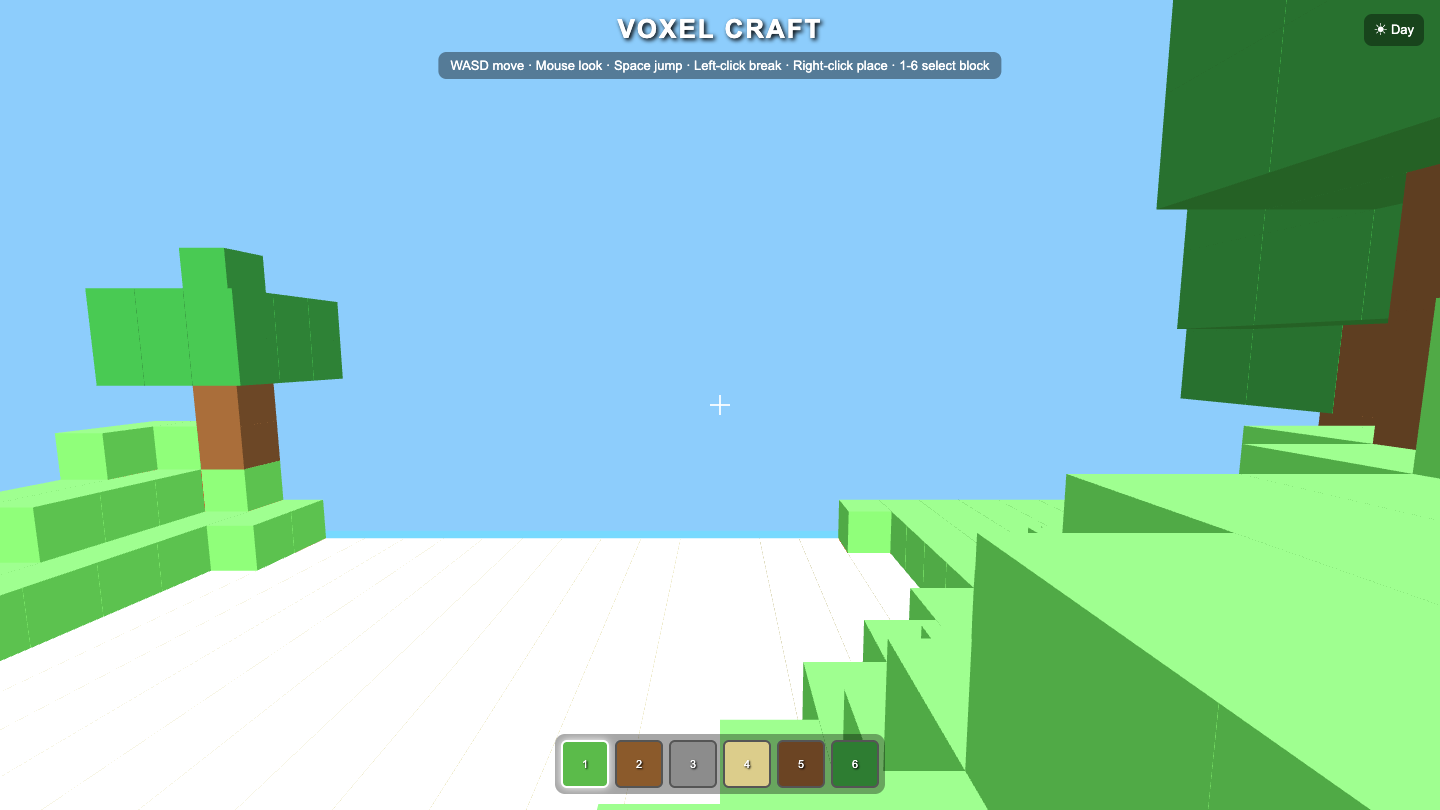
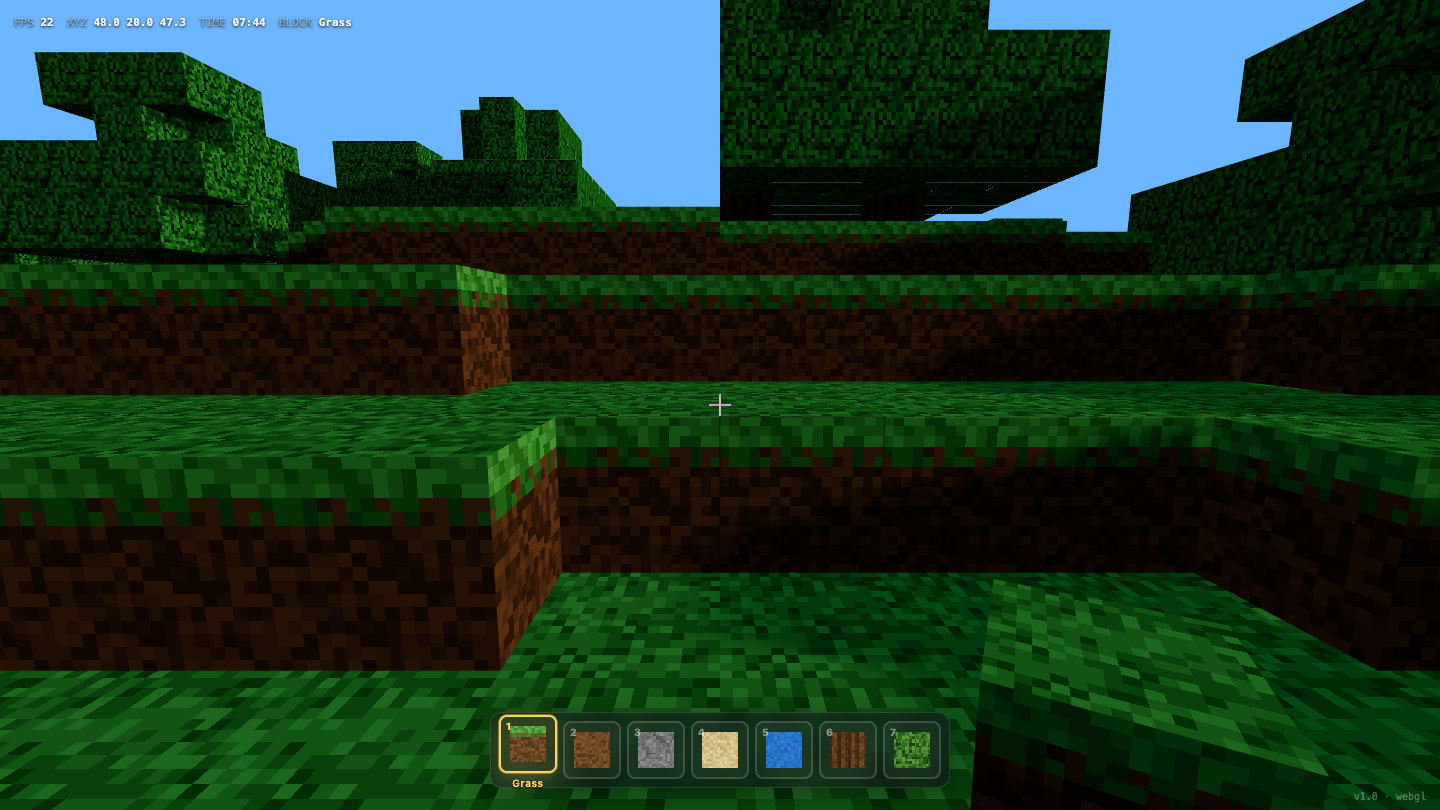
Credit where it's due: Sonnet 5 builds well. Here's its one-shot "Voxelcraft" — a full playable block world, hotbar and all. It scored an 8.6.
So it's not a weak model. But here's the honest part.
Across the same bench, GLM-5.2 — the open-weight model that costs 5× less — sits at a 7.77 average with 6 gold-medal builds. Sonnet 5 is landing in the low 7s in the run I'm doing right now. Same class of output. A fraction of the cost. And GLM-5.2 you can even run it on your own hardware, because the weights are open.
Both of these are playable — click either one and walk around. Same task, same prompt.
Thinking it? "Aren't you just cherry-picking to bash Anthropic?"
No — I use Claude every day and Sonnet 5 is a fine model. Same prompt, same bench, same judge for all of them; the scores and the prices are what they are. The point isn't "Sonnet 5 is bad." It's "on value, it's not the one to reach for by default" — and that's a useful thing to know before you wire it into everything.
GoldieBench build quality vs relative cost · higher score, lower cost = better value
GLM-5.2 · build score7.77 · 6 gold
Claude Sonnet 5 · build score~7.2 (run in progress)
GLM-5.2 · relative price1×
Claude Sonnet 5 · relative price5×
Near-identical build quality. GLM-5.2 does it at a fifth of the price (and open-weight). Sonnet 5's numbers are from the live run — I'll finish all 42 tasks and post the final. Score bars zoomed to the 0–10 band.
✦
IV · the lesson
The Model Freedom Engine™.
Here's the takeaway, and it's bigger than Sonnet 5.
Every few weeks a new "best model" drops with a big launch. Sometimes it's great value. Sometimes, like this one, it's priced like a luxury and a cheaper model does the same work. If you've hard-wired your whole setup to one model, you eat whatever price and quirks it ships with.
The fix is to never marry a model. Run a system that plugs in any of them and sends each job to whichever one is the best value that week.
i.
Swap freely
Sonnet 5, GLM-5.2, Kimi, DeepSeek, a free local model — each is one line in a config, not a rebuild. New model drops? Drop it in and try it.
ii.
Route by value
Send each job to the model that does it best per dollar. The everyday 90% goes to free local or cheap open models; the frontier stuff goes to a paid model only when it earns it.
iii.
Use what you already pay for
Your Claude subscription already includes the Claude CLI. The engine drives that, so you get Sonnet-5-level agentic runs without paying a second per-token bill on top.
iv.
Test, don't trust
Every new model runs the same real build check before it touches your work. You keep the ones that ship and drop the hype — like this whole guide is doing with Sonnet 5.
v.
Never get held hostage
When the model of the week gets a price backlash, you shrug and route around it. Your system doesn't depend on any one company's pricing decisions.
Thinking it? "Doesn't running an Agent OS burn a fortune in tokens?"
No — and that's the whole point of routing by value. The Agent OS runs the everyday 90% on a free local model on your own machine (nothing leaving it), free and cheap open models like GLM-5.2 slot in for more, and for the frontier work it drives the CLIs you already pay for — your Claude subscription already includes the Claude CLI, so a Sonnet-5-class agentic run costs you nothing extra per token. It's a layer on top of what you already own, not a new meter. And inside the AI Profit Boardroom there are full token-efficiency tutorials, so a launch like this one — priced too high — never stings you.
Models come and go, and their prices swing. The engine that routes each job to the best-value one is the part you keep — it never depends on a single company's pricing.
✦
V · old way vs new way
Two ways to handle a model launch.
Marry the model
5× overpaying
Wire your whole setup to one model
New "best model" drops — rush to switch everything
Eat whatever price it ships with
Find out on your bill that "cheaper" wasn't
Locked in until the next painful migration
Result: you pay the premium for the name on the box
Run the Model Freedom Engine
pay the least, every job
Any model is one line in a config
New model drops? Test it on a real build in minutes
Route each job to the best value that week
The everyday 90% runs free/local or on cheap open models
Frontier work uses the CLI you already pay for
Result: same output, a fraction of the cost, no lock-in
✦
VI · three beliefs to drop
What's quietly overcharging you.
Wrong: "The newest Anthropic model is the one I should use."
Right: Newest ≠ best value. Sonnet 5 launched priced above Opus 4.8 and 5× above GLM-5.2 for the same class of work. Pick by what it costs to do YOUR job, not by the launch date.
Wrong: "Sonnet is always the cheaper, safer default."
Right: Not this time. Poor token efficiency made Sonnet 5 as expensive as the flagship. The "cheap default" has to be re-checked every release — the label on the tier doesn't guarantee the bill.
Wrong: "I have to bet on one model and hope it's the right one."
Right: You don't bet at all. A system that plugs in every model and routes by value means you're never wrong about a launch — you just use whatever wins, and drop whatever doesn't.
Don't take my word for it
158 pages of members who stopped chasing the model of the week and built a system instead — real businesses, real wins, in their own words.
Every job: check who does it best per dollar, route to that model, get the result. Sonnet 5 gets picked when its agentic edge is worth the price — and skipped when it isn't.
✦
VII · get the engine
Stop overpaying for the model of the week.
The Model Freedom Engine is the Agent OS inside the AI Profit Boardroom — one dashboard that plugs in every model and routes each job to the best value. Here's what's in it:
The Model Freedom Engine — plug in Sonnet 5, GLM-5.2, Kimi, DeepSeek or a free local model, swap in one line
Route-by-value — the everyday 90% runs free/local, frontier work only when it earns it
The build test bench — check any new model on a real build before you trust it (the exact thing I did to Sonnet 5)
Every CLI you already pay for — Claude, Codex, Gemini, Kimi, GLM, Grok, wired into one dashboard
Agent Kanban — Planner → Builder → Reviewer agents that catch bad output before you ship it
The Claude Workspace — every output saved and previewed, nothing lost
Free local models — the everyday 90% at $0, offline, nothing leaving your machine
Token-efficiency playbooks — cut usage to the bone so no launch's pricing can sting you
Memory that knows your business — so a cheap model with context beats a pricey one flying blind
3,900+ founders + me, daily — every new model tested and added the week it ships
You're not buying a tool. You're getting the operating system I run a seven-figure business on — the one that just told you to skip the $5-too-expensive model and route around it.
Get the Agent OS →Inside the AI Profit Boardroom · skool.com/ai-profit-lab
✦
VIII · should you use Sonnet 5?
Use it where its agentic edge pays for itself.
Here's the balanced answer, not a takedown.
Sonnet 5 is worth reaching for on genuinely agentic, long-running tasks — an agent that plans, drives a browser and terminal, and works on its own for a while. That autonomy is real, and on those jobs it can earn its price.
For everyday building, writing, and one-shot work? A cheaper model — GLM-5.2, an open model, or a free local one — does the same job for a fraction of the cost. That's not me being contrarian; it's what the prices and my own bench say right now.
The people who win the next year won't be the ones who always run the newest model. They'll be the ones with a system that tests every model and quietly uses whichever one is the best value that week. Every launch you check. Every price you compare. It compounds into a setup that never overpays.
✦
IX · recap
What you walk away with.
i.
You saw it's real. Sonnet 5 is Anthropic's most agentic Sonnet — plans, browsers, terminals, autonomy.
ii.
You know the catch. Poor token efficiency made it as pricey as Opus 4.8 — and 5× above GLM-5.2.
iii.
You have the value pick. GLM-5.2 scores higher on my bench (7.77, 6 golds) for a fraction of the cost — and it's open-weight.
iv.
You stopped guessing on launches. Test every model on a real build; keep what ships, drop the hype.
v.
You stopped overpaying. Route each job to the best value — the everyday 90% runs free or cheap.
vi.
You own the engine. Models come and go with their prices; the system that routes by value is what you keep.
Don't marry the model. Own the engine that runs whichever one wins.
X · your move
Run whatever's best value — every single week.
Sonnet 5 is the newest name, not the best value. Next month it'll be a different name. The only thing that keeps paying off is the system that tests each one and routes your work to whichever wins.
Inside the AI Profit Boardroom you get the Model Freedom Engine — plug in Sonnet 5, GLM-5.2, Kimi, DeepSeek or a free local model and route every job to the best value; the build-test bench that vets any new model before you trust it; every CLI you already pay for in one dashboard; Agent Kanban that catches bad output; memory that knows your business; token-efficiency playbooks so no launch price can sting you; and 3,900+ founders building alongside you, with every new model tested the week it drops.
The people chasing the model of the week keep overpaying. You could be the one who tested it, priced it, and routed around it.
Get the Agent OS →Inside the AI Profit Boardroom · skool.com/ai-profit-lab
Link's in the description. Test the price before you trust the launch — I'll see you in the next one.
The AI Profit Boardroom is where the actual Agent OS lives — the templates, the prompts, the daily rooms, the weekly walkthroughs. Same builds you read about here, taught hands-on inside.