V · THE TOUR
A tab for every format, a gallery in every tab
This is the rebuilt Notebook section of my Agent OS. Same yellow accent, ten tabs across the top — five format tabs each holding a generator plus a gallery, a Studio tab that can generate any of the nine formats in one click, and an Assets tab showing everything ever saved in one grid.
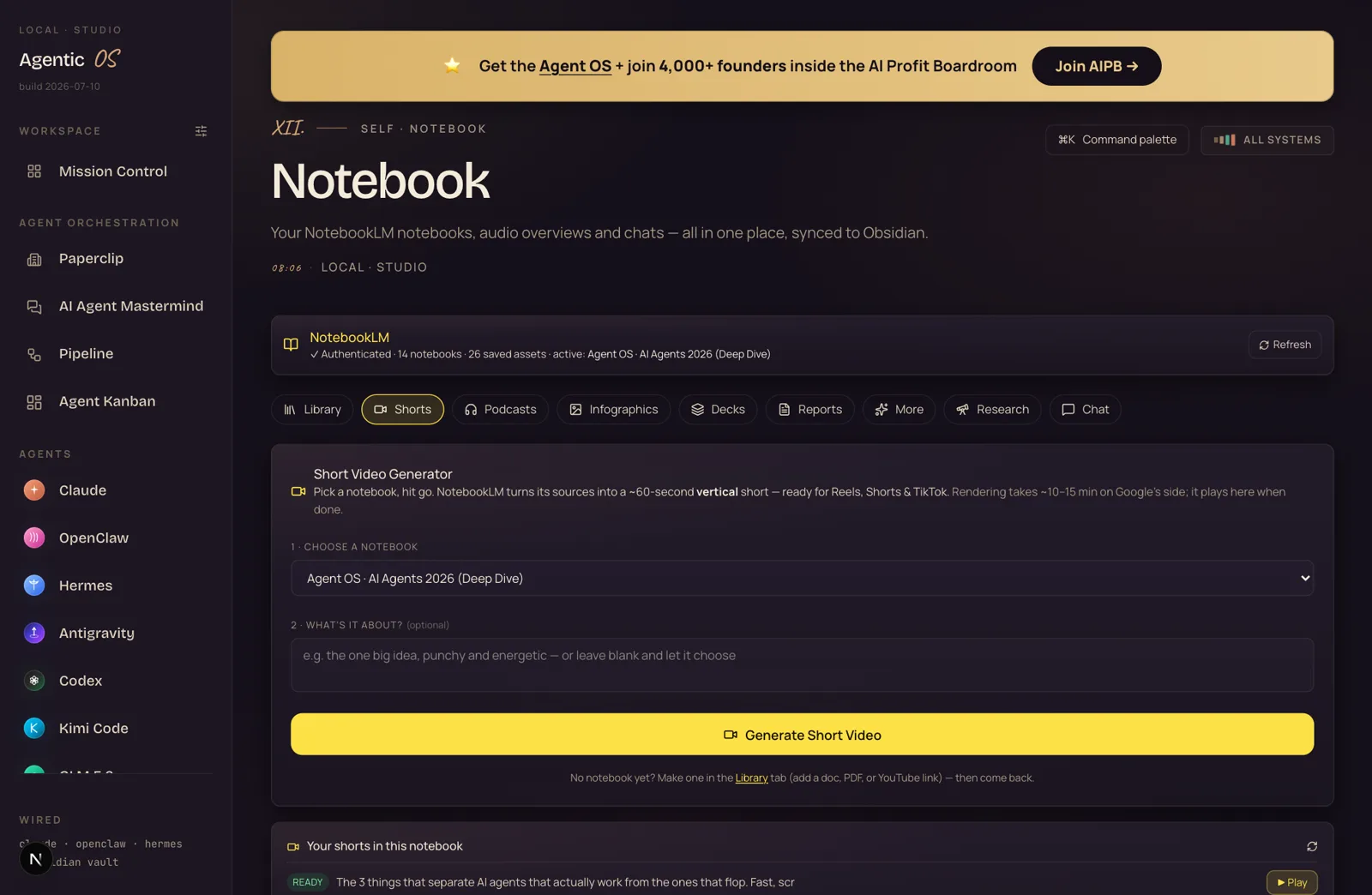
🎬 Shorts — vertical video for Reels, Shorts & TikTok
Pick a notebook, one optional line of focus, hit Generate — a ~60-second vertical short renders in 10–15 minutes.
NotebookLM turns the notebook's sources into a script and renders a finished vertical video. You can see one sitting READY in the list — "The 3 things that separate AI agents that actually work from the ones that flop". Every video ever pulled lives in the gallery below the generator.
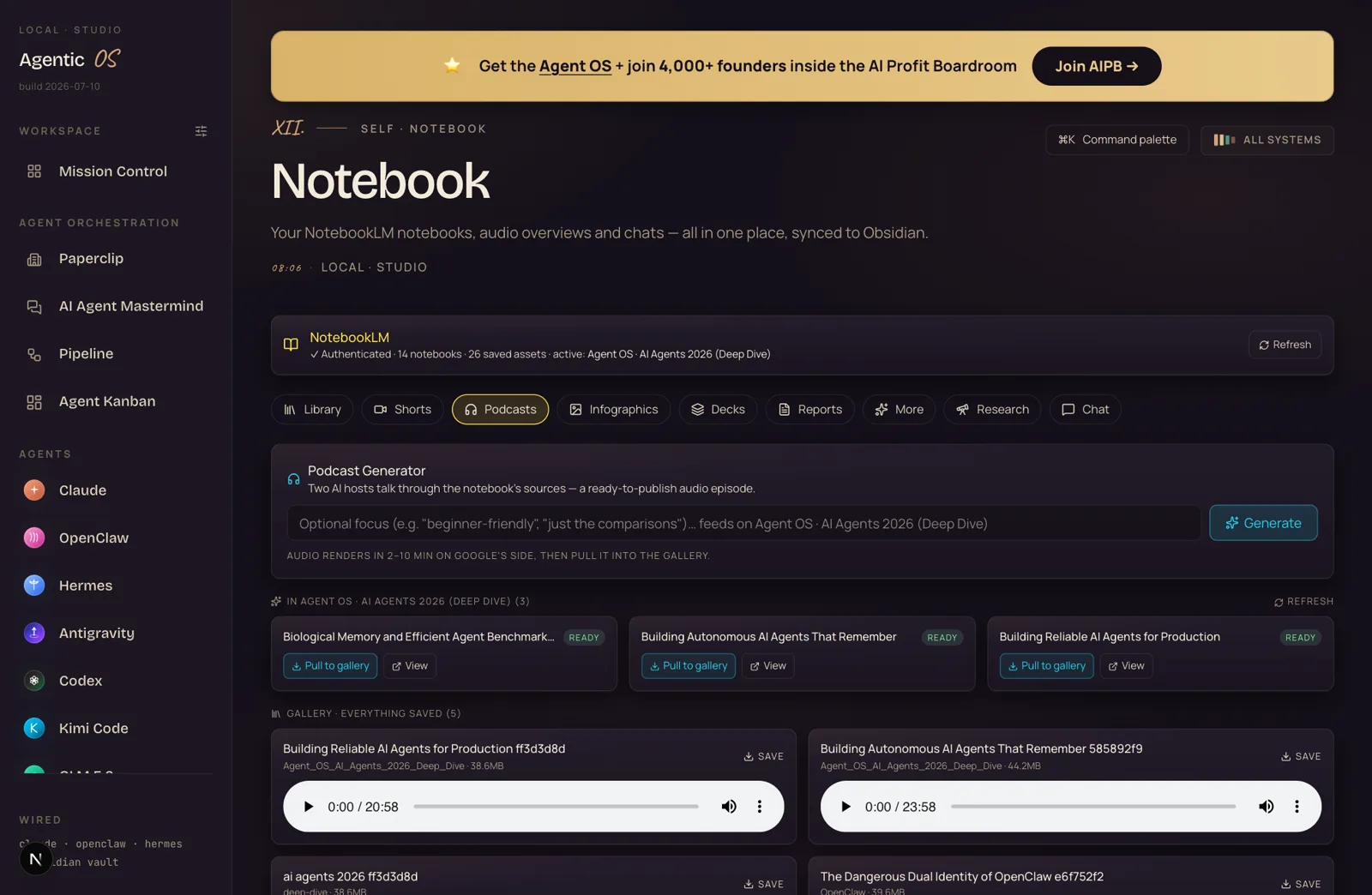
🎙 Podcasts — two AI hosts, ready-to-publish episodes
Three READY episodes up top — the gallery below has playable 20–24 minute episodes, stored on my disk.
This is NotebookLM's most famous trick and it fits the machine perfectly: two hosts discuss your exact sources for twenty minutes. The middle one — "Biological Memory and Efficient Agent Benchmarks" — I generated while writing this guide with a one-line focus prompt. Every episode is playable right in the gallery.
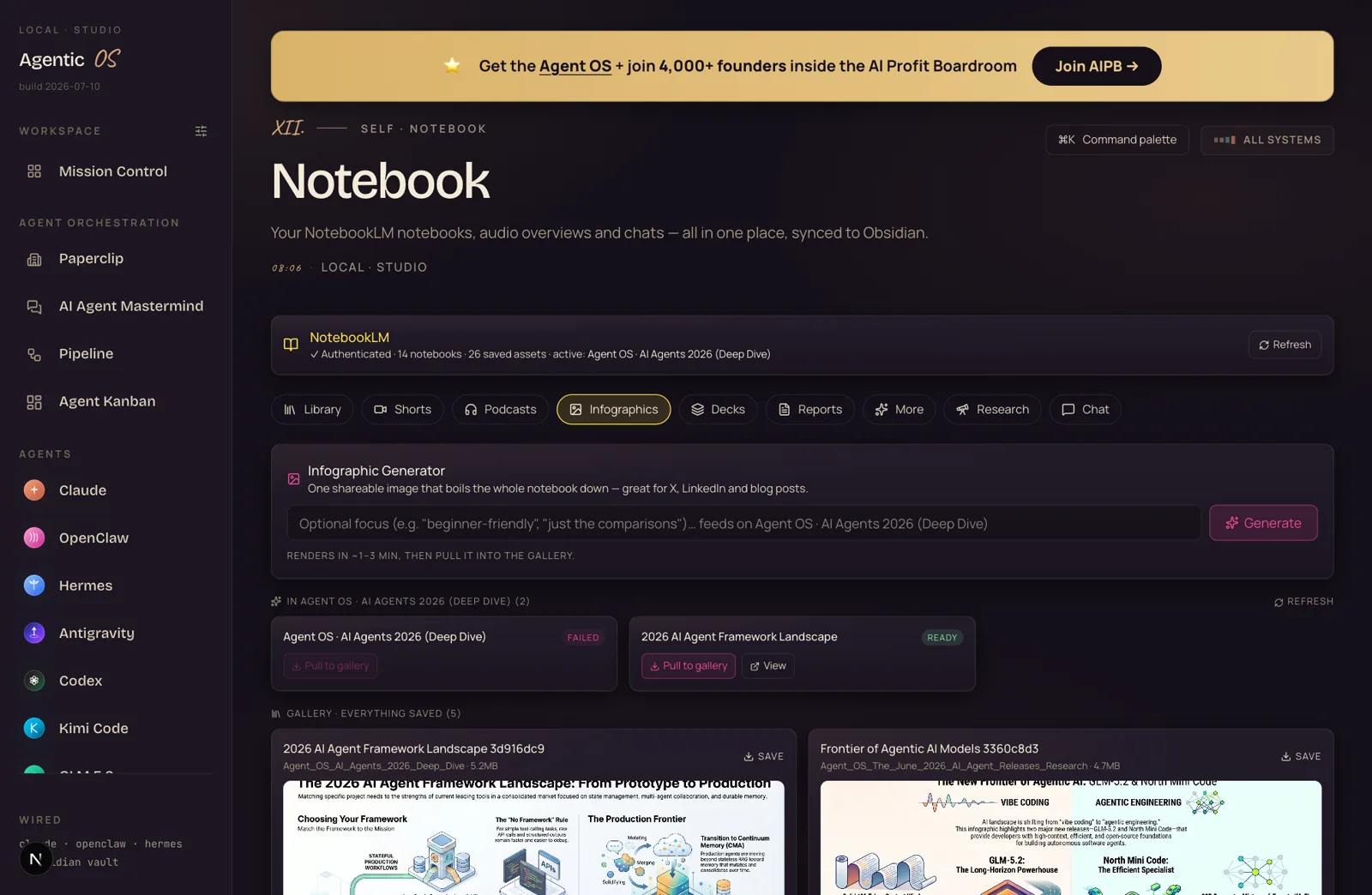
🖼 Infographics — one shareable image per idea
The gallery holds five full infographics across my notebooks — and yes, that FAILED badge is real; Google-side renders occasionally flop and you just re-run them.
One image that compresses the whole notebook — "The 2026 AI Agent Framework Landscape" came out clean enough to post straight to X. Notice the honest FAILED badge on one attempt: the machine shows you everything, and a retry is one click.
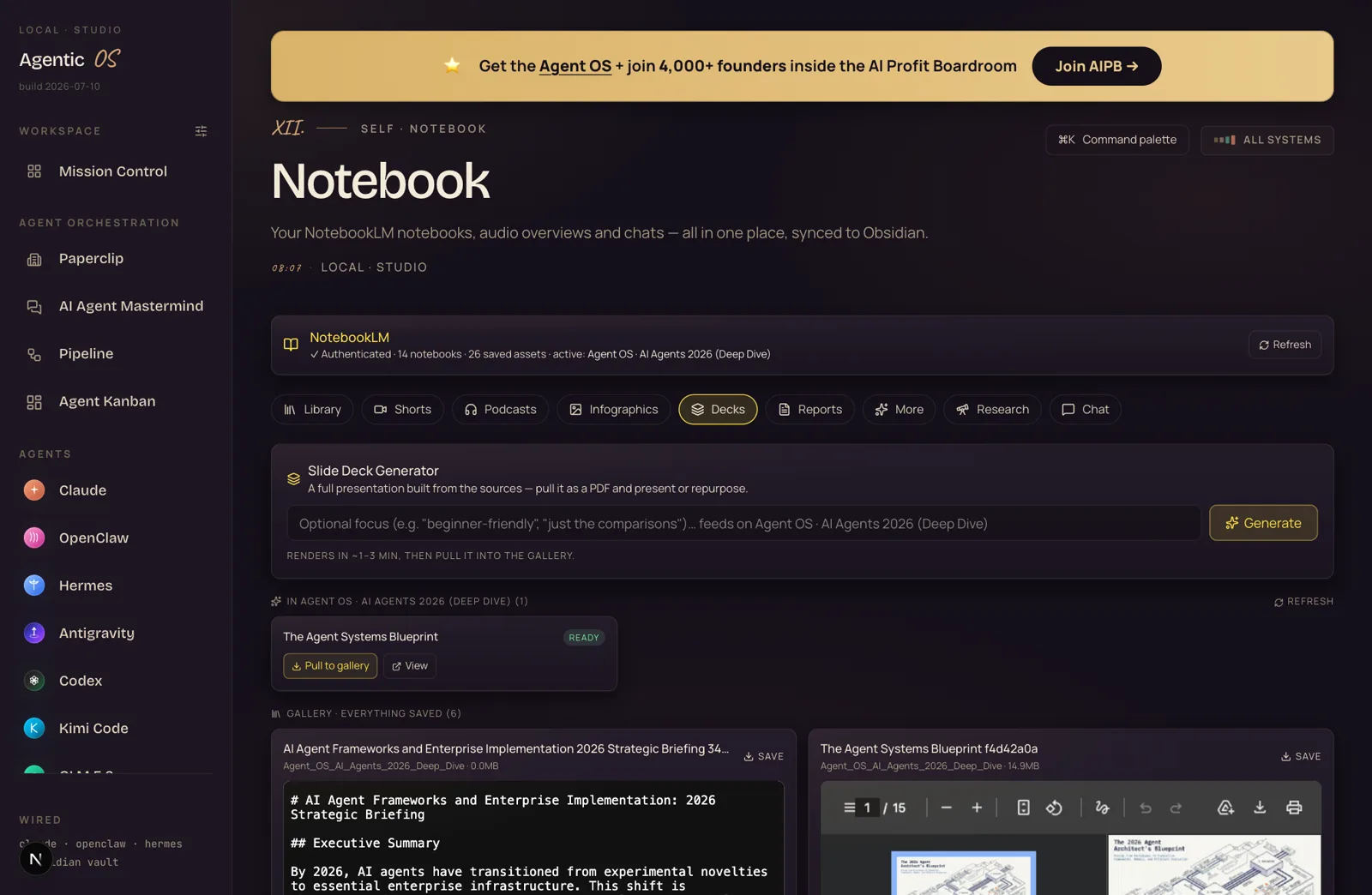
📊 Decks — full presentations, pulled as PDFs
"The Agent Systems Blueprint" — a 15-page deck NotebookLM built from the notebook, viewable page by page right in the gallery.
The deck generator produces a real presentation — title slides, diagrams, structured sections. The gallery embeds a PDF viewer, so you flip through the pages without leaving the dashboard. Pull the file and it's ready for clients, webinars or repurposing into carousel posts.
📄 Reports — written strategic briefs
A written brief with an executive summary — renders in under a minute, lands as markdown you can publish or feed to other agents.
The fastest format: a structured document with an executive summary, built from the same sources. These are gold as blog-post drafts, client briefings — or as input for the next agent in a pipeline.
And because everything pulls to disk, the galleries double as an archive: the header on my install reads 26 saved assets across 14 notebooks — every one of them is a piece of content that took minutes, not days.
THINKING IT? "Where do the files actually live?"
On your machine — every Pull saves into your vault (Agentic OS/Notebooks/_assets/ in my Obsidian).
The galleries read from disk, so they survive NotebookLM sessions, work offline, and the files are right there to upload wherever you publish.