You sit there waiting for the usage reset like a video-game cooldown.
So you do what everyone does: shorter prompts, fewer questions.
You start rationing tokens like desert water.
Wrong fix — the tokens you type are a tiny slice of the problem.
The real spend is pouring out of four invisible leaks.
The Leak-Proof Engine plugs all four for good.
THINKING IT?"But I already keep my prompts short."
The words you type are a tiny slice of the spend — the flood is everything Claude reads back: command output, its own long replies, the extra code it builds.
That's why plugging leaks beats typing less.
02 · the framework
Your setup has four leaks. This engine plugs all four.
Plug them once and the same subscription goes roughly five times further — same quality, way more done.
i.The Filter — RTK. Strips the noise out of every command result before Claude reads it.
ii.The Short Answer — Caveman. Claude says the same thing in a fifth of the words.
iii.The Lazy Senior — Ponytail. Builds exactly what you asked for and nothing extra.
iv.The Free Router — OmniRoute. Ships the boring work to free AI models so Claude never sees it.
03 · the four leaks
Where your tokens are actually going.
Four leaks, four free repos, one per leak — and the fourth is the most powerful, because it hands the boring work to a second free AI.
04 · plug 1 — RTK
RTK: a filter on the tap.
RTK sits between Claude and your commands — it rewrites them compact, filters the output, and hands Claude only the signal.
What you're watching: a real RTK session recorded on this machine — same repo, same minute, byte counts verbatim. git status went 447 → 86 characters (−80.8%), git log −76.2%, ls −80.2%, with about 19ms of overhead. The 82.9% average and the 92% git diff cut are from my full RTK benchmark on a bigger repo.
brew install rtk
One gotcha from my testing: RTK's grep needs the -r flag to search folders — plain rtk grep comes back empty.
THINKING IT?"Won't filtering the output break my agent?"
No — RTK only filters mechanical noise: duplicate lines, boilerplate, decoration. The signal stays untouched.
In my testing the work quality stayed exactly the same — Claude just read a shorter page.
05 · plug 2 — Caveman
Caveman: same brain, smaller mouth.
Claude's normal reply opens with "Great question! I'd be happy to help…" — Caveman makes it talk short and direct, and every answer stays correct.
What you're watching: an animated recreation using my real measured numbers — the 69-token reply shrinking to 19 with the same facts, then Ponytail (next plug) turning a five-file overbuild into one 12-line edit. Driving Claude Code live on camera isn't reliable to record, so the terminal is recreated — the numbers aren't.
THINKING IT?"But I like Claude being friendly."
Keep it friendly in chat — that's fine.
Across fifty coding tasks a day you need the work, not fifty rounds of pleasantries you pay for by the word.
06 · plug 3 — Ponytail
Ponytail: the lazy senior expert.
Claude loves building extras "just in case" — Ponytail takes the shortest safe path, builds what you asked, and touches nothing else.
THINKING IT?"Won't a 'lazy' AI cut corners on safety?"
Ponytail doesn't touch error handling or safety — it only skips the speculative extras built for a future that never comes.
And it compounds: every file it doesn't create is a file Claude never has to read back later.
07 · plug 4 — OmniRoute · the biggest one
OmniRoute: stop sending your best person to sort the mail.
OmniRoute is a free gateway on your own machine that routes the grunt work to free AI models — my gateway shows 593 models behind one local door, and this exact setup runs the free coding engine inside our Agent OS.
What you're watching: a real session against my live gateway on localhost:20128 — the model count, the free-model reply "fix(readme): correct typo in install", the token usage, and the price are all verbatim from the actual requests.
THINKING IT?"Free models rate-limit me all the time."
They do — which is exactly why OmniRoute has RTK and Caveman compression built into the gateway itself.
Every free-model request gets squeezed another 15–95%, so you fit far more work inside the free limits.
08 · the shortcut
THINKING IT?"This sounds technical. I'm not a coder."
Each repo installs with roughly one pasted command — the whole stack takes about 15 minutes, then it's automatic forever.
And doesn't the Agent OS itself burn a fortune in tokens? No — that's the myth this whole page kills. It runs the everyday 90% on free local models and free APIs, and for the frontier work it drives the CLIs you already pay for — your Claude subscription already includes the Claude Code CLI, so you're not paying twice. Plus the Boardroom has a full token-minimization classroom, so usage keeps dropping after day one.
RTK filters what Claude reads, Caveman shrinks what it says, Ponytail thins what it builds, and OmniRoute takes whole tasks off the bill — each cut applies to what's left after the previous one.
"Stop rationing. Fix the plumbing."
10 · eight extra tricks
Eight free habits that each take seconds.
These stack on top of the four plugs — every one is free and most take one keystroke.
11 · old way vs new way
Rationing vs fixing the plumbing.
Old way — tokens as a scarce resourceanxiety, every single task
Shorter prompts, fewer questions, on purpose
A little anxiety spike every time you ask for something big
Ration through the morning, hit the limit anyway
Wait for the reset like a video-game cooldown
Use AI less — the tool you pay for, used on purpose less
Run more agents at once — the anxiety is just gone
12 · the honest bit
What this won't do.
Read this before you install
Routing helps less if every task truly needs a frontier model. Be honest — most don't. And RTK, Caveman and Ponytail still cut the tasks that stay on Claude.
80% is not guaranteed on every task. Tool-heavy sessions save the most; across a real working day the total is massive.
My numbers are measurements, not projections. 82.9% on tool output, 69% on replies, roughly half the output volume — all from my own tests, and your repo will differ.
Wrong: "I'm not technical enough for this."
Right: Each plug is roughly one pasted command — about 15 minutes total, then it's automatic forever. Members who'd never opened Terminal run this stack.
Wrong: "I'll just pay for a bigger plan."
Right: Then you're paying full price to pad logs, fluff replies, and send simple tasks to an expensive model. You still hit limits — just later, and more expensively. Fix the leaks first.
Wrong: "Hitting limits is just how Claude works."
Right: The limit was never the problem — the leaks were. Plug them and the same plan runs roughly five times the work.
Don't take my word for it
158 pages of members who already broke through these exact beliefs — real businesses, real wins, in their own words.
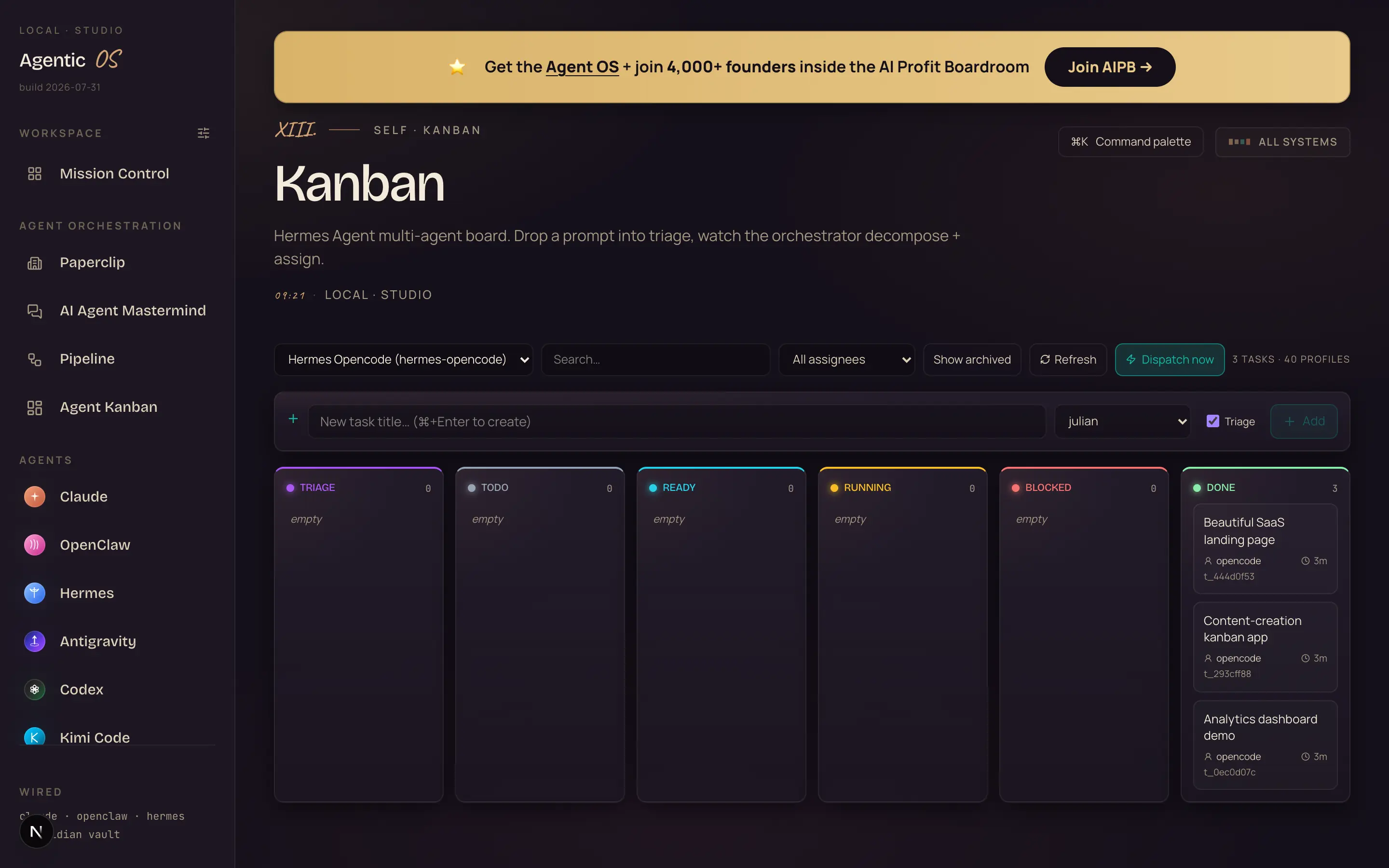
The AI Profit Boardroom is where the actual Agent OS lives — the templates, the prompts, the daily rooms, the weekly walkthroughs. Same builds you read about here, taught hands-on inside.