Claude Code idles at ~387MB of RAM and takes 3.4 seconds to boot. jcode does the same job in ~28MB and 14 milliseconds — with a semantic memory that recalls past sessions on its own, and a swarm mode where agents coordinate in the same repo. I wired it into the Agent OS on the Claude login I already pay for, then made it build the three showpieces below. Full tour.

Before.
Every coding agent on my machine was a heavyweight.
One Claude Code session: ~387MB. Ten sessions: 2.3GB — my fans knew before Activity Monitor did.
Boot times measured in seconds. Multiply that across the fleet of agents the Agent OS runs, and RAM was the real limit on how much I could parallelise.
And every harness forgot everything between sessions unless I wired the memory myself.
Then a Rust harness with 15,000 GitHub stars showed up claiming 28MB.
After.
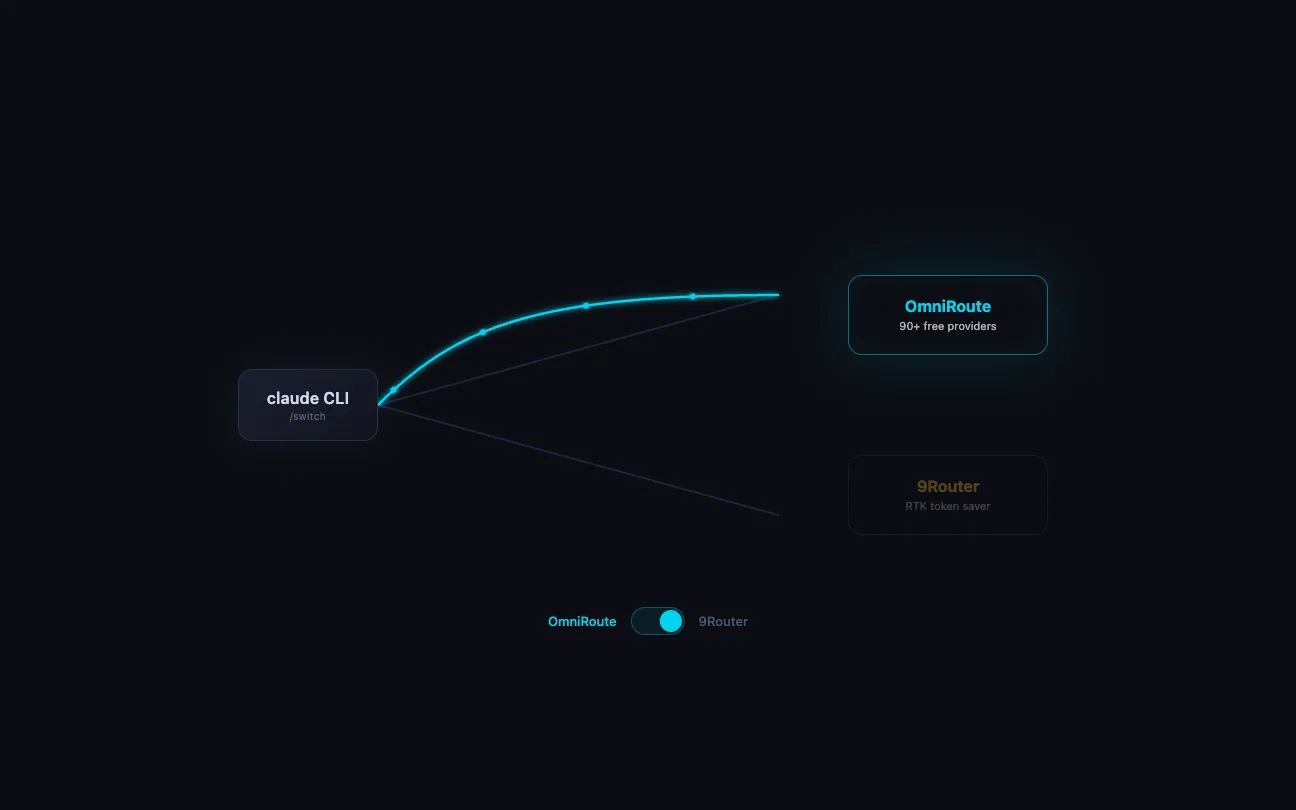
jcode is now a tab in my Agent OS, running claude-opus-5 on the subscription I already pay for.
It boots faster than my monitor refreshes. Ten sessions cost less RAM than one Claude Code.
Its memory graph recalls past work on its own — and every conversation lands in a History tab, named like fox, rhino, octopus, readable forever.
First day in, it shipped a luxury landing page, an award-style studio site, and a playable 3D racing game. Receipts below.
Here's the ceiling nobody talks about.
AI coding agents are brilliant — and obese. Hundreds of megabytes each, seconds to boot, an Electron-sized footprint for what is, underneath, a loop that calls a model and edits files.
Run one, fine. But the whole point of an Agent OS is running many — a researcher here, a builder there, three more in the background.
At ~200-400MB a session, your RAM budget runs out long before your ambition does. Ten Claude Code sessions is 2.3GB. Ten OpenCode sessions is 3.2GB.
So you ration your agents the way you once rationed browser tabs.
jcode deletes that ceiling: ten sessions in 117MB — less than half of ONE Claude Code.
One agent? Nobody. A fleet? Everything. Multi-session workflows scale by the marginal cost of the next agent — jcode's is ~9.9MB; Claude Code's is ~213MB. That's the difference between running three agents and running thirty on the same Mac.
And the same engineering shows up where you feel it every time: 14ms to a usable screen instead of 3.4 seconds.
jcode is an open-source (MIT) coding agent written in Rust by one obsessive builder — 15,000 GitHub stars and counting.
Same shape as Claude Code: a terminal agent that reads your repo, writes files, runs commands, loops until done.
Completely different construction. No Electron, no Node runtime, no browser dependency — down to writing its own mermaid diagram renderer (1800x faster than the standard one) and its own terminal.
The result is a spec sheet that reads like a typo:
And because every session costs ~10MB more, not ~213MB more, the multi-agent workflows the Agent OS is built around stop being a RAM negotiation.
Light weight gets you in the door. Two features make jcode genuinely different.
/resume it from jcode and keep going.Nothing. jcode is MIT-licensed open source, and it logs in with the accounts you already have — Claude, ChatGPT/Codex, Gemini, Copilot and more, OAuth included. Mine found my existing Claude Code login on disk and asked one consent question.
It's the same Opus-5-class brain you already pay for, in a body that weighs 14x less.
# macOS & Linux — one line
curl -fsSL https://jcode.sh/install | bash
Reading about a harness is not running one. jcode is now a first-class surface in my Agent OS, next to Claude, Codex and the rest of the fleet.

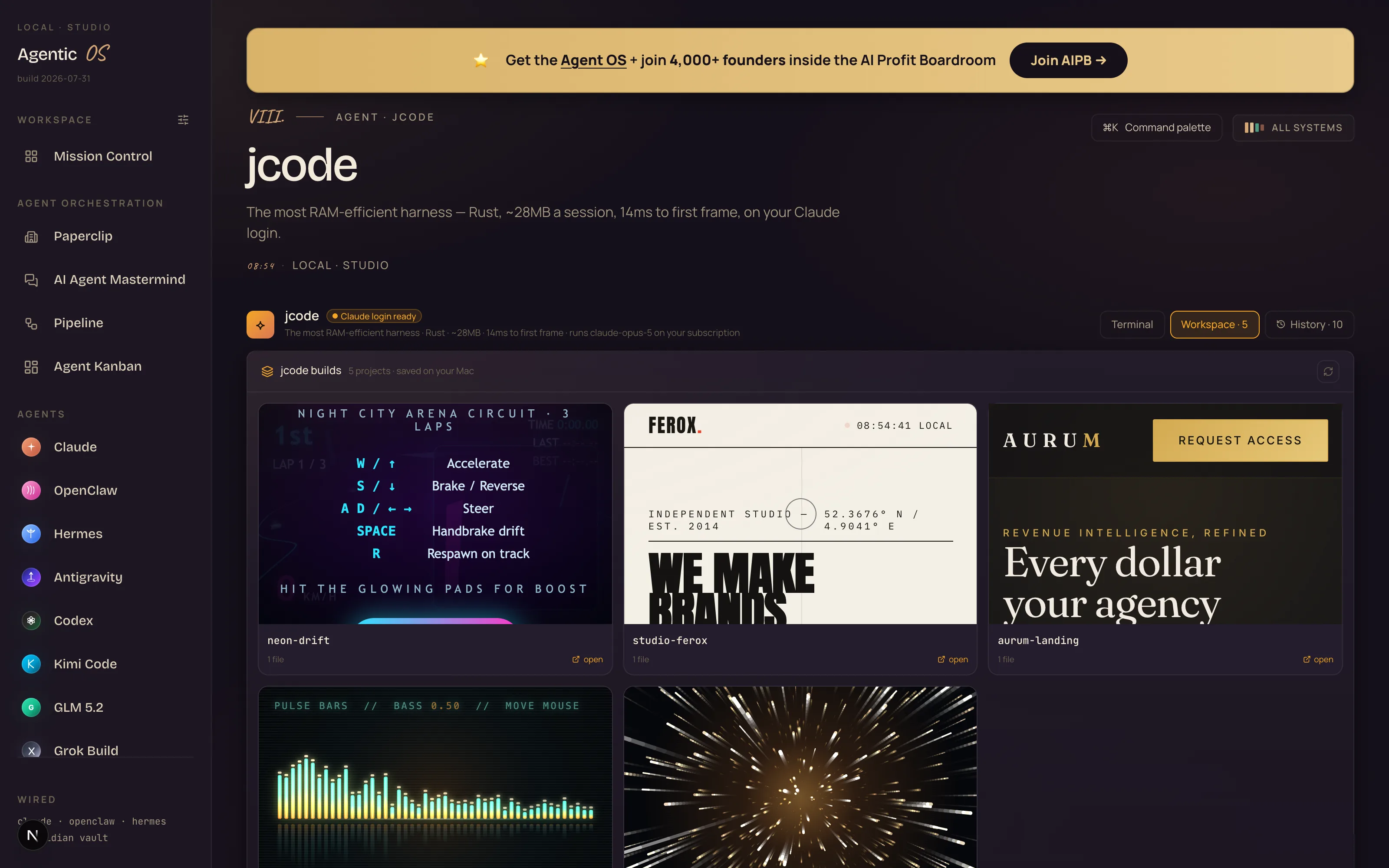
What you're looking at: the jcode tab's Workspace — every build as a live, running preview. Left to right: the NEON DRIFT racing game's controls screen, STUDIO FEROX's editorial hero, AURUM's gold landing page. All built by jcode, all playable in place.
Three views:
jcode run on the Claude provider and streams every event live — the model, the session name, the answer, the token counts. Same line-protocol terminal as the other Code tabs.
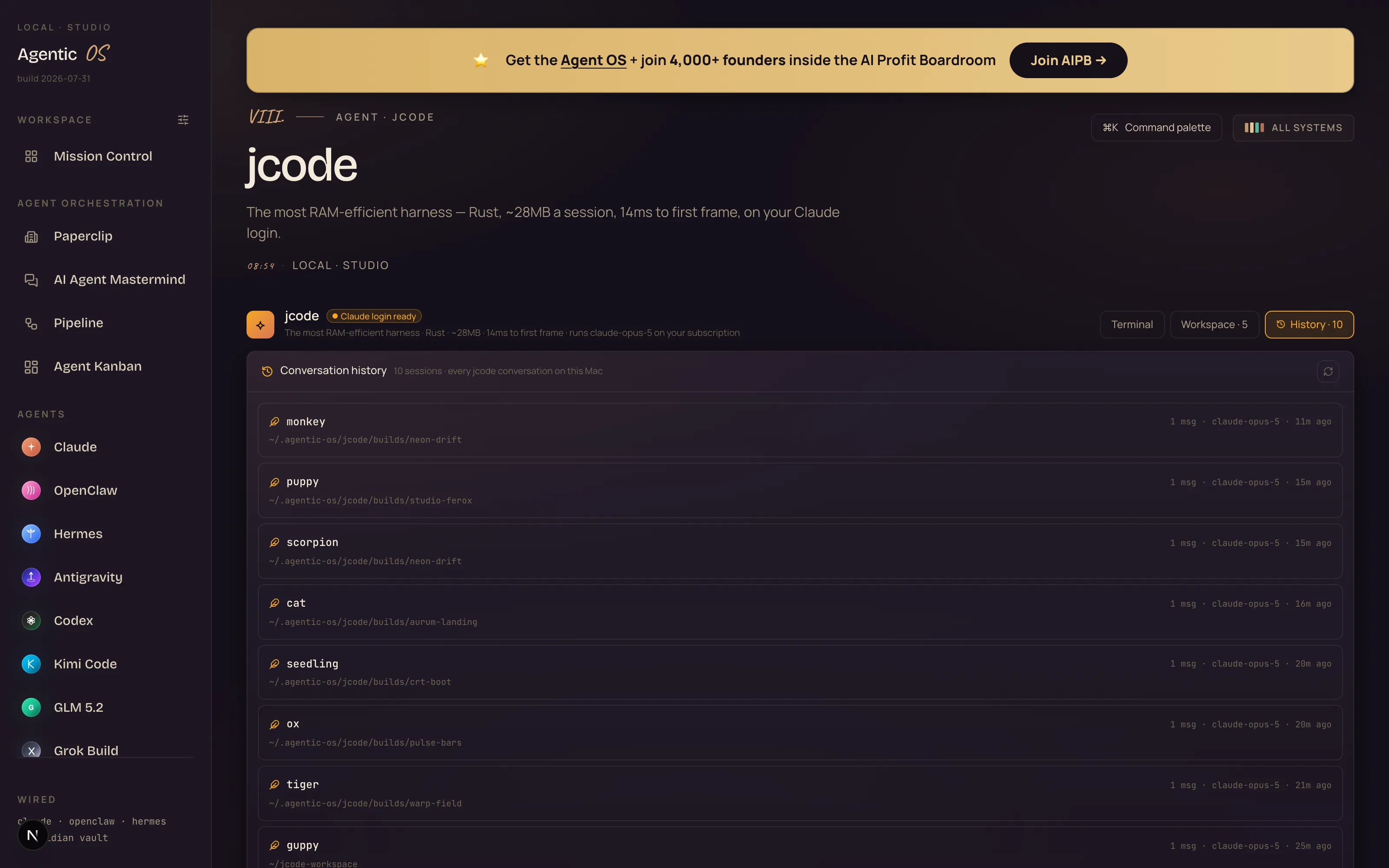
The History tab — the conversation-history workspace. Ten sessions from today alone: monkey built the racer, puppy built Ferox, cat built Aurum. Every row is a full, readable transcript on claude-opus-5.
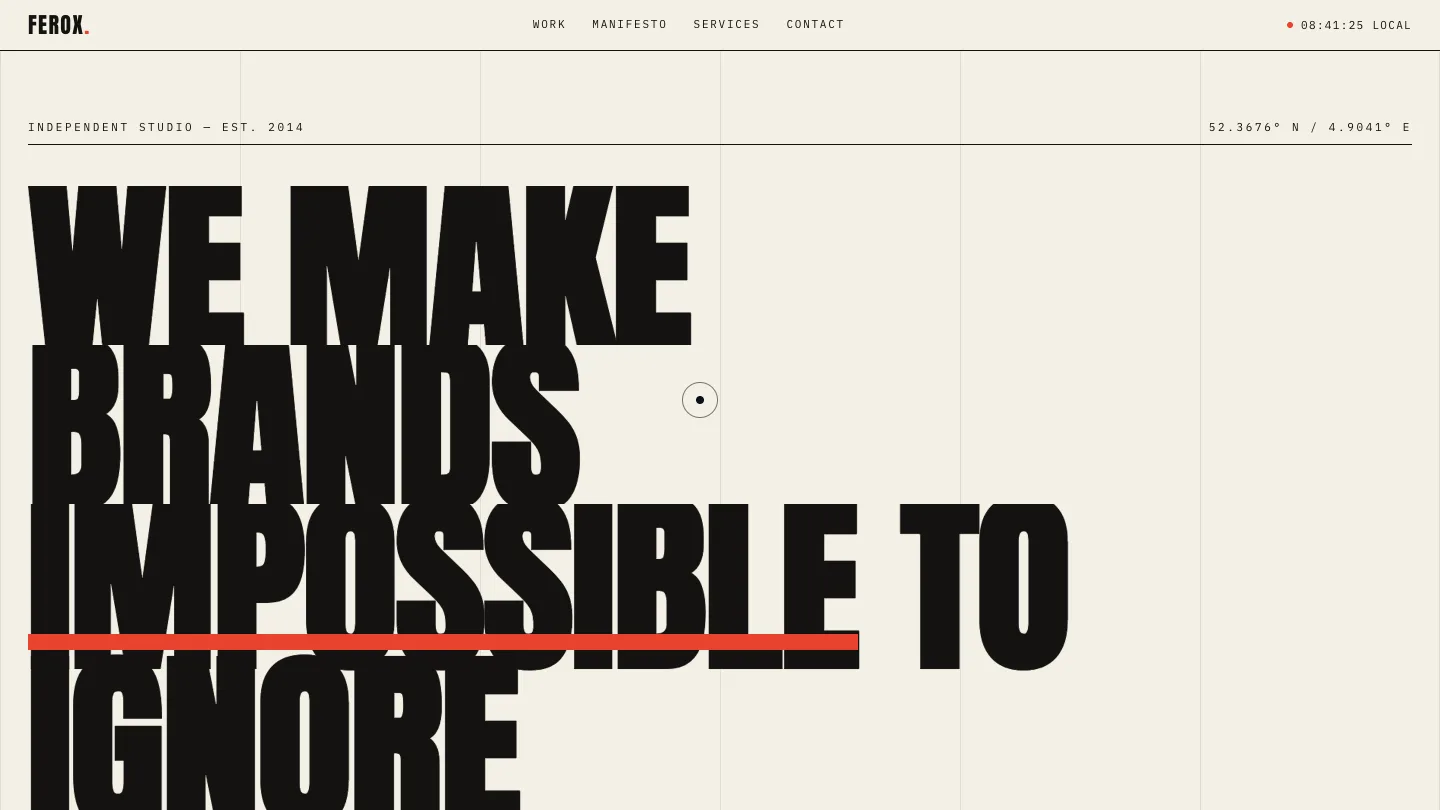
Spec sheets are marketing. Builds are receipts. Three one-prompt builds from the tab, all on claude-opus-5 through jcode:


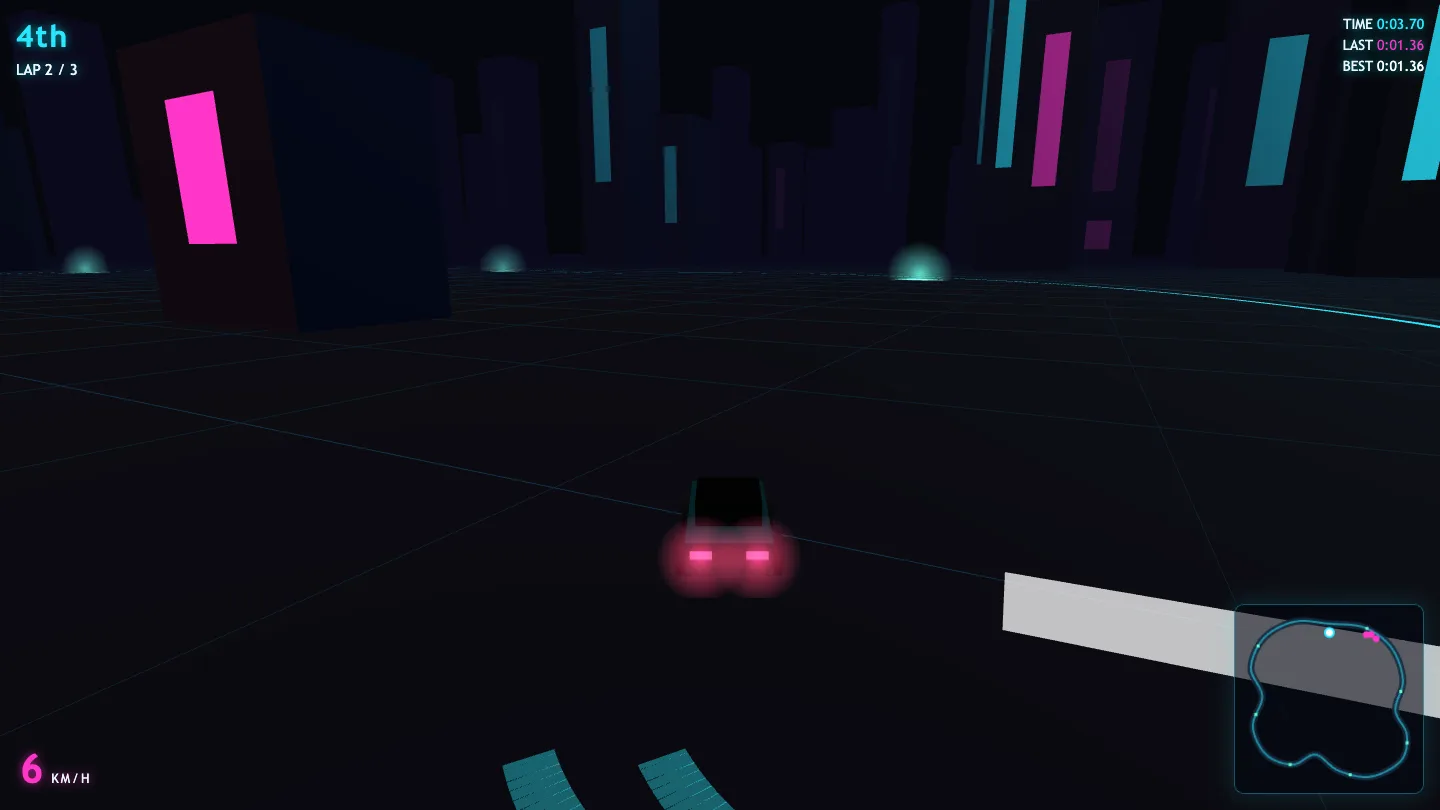
The racer has the best story. Its first version crashed the moment you pressed START — a classic undefined error every frame.
So I did what the Agent OS does on GoldieBench: fed the console error back to jcode in the same project. It read its own file, diagnosed the root cause (an uninitialised speed turning a waypoint index into NaN), made nine surgical edits, and explained the fix.
Second playtest: START works, the car drives, drift trails burn into the tarmac, the HUD says 4th · LAP 2/3. The harness debugged its own game.
Correct — the brain is claude-opus-5. That's the point: jcode is the harness, and the harness is what you feel. It booted instantly, streamed the whole build at ~28MB, saved every session transcript automatically, and fixed its own build when handed an error.
Same brain you already pay for. Dramatically better body — and one that lets you run ten of them at once.
Members post their wins every day — agency owners, ecom founders, course creators, solo operators across 38 countries. Real businesses, real numbers, in their own words.
Read the 158-page wins doc →curl -fsSL https://jcode.sh/install | bash — one line, macOS or Linux (Windows has a PowerShell one-liner). You even get a global hotkey: Cmd+; launches jcode from anywhere.jcode login --provider claude. If you use Claude Code, jcode finds those credentials and asks one consent question — approve it and you're running claude-opus-5 on your existing subscription. ChatGPT/Codex, Gemini and Copilot logins work the same way.jcode opens the TUI; jcode run "say hello" is the one-shot mode. Boot is instant — that's not your machine being fast, that's the harness being 28MB.jcode --resume fox picks one back up — and it can resume sessions from Claude Code, Codex, OpenCode and pi too. A crashed harness no longer costs you the conversation.It's an explicit, one-time consent — jcode found the credential file and refused to touch it until approved. The code is MIT-licensed and public; you can read exactly what it does with the token. It refreshes and validates the login with a smoke test before ever running a task.
That's more transparency than most closed tools give you about your own account.
jcode doesn't replace your brain. It replaces the 387MB wrapper around it.
Same models, same logins, same repos — in a body that boots in 14ms, remembers what you did last week, and scales to a ten-agent swarm on a laptop.
The heavyweight era of coding agents is going to look very silly in about a year. This is what the lightweight one looks like.
~28MB a session vs ~387MB — ten sessions for half of one.
14ms to first frame. 245x faster than the heavyweight.
A semantic graph that recalls past sessions without being asked.
Agents that notify, DM and coordinate in the same repo.
Claude, Codex, Gemini, Copilot — OAuth you already have. $0 extra.
Every conversation named and kept — the History tab in the Agent OS.
Members post their wins every day — agency owners, ecom founders, course creators, solo operators across 38 countries. Real businesses, real numbers, in their own words.
Read the 158-page wins doc →