JoinThe Hermes update · parallel tool calls just got faster
The Hermes Swarm System™.
Hermes just changed how your agent runs tool calls. Before, they only went in parallel if every one was safe. Now every safe call fires at the same instant — only the one that must wait, waits.
✦ The swarm · one ask · many calls · fired at once● live in Hermes
"Prior to today, tool calls would work in parallel only if all were safe to parallelize. Now you gain big speedups for parallel tool calls so long as any subset are parallelizable."
— Teknium (@Teknium), Nous Research · Jul 14, 2026
The update · in his words
The old rule was all-or-nothing
Here's the whole change in one line. Before today, Hermes would only run your tool calls at the same time if every one of them was safe to run together. One risky call in the batch, and it dropped back to doing them one at a time.
Now it runs every safe call together and only holds the one that can't. That's where the "big speedups" come from.
✦
I · the problem
The One-at-a-Time Problem.
Picture asking your agent to do five things.
Check the calendar. Read three files. Pull the latest prices.
None of them depend on each other.
They could all happen at once.
But your agent does them one at a time.
The first finishes. Then the second starts. Then the third.
You sit and wait while it plods down the list.
Five quick jobs take five times as long as one.
The Hermes Swarm System fixes that for good.
Thinking it? "Running things at once sounds risky — won't it break stuff?"
No. Hermes only swarms the calls that are safe to run side by side.
The one call that could clash still waits its turn. You get the speed without the mess.
II · how it works, in simple words
Every safe call fires at the same time.
Think of your agent as a worker with a to-do list.
The old way was a queue. Do one task. Finish it. Start the next. Finish that. Down the line.
The new way is a swarm. Every task that doesn't step on another one's toes goes out at the same second.
Reading a file doesn't hurt reading another file. So both go at once.
The only thing that has to wait is a task that changes something the others are counting on. That one holds back — everything else already went.
Same list. Same correct result. A fraction of the wait.
Same five jobs. A queue vs a swarm. (Illustrative: 5 safe calls, ~2s each — parallel finishes in the time of one.)
✦
III · exactly how it works, step by step
What Hermes does the moment you ask.
No mystery. Here's the literal path a batch of tool calls takes now.
1
You ask Hermes to do several things — read some files, run a search, fetch a price, check a calendar.
2
Hermes looks at each call and asks one question: is it safe to run alongside the others? A read is safe. A write that the next step depends on is not.
3
Every call that's safe fires in the same instant — a swarm, not a queue. This is the new part: it no longer needs the whole batch to be safe.
4
The one call that must wait — the risky one — holds until the coast is clear. Nothing races, nothing clobbers anything.
5
All the results land and get stitched back together in the right order.
6
You get the same correct answer you'd have got before — just in a fraction of the time.
So what is the update, in one sentence? Hermes stopped waiting for permission to go fast. It now runs everything that can run at once, and only holds the one thing that can't.
You ask → Hermes sorts → the safe calls swarm while the risky one holds → results merge into one answer.
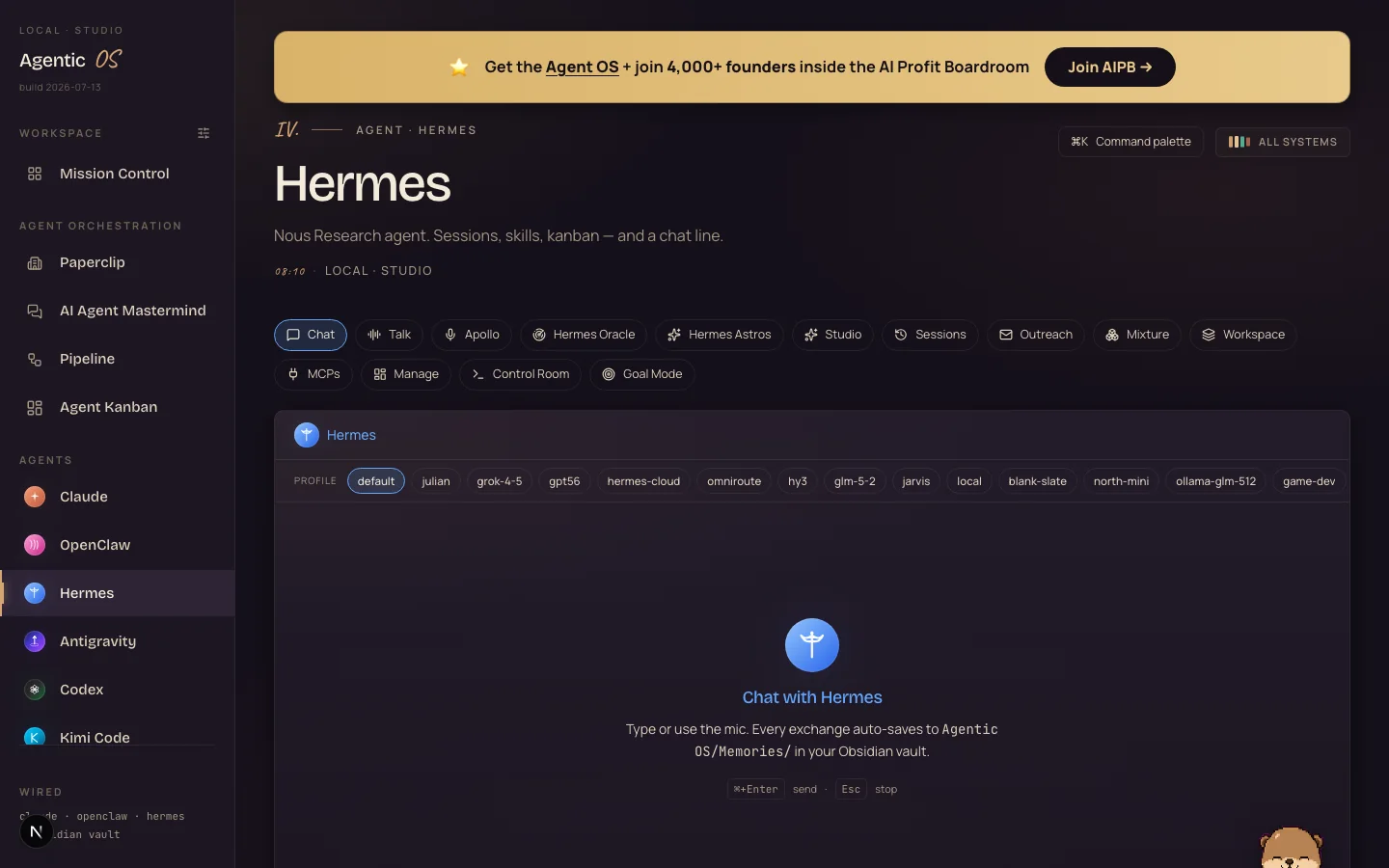
What you're looking at: this is Hermes running inside the Agent OS on my machine. Every one of those tabs — Chat, Sessions, Kanban, Workspace — fires tool calls under the hood. The Swarm update speeds up all of it, no setting to flip.
✦
IV · old way vs new way
What this gives you back.
The old rule · all-or-nothing
~10s
One risky call forced the whole batch to run one-by-one
Read 5 files? It waited for each before starting the next
Every safe call stuck behind the slowest unsafe one
Multi-step tasks felt sluggish and draggy
Total time = every call added up, back to back
The Hermes Swarm System
~2s
Every safe call fires at the same instant
Read 5 files? All 5 come back together
Only the one call that must wait, waits
Multi-step tasks feel close to instant
Total time = the slowest single call, not the sum
Thinking it? "This is a tiny dev tweak — it won't change my day."
Multi-step jobs are most of what an agent does. Research, file edits, lookups, reports.
Cut the wait on every one of them and the whole feel of working with agents changes — faster answers, more shipped.
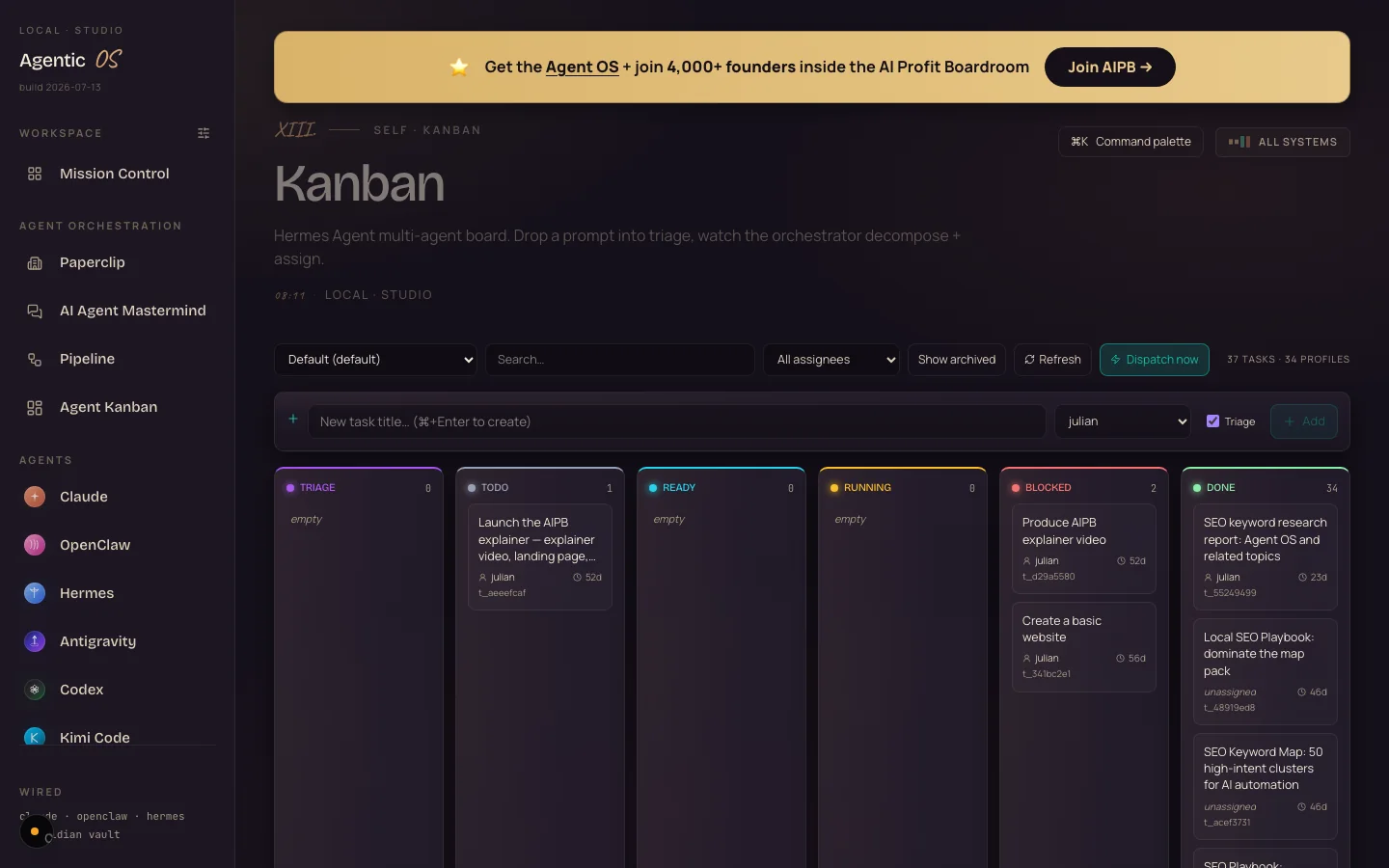
What you're looking at: the Hermes multi-agent board — 37 real tasks moving through Triage → Running → Done. When an agent works a task and hits a batch of safe tool calls, they now all fire together instead of queuing. More boards like this finish while you're still reading the first result.
Your agent stopped standing in its own queue. Now it swarms.
V · the framework
The Hermes Swarm System™ — four moves.
This is the whole method in four steps. It's what Hermes now does for you automatically on every batch of tool calls.
i.
Sort
Hermes reads every call in the batch and splits them: the ones safe to run together, and the one that can't. You do nothing — it decides in a blink.
ii.
Swarm
Every safe call fires at the same instant, side by side. This is the new power: it no longer needs the whole batch to be safe — any safe subset goes now.
iii.
Hold
The one call that could clash waits its turn. Nothing races, nothing overwrites anything. You keep every bit of the old safety.
iv.
Merge
All the results land and get stitched back in the right order. Same correct answer as before — delivered in a fraction of the time.
Sort → Swarm → Hold → Merge. Four moves, run for you on every batch of tool calls.
✦
Skip the setup
Get the Hermes Swarm System built for you.
You can install Hermes yourself and get this speedup free. Or get the whole thing done, inside the Agent Operating System — Hermes wired into one dashboard with Claude, OpenClaw, Codex and every CLI, all sharing one memory.
The full Agent OS zip — Hermes + the Swarm speedup already wired
The Hermes setup walkthrough, step by step on video
Coaching calls where I wire Hermes into your workflow with you
A room of 3,900+ operators running this exact stack
Free local models + the CLIs you already pay for — no token worry
Get the Agent OS →Inside the AI Profit Boardroom · aiprofitboardroom.com
Thinking it? "Doesn't running the Agent OS burn a fortune in tokens?"
No — that's the biggest myth about it. The everyday 90% runs on a free local model on your own machine, nothing leaving it. Free APIs slot in for more. And for the heavy work it drives the CLIs you already pay for — your Claude subscription already includes the Claude CLI, so you're not paying twice.
Inside the Boardroom there are full token-efficiency tutorials too, so you cut usage to the bone and stop thinking about it.
✦
VI · why listen to me
I run my whole business on these agents.
This isn't theory. Hermes is one of the agents I run every day inside my Agent OS — the same dashboard in the screenshots above. When Nous ships a speedup like this, my whole stack gets faster the same day.
0K YouTube subscribers
0+ members in AIPB
0countries · live members
0K followers on X
Members post their own wins — real businesses, real results — in a 158-page doc. Read them in their own words.
Wrong: "Running tool calls at once will make my agent unreliable — race conditions, clashes, mess."
Right: Hermes only swarms the calls that are safe to run together. Anything that could clash still waits its turn. You get the speed AND the correctness — nothing about safety changed.
Wrong: "It's a tiny under-the-hood tweak — not worth my attention."
Right: Multi-step tasks are most of what an agent does all day. Shave the wait off every single one and the whole experience feels different — faster feedback, more finished.
Wrong: "I'll wait until these tools settle down before I learn them."
Right: The people running agents in production now compound every update like this one. Wait, and you're reading patch notes at midnight while the gap in front of you widens.
Don't take my word for it
158 pages of members — real businesses, real wins — already running their day on agents like these.
This one's easy. There's no new setting, no config, no risk. You update Hermes and every batch of tool calls just gets faster.
Run hermes update and you're on it.
Here's the thing about updates like this. The people who figure out AI agents now, while the tools are moving fast, are going to be way ahead when everything settles. Every speedup you pick up. Every workflow you build on it. It all compounds.
Today · Update
Get the speedup
Run hermes update. Give it one multi-step task you do often and watch it come back faster.
This week · Notice
Batch your asks
Stop asking for one thing at a time. Ask for the whole batch in one go — Hermes now swarms the safe parts for you.
This month · Build
Bigger workflows
Wire longer, multi-tool workflows knowing the safe steps run in parallel. What used to feel too slow is now fine.
Ongoing · Compound
Every update
Ride every Hermes release the day it ships. Each one makes the stack you already run a little more powerful.
Stop waiting on one call at a time. Let the safe ones swarm.
Your move
Put Hermes to work on one dashboard.
Grab the Agent Operating System inside the AI Profit Boardroom. Hermes, the Swarm speedup, and every other agent I run — Claude, OpenClaw, Codex, GLM — all on one screen, all sharing one memory. You point it at your work and go.
The full zip. Hermes + the Swarm speedup + every agent, pre-wired
Coaching calls where we set it up together, step by step
3,900+ members · daily tutorials · a member map for your city
The AI Profit Boardroom is where the actual Agent OS lives — the templates, the prompts, the daily rooms, the weekly walkthroughs. Same builds you read about here, taught hands-on inside.