How to become a Hermes Agent Operator.
You are not just an AI user anymore. You are an Operator. You command teams of agents. You set the goals. You read the verdicts. You ship the work. This guide is the role — the mindset, the daily routine, the weekly review, the moves of a Hermes Agent Operator inside the Agent Operating System. Step in.

If you want to step into this role, join the AI Profit Boardroom. You get the full Agent Operating System and the Hermes Operator playbook — updated daily. The Operator role shipped today. We've already added it — along with everything else inside.
You are not an AI user anymore. You are an Operator.
Something changed in the last few weeks. We crossed a line. AI stopped being a thing you use — like a search bar, like a notepad — and started being a team you command.
The people who win from here on out aren't the ones with the best prompts. They're the ones who step into the role of Operator. They set the goals. They read the verdicts. They ship the work. They run agents the way a captain runs a ship.
I named the role inside the Agent Operating System. I call it the Hermes Agent Operator — a person who runs swarms of Hermes-driven agents on a daily routine, with a weekly review, with a clean handoff back to the human at every check-point.
This guide is the role definition. The mindset. The daily moves. The compounding effect. Read it once and you'll feel different by the end — because you'll stop seeing yourself as someone who "uses ChatGPT" and start seeing yourself as someone who runs a team.
I was you. Then I stepped into the Operator chair.
Before
I was an AI user.
I opened a chat window. I typed a prompt. I waited. I copied the answer. I pasted it somewhere.
Then I did it again. And again. And again. Every day, the same loop. The same small wins. The same ceiling.
I'd see other people building agents and think, "that's a different sport — I just type into a box."
One person, one window, one prompt at a time. That was my whole AI life.
Then I stepped into the Operator role.
After
Now I sit at my desk in the morning and I run a team.
I set the day's goals on a board. Hermes drives the agents. The agents fan out and do the work.
I read the verdicts at the end of the day — what shipped, what got sent back, what needs my call.
I'm not in the prompt anymore. I'm above the prompt. I'm the Operator.
You can have this too. Same chair. Same role. Same path.
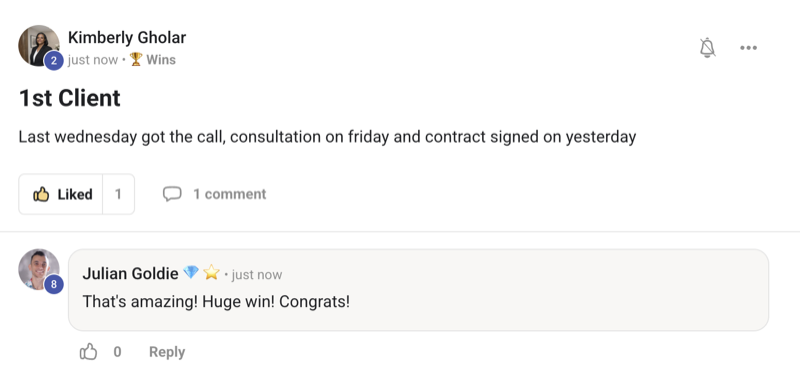
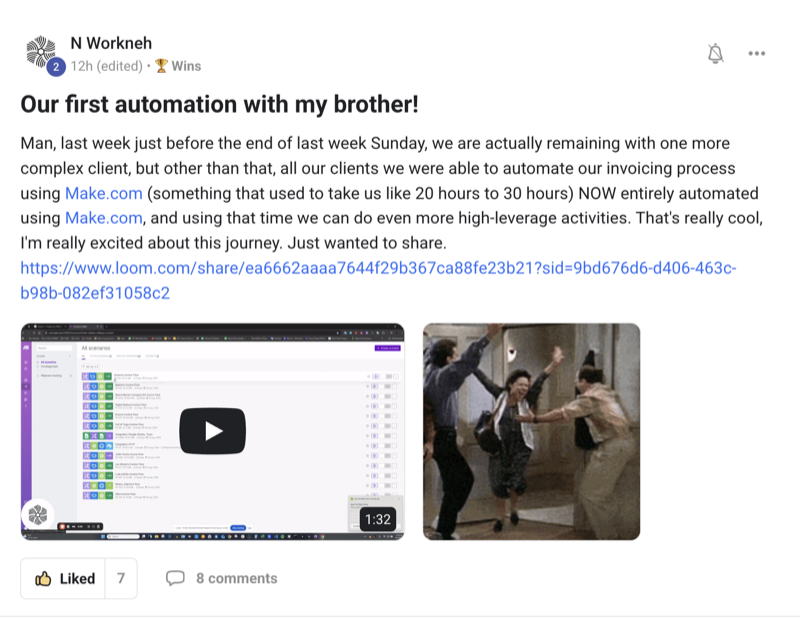
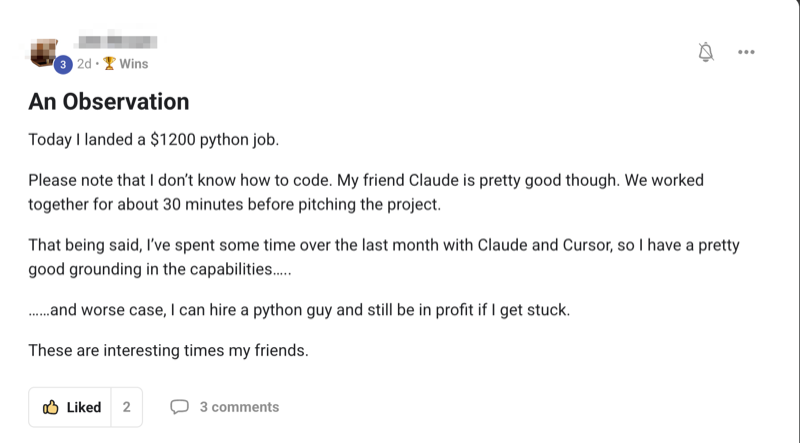
Real people. Real wins. Inside the Boardroom right now.
Here's what's already happened for members who stepped into the Operator role — agency owners, ecom founders, course creators, solo builders. Different businesses. Same shift: they stopped being a user and started being the one running the team.
Commit to transitioning today. Not tomorrow.
You just saw it. People stepping into the Operator chair and changing what their day looks like.
The next few minutes show you the mindset, the daily routine, and the weekly review of a Hermes Agent Operator.
So here's the deal.
Promise yourself one thing right now: you'll finish this guide, and before you sleep tonight you'll run your first day as an Operator. Just one day. Because the moment you step into this role, your whole workflow with AI changes. You stop being the one in the prompt. You become the one above it, setting the missions.
The people sitting still are about to get passed by the people who command teams of agents.
The people who act today are the ones who'll look back and say "that's when I became the Operator."
Be one of those people.
Commit to the transition. Commit to acting today. This changes how you work with AI — for good.
AI user vs Agent Operator
- Open a chat window, type a prompt, wait for the answer — ~2 min each, dozens a day
- Copy the answer, paste it into a doc, lose it the next session — ~30 min lost a day
- Re-explain your business every single time you open the chat — ~20% of every prompt wasted
- Do one thing at a time, one window at a time — one job at a time, all day
- No record of what got done, no verdict at the end — ~0 review
- End the day tired with a pile of half-finished outputs — ~8 hrs in, small win out
- Result: you're an AI user. The ceiling is your typing speed.
- Open the Agent Operating System, set today's missions on the board — ~5 min
- Hermes drives the agents in parallel while you go do real life — hours of work, in the background
- Every agent already knows your business from shared memory — ~0 wasted explaining
- You run a weekly review — what shipped, what needs your call — ~15 min on Friday
- Every output saved to the Workspace, every run replayable — ~0 lost work
- End the day with shipped deliverables, not a chat history — full day's output in one standup
- Result: you're an Operator. The ceiling is how clearly you set goals.
It's the opposite. The Operator role is built for the person who can't (or won't) code. You set the missions in plain words. Hermes and the agents do the technical part. You run the team — you don't write the code the team runs on.
The Hermes Operator playbook lives inside the Agent Operating System inside the AI Profit Boardroom — updated the day new tools ship. You never fall behind. You just open your dashboard and the new agents are already there.
The Goldie Operator Stack™
Stepping into the Operator role isn't a mindset trick. It's a stack. Five layers, top to bottom. Each layer gives you something you didn't have as an AI user. Together they turn you into a Hermes Agent Operator inside the Agent Operating System.

Mindset — above the prompt
You stop seeing yourself as someone who types into a chat box. You see yourself as the one above the prompt. The one who decides what the team does today. This is the first shift, and it changes every move that comes after.
Mission Board — set today's goals
Every Operator day starts on the Mission Board. You pick the 3–5 missions for the day. Each mission is a clear job a team of agents can run on its own. You stop reacting. You start directing.
Hermes Conductor — the driver
Hermes is the messenger that drives your agents on your behalf. You don't push every button. Hermes hands the work to the right agent, in the right order, and reports back. You stay above the work, not in it.
Agent Roster — your team
You build a roster of named agents — a research agent, a content agent, an outreach agent, a numbers agent, an auditor. Each one owns one job. The roster gets sharper every week. Your team gets stronger every Friday.
Verdict Loop — the daily verdict
At the end of every day, you read the verdict — what shipped, what got sent back, what needs your call. You sign off, store the learning, set tomorrow's missions. The loop closes. The Operator goes home.
Five layers. One Operator. Run them daily and the role stops being a guide you read — it becomes who you are.
Sit above the prompt, not in it
The biggest shift in becoming a Hermes Agent Operator happens between your ears. Most people sit inside the prompt — they live in the chat window, they grind out one ask at a time, and their whole AI life is constrained to one window.
An Operator sits above the prompt. You're the one deciding what the team will work on today. You're the one reading the report at the end. You're the one choosing what to ship.
Picture it like this: you're at your desk in the morning. You're holding a coffee. You look at your Mission Board inside the Agent Operating System. You pick three missions. You hand them off to Hermes. You walk away from the desk and your team starts working.
That's the mindset. You don't do the work. You direct the work. That one move is the difference between feeling busy with AI and feeling powerful with AI.
Every operator feels that the first week. It passes fast. Once you see your team ship a real outcome you couldn't have done alone in a day, you stop missing being the one in the prompt. You see what you can build instead.
A Hermes Operator's daily routine
The Operator day has shape. Same shape every day. That's the whole point — once it's a routine, you don't have to think about it. Here's the simple version that works inside the Agent Operating System.
Morning standup (5–10 min). Open the Mission Board. Pick today's 3–5 missions. Set the goal for each in one sentence. Hand them to Hermes. Walk away.
Midday check-in (5 min). Glance at the dashboard. See which agents are running, which paused for your call, which already shipped. Make any decisions that are waiting for you. Walk away again.
End-of-day verdict (10 min). Read what shipped. Read what got sent back. Approve, reject, or re-mission. Store the day's learning in the shared memory so tomorrow's agents start smarter.
That's it. Three touch-points. Less than 30 minutes a day at the desk. The rest of the work happens while you live the rest of your life.
Nothing in this routine asks you to write code. You click a board. You read a verdict. You make a yes or no call. If you've ever used a to-do list app, you can run this. The hard part is mindset, not tech.

Get the Agent Operating System
Everything you're reading — the Operator role, the Mission Board, the Hermes Conductor, the daily verdict — is built into the Agent Operating System I run every day. It connects Claude, OpenClaw, and Hermes into one dashboard with one shared memory, so every agent already knows your business. We update it daily. The Operator playbook shipped today and it's already inside.
- The full Agent Operating System zip file + every prompt
- The Hermes Operator playbook — done with you step by step
- Daily updates — new agents added the day they ship
- Four live coaching calls every week
- A 30-day Operator roadmap + a member map to find Operators near you
- 3,200+ members across 38 countries, someone online 24/7
Or read the 158-page testimonials doc first →
Friday is when you sharpen the team
Every Hermes Agent Operator does one move at the end of the week that single-window AI users never do. The Friday review.
It takes 15 minutes. You sit down with the week's verdicts pulled together by the Agent Operating System. You answer three questions in plain words.
One — what did the team ship this week that mattered? Name the wins. Save them to memory so they compound.
Two — which agent let me down? Find the weak link. Re-write its instructions. Sharpen its job. By next Friday it's better.
Three — what's missing from my roster? Is there a job your team can't do yet? Add a new agent for it. Your team grows one slot stronger every week.
Most people never review their AI use. They just keep prompting. An Operator runs a weekly review and the team gets sharper week after week. That's how the compounding happens.
That's why the Agent Operating System runs the review for you. The verdicts are already pulled together when you open it on Friday. You just answer the three questions. Even on a bad week, 15 minutes makes the team better.
Why the Operator role compounds
Here's the thing AI users don't get to feel. When you're an Operator, every week the team gets stronger.
Why? Because every week you sharpen one agent and add one to the roster. Every day the shared memory of the Agent Operating System gets richer with your business — your customers, your voice, your wins. So tomorrow's agents start where today's agents finished.
A normal AI user is back at zero every session. Re-explaining their business. Re-typing the same context. The ceiling never moves.
An Operator's ceiling moves every single week. Week one, your team can do three jobs. Week ten, it can do thirty. Same Operator. Sharper team.
That's why the move you make this week matters far more than the prompt you typed this morning. The prompt is gone tomorrow. The Operator habit pays you forever.
That's exactly why this lives inside the Agent Operating System and not in some loose setup on your laptop. We update the system daily. When a tool changes, the agents change with it. You wake up Monday and your team still works.
New agents drop every few days now. Inside the AI Profit Boardroom, we add them to the Agent Operating System for you — so your Operator roster is always the newest, not last month's team.
Why the Operator role is so strong inside the Agent Operating System
You could try to play Operator with a stack of separate apps. But the role only really clicks inside the Agent Operating System — here's why, in plain words:
- One Mission Board. All your missions sit in one place. You don't bounce between tools wondering what's running. Your whole team is visible at a glance.
- Shared memory. Every agent already knows your business, your customers, and your voice. You stop re-explaining and start commanding.
- Hermes does the driving. You don't push every button. Hermes hands work between agents, keeps the order right, and reports back. You stay above the work.
- Verdicts come pre-built. The day's report and the Friday review are already laid out for you. You don't build the dashboard. You read it and decide.
- Daily updates. New agents and new tools get added to your dashboard the day they ship. Your roster never goes stale.
"On its own, AI is a chat window. Inside the Agent Operating System, it's a team — and you're the Operator running it."
Most of them are. They throw ten panels at you with no role. The Agent Operating System is built around one job — making you the Operator. Mission Board, Hermes Conductor, Agent Roster, Verdict Loop. That's the whole point. No clutter.
My honest take
Step into the Operator role if you've ever felt the ceiling of being an AI user. If you've ever thought "I'm typing the same prompt for the hundredth time and getting the same small win." If you can sense there's a level above the chat window — there is, and this is it.
And here's the thing worth sitting with: the people who become Operators now, while the role is brand new, are going to be miles ahead when everyone else catches up. Every mission you run sharpens you. Every Friday review compounds your team. The skill keeps building on itself.
Most people will read this, think "interesting," and keep typing one prompt at a time. Don't be most people. Step into the chair.
What you gained today
You stepped above the prompt. You stopped being an AI user and became a Hermes Agent Operator.
You get a daily routine. Morning standup, midday check-in, end-of-day verdict. Less than 30 minutes a day.
You run a Mission Board. Today's goals sit in one place. You stop reacting and start directing.
You command a team. Your Agent Roster grows one slot stronger every Friday.
You see the verdict. What shipped, what got sent back, what needs your call — all in one report.
You compound. Updated daily inside the Agent Operating System — your team gets sharper every week.
Today you stop being an AI user.
Today you become a Hermes Agent Operator — inside the Agent Operating System.
Run your first day as an Operator this week
Want to step into the Operator chair — not just read about it? Grab the Agent Operating System inside the AI Profit Boardroom. It turns Claude, OpenClaw, and Hermes into one dashboard with shared memory, a Mission Board, a daily verdict, and one place you actually run from. We update it daily — so the moment a new agent ships, it's already in your roster. The Operator role came out today, and it's already added.
- The full Agent Operating System zip file — you get every file I run
- The Hermes Operator playbook + every prompt + the memory setup
- Daily updates — newest team, never last month's setup
- Coaching calls where we set up your Mission Board together
- A 30-day Operator roadmap + a member map to connect with builders near you