Run Hermes free forever — a real AI employee on your own machine.
You can now run your Hermes AI employee free forever.
A tiny new model just dropped that lives on your computer — it plans, uses tools, and works through multi-step jobs with the WiFi off.
Nothing is metered. Nothing leaves your machine. It even fits on an eight-gigabyte laptop.
I set it up this morning and made it do real work. Some of it stunned me, one thing flopped hard — and I'll show you both, because knowing the flop is what makes this useful.
There's also a one-line trap that quietly breaks the whole setup for most people, and I'll show you the fix later.
Stick with me to the end. Let's get into it.
Here's the whole idea in one breath.
Hermes is the agent — it plans, runs commands, writes files and finishes work on your Mac.
Until now the brain behind it lived in someone else's cloud.
LiquidAI just shipped LFM2.5 — a small, sharp model built for exactly one job: being an agent's brain on the device itself.
Plug it into Hermes and the meter is gone. Forever.
185tokens per second on my Mac
128Ktoken context window
8GBof RAM is enough
100%on-device · nothing metered
✦
II ────── What just dropped
A brain built to live in your pocket, not in a datacenter.
LiquidAI released LFM2.5-2.6B — two point six billion parameters, trained on around thirty-four trillion tokens, with a 128K context window and an open-weight license.
The pitch isn't "biggest model ever". It's the opposite: an agentic model small enough to run on phones, laptops and robots, tuned specifically to plan, call tools and work through multi-step tasks on the device itself.
the drop —
Today we release LFM2.5-2.6B, an agentic model that runs entirely on-device. It plans, calls tools, and works through multi-step tasks on phones, laptops, PCs, and robots. Data never leaves the device, and the marginal cost of each run is essentially zero.
and the Hermes connection —
Best model for your local hardware 8GB — trained in Hermes — trained on a ridiculous amount of tokens — can navigate phones, computers and bots. Enjoy ❤️
Look at what their own benchmark table measures: ToolSandbox 77.83 (ahead of a model nearly four times its size), Multi-IF 80.07, IFStruct 85.49. Tool calling and instruction following. That's agent duty — and it predicts exactly what you'll see below.
"Best model for your local hardware 8GB" — trained with Hermes in the loop, able to navigate phones, computers and bots.
When the Hermes people point at a local brain for Hermes, that's the one you wire in first.
Notice what those benchmarks measure: tool calling and instruction following. Not poetry, not giant codebases. Keep that in mind — it predicts exactly what my tests found.
✦
III ────── The Zero-Meter Engine · the system
The Zero-Meter Engine — three parts, one machine.
1The engine room — Ollama
One install. It loads models on your Mac and serves them to anything that asks, on localhost.
2The brain — LFM2.5
The 2.6B on-device agent model. Pulled once, rebuilt with the renderer fix, runs at 140+ tokens a second.
3The hands — Hermes
A five-line profile points Hermes at the brain. Every chat, tool call, skill and cron now runs free.
The routing rule that makes it work: the free brain is your default for everyday agent duty. Heavyweight builders stay one profile flag away — hermes -p <big-brain> — for the jobs that genuinely need one. You choose when a meter runs. It's never on by default.
The Zero-Meter loop: free brain by default, giants on demand.
And a meter changes how you use your agent more than you think.
When every message costs something, you ration. You batch your questions. You hesitate before letting an automation run every ten minutes. You think twice about cron jobs that fire all night.
The moment the brain is local, that voice in your head goes quiet.
Let it watch a folder all day. Let it summarise every session. Let the wake-word listen around the clock. Run it on a plane. Feed it documents you'd never send to a cloud. The habit changes before the tooling does — you stop asking "is this worth a call?" and start asking "why isn't this automated yet?"
Three layers, one machine. Unplug the router and it still works.
✦
IV ────── The setup
Five commands. Zero accounts.
This assumes Hermes is installed. Everything else is below, and none of it asks for a card or a key.
# 1 · engine room (skip if you have Ollama)
brew install ollama
ollama serve

# 2 · pull the ACTUAL new model — the 2.6B from the announcement
ollama pull hf.co/LiquidAI/LFM2.5-2.6B-GGUF:Q4_K_M

# 3 · rebuild it with Ollama's native LFM renderer (the fix explained under this block)
cat > /tmp/Modelfile.lfm26 <<'EOF'
FROM hf.co/LiquidAI/LFM2.5-2.6B-GGUF:Q4_K_M
RENDERER lfm2
PARSER lfm2-thinking
PARAMETER repeat_penalty 1.05
PARAMETER temperature 0.2
PARAMETER top_k 80
EOF
ollama create lfm2.5-2.6b -f /tmp/Modelfile.lfm26

# 4 · give Hermes the profile
mkdir -p ~/.hermes/profiles/lfm
cat > ~/.hermes/profiles/lfm/config.yaml <<'EOF'
model:
  default: lfm2.5-2.6b
  provider: ollama
  base_url: http://127.0.0.1:11434/v1
  context_length: 65536
  ollama_num_ctx: 65536

toolsets:
  - hermes-cli
EOF

# 5 · verify before you trust it
hermes -p lfm status        # Model line must say lfm2.5-2.6b
hermes -p lfm -z "Reply with exactly: READY"
Why step 2 uses that long address: the short tag ollama pull lfm2.5 quietly gives you a different 8B variant — not the model from the announcement. And why step 3 exists: the direct download's chat template kills agent loops with a "2 or more assistant messages" error; the three-line rebuild swaps in Ollama's native LFM renderer and everything runs clean. One habit to keep: glance at its first file write — if you ever see a literal \n in the text, just tell it to rewrite the file.
Each node is one command from the block above. Ten minutes end to end, most of it the download.
From then on, every Hermes feature — chat, tools, skills, cron, the works — runs against a brain that costs nothing per message and never phones home.
✦
V ────── See it running
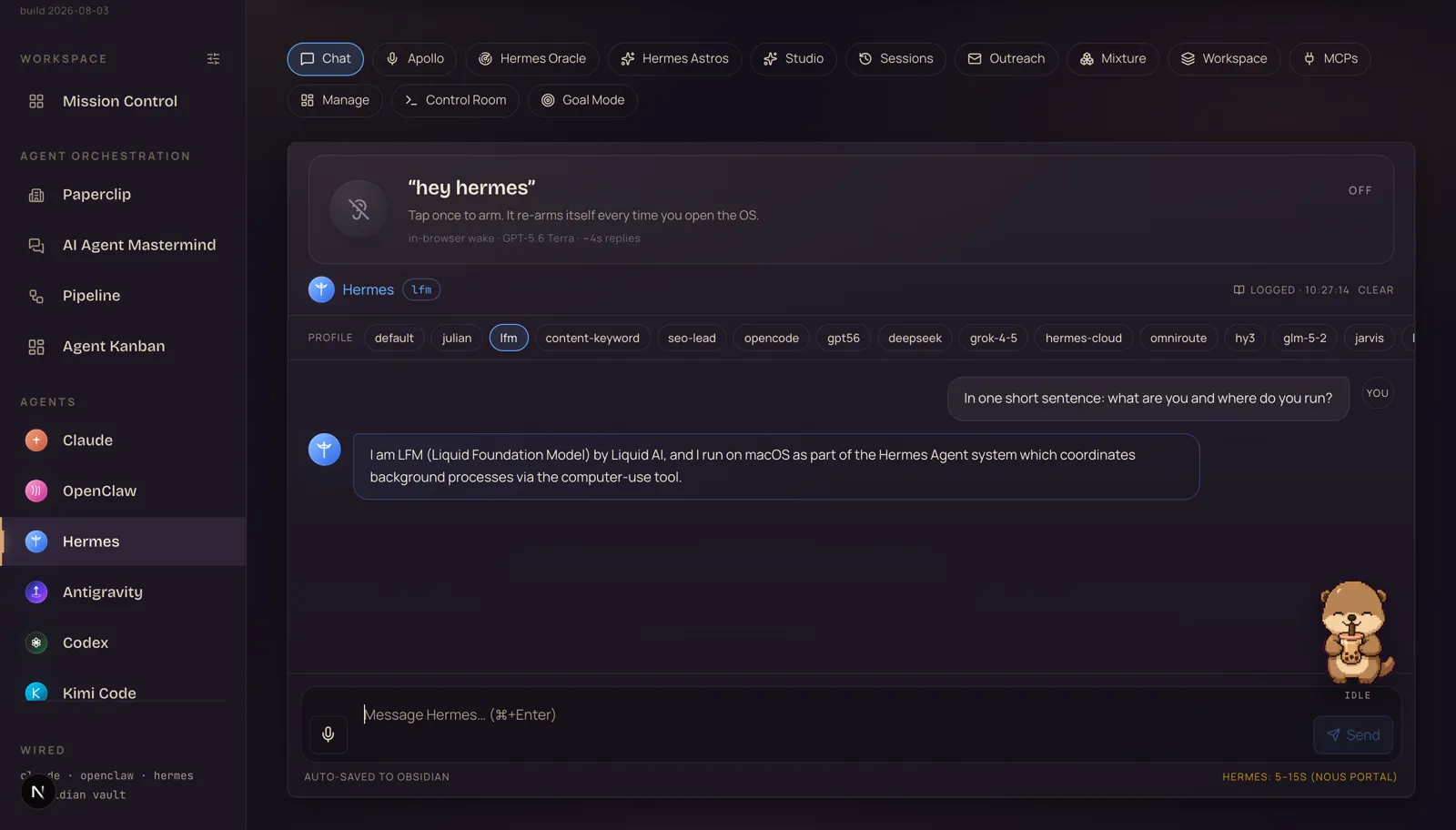
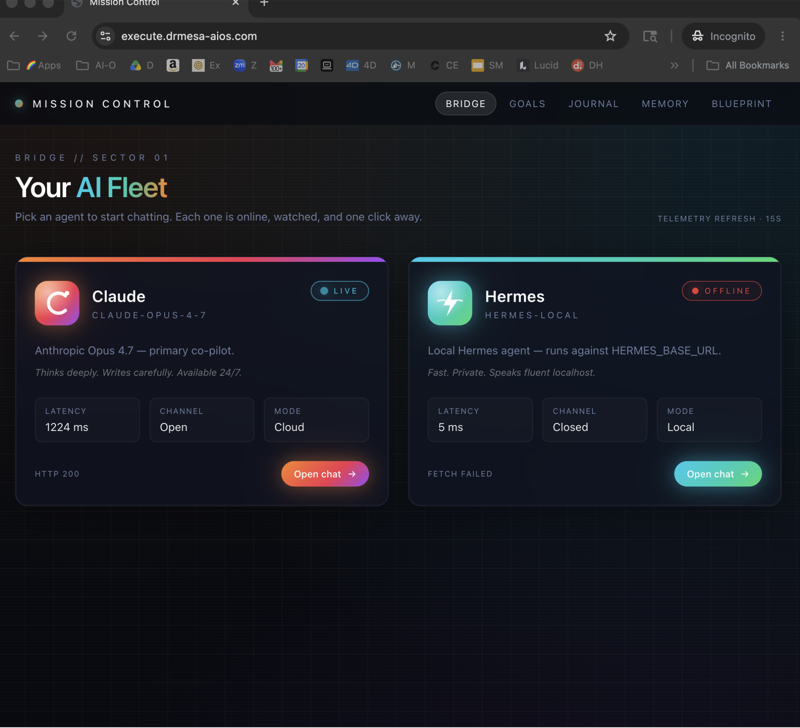
Inside the Agent OS, free brain selected.
This is my actual dashboard. The Hermes tab's profile rail picked up the new lfm profile automatically — one click and the whole chat runs on the free local brain. I asked it what it is; the answer below came back in seconds, offline-capable, nothing metered.
The Agent OS · Hermes tab · lfm pill active — LFM introducing itself from inside the machine.
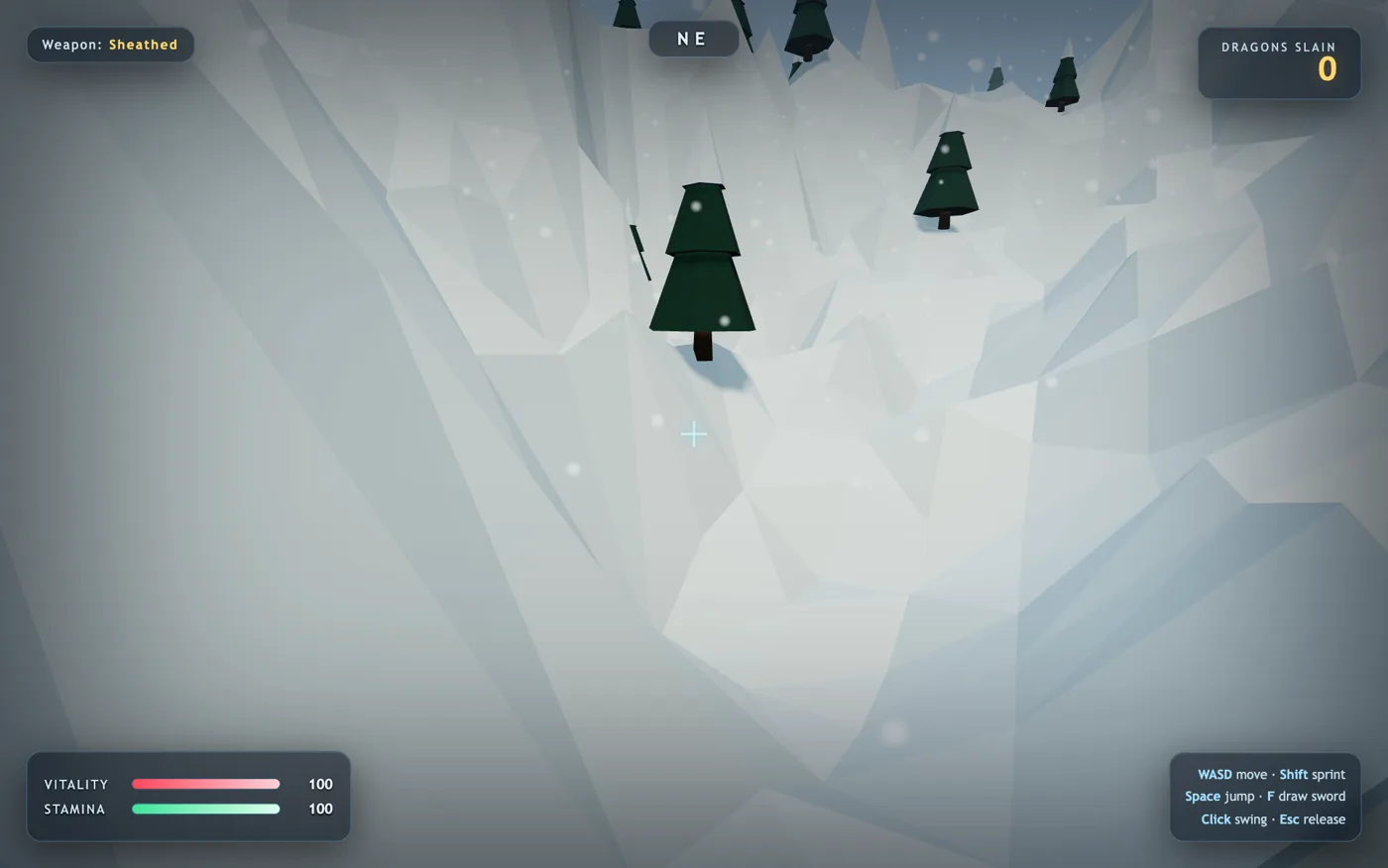
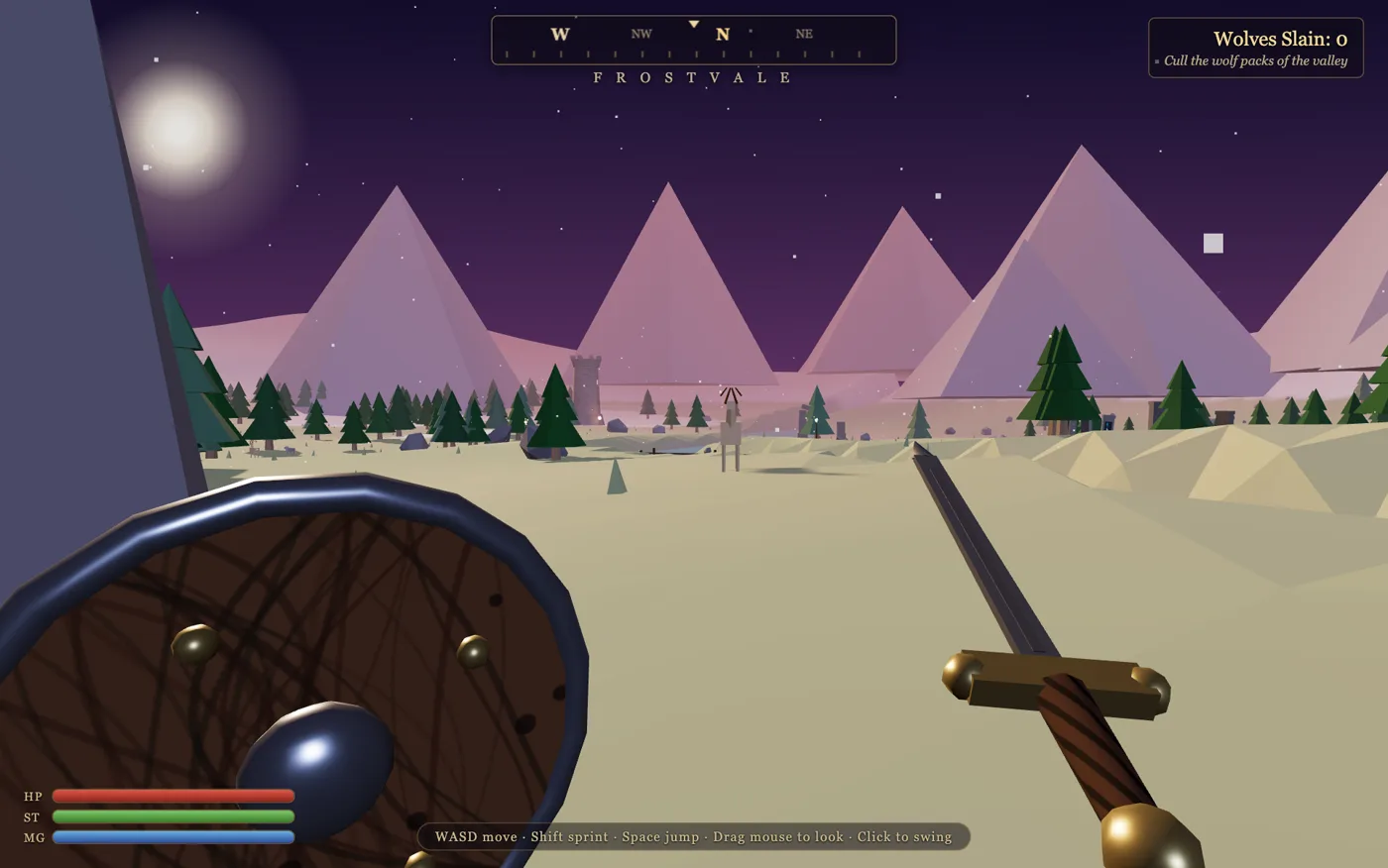
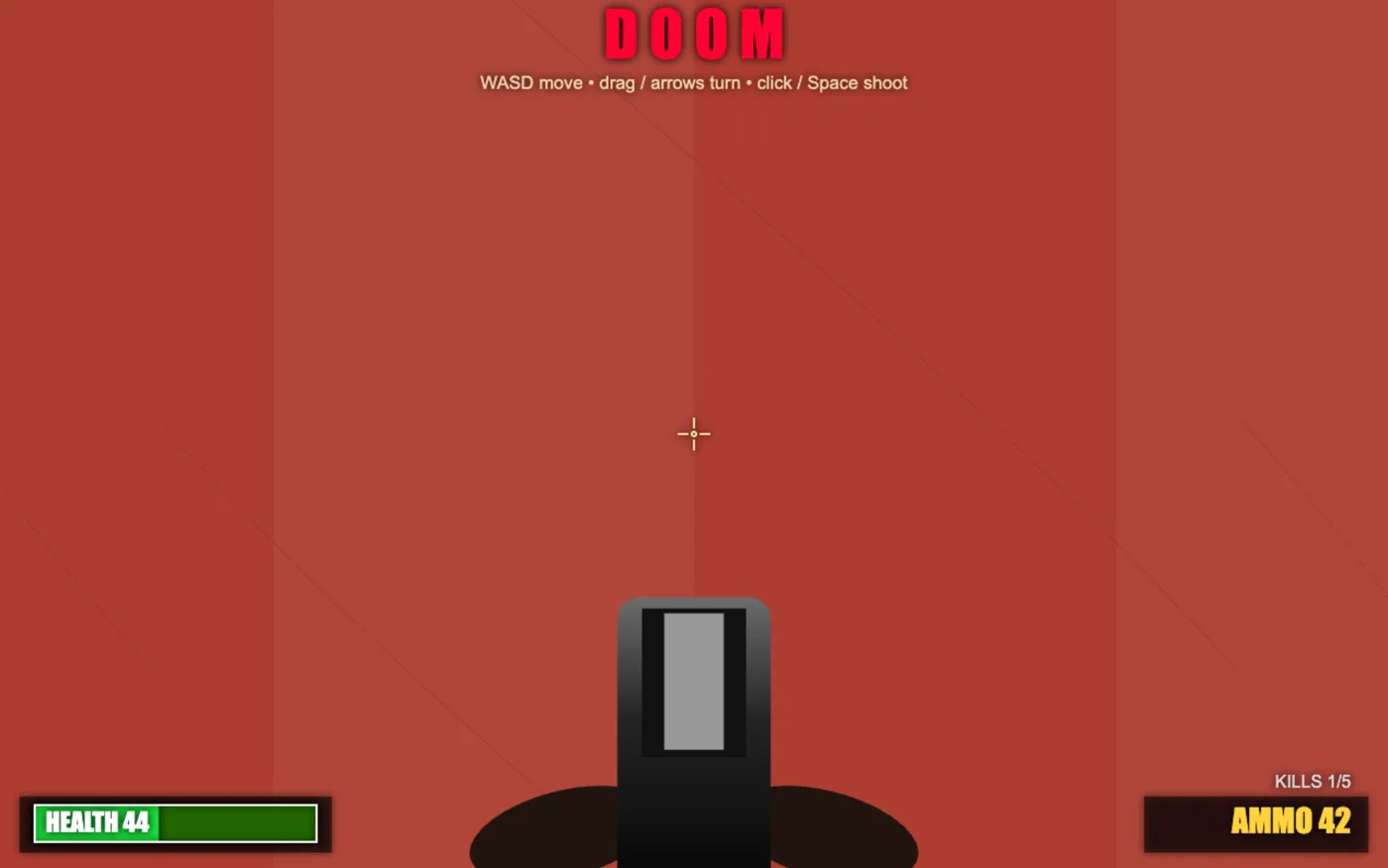
Now the part you actually came for — what this stack builds. The Zero-Meter Engine is one half of the routing rule; the other half is that every heavyweight engine in the Agent OS is one profile flag away. These are real builds from that routing — GoldieBench-class games, every one playable right now, every one playtested before it went on this page. I died in the shooter while testing it. That's how real they are.
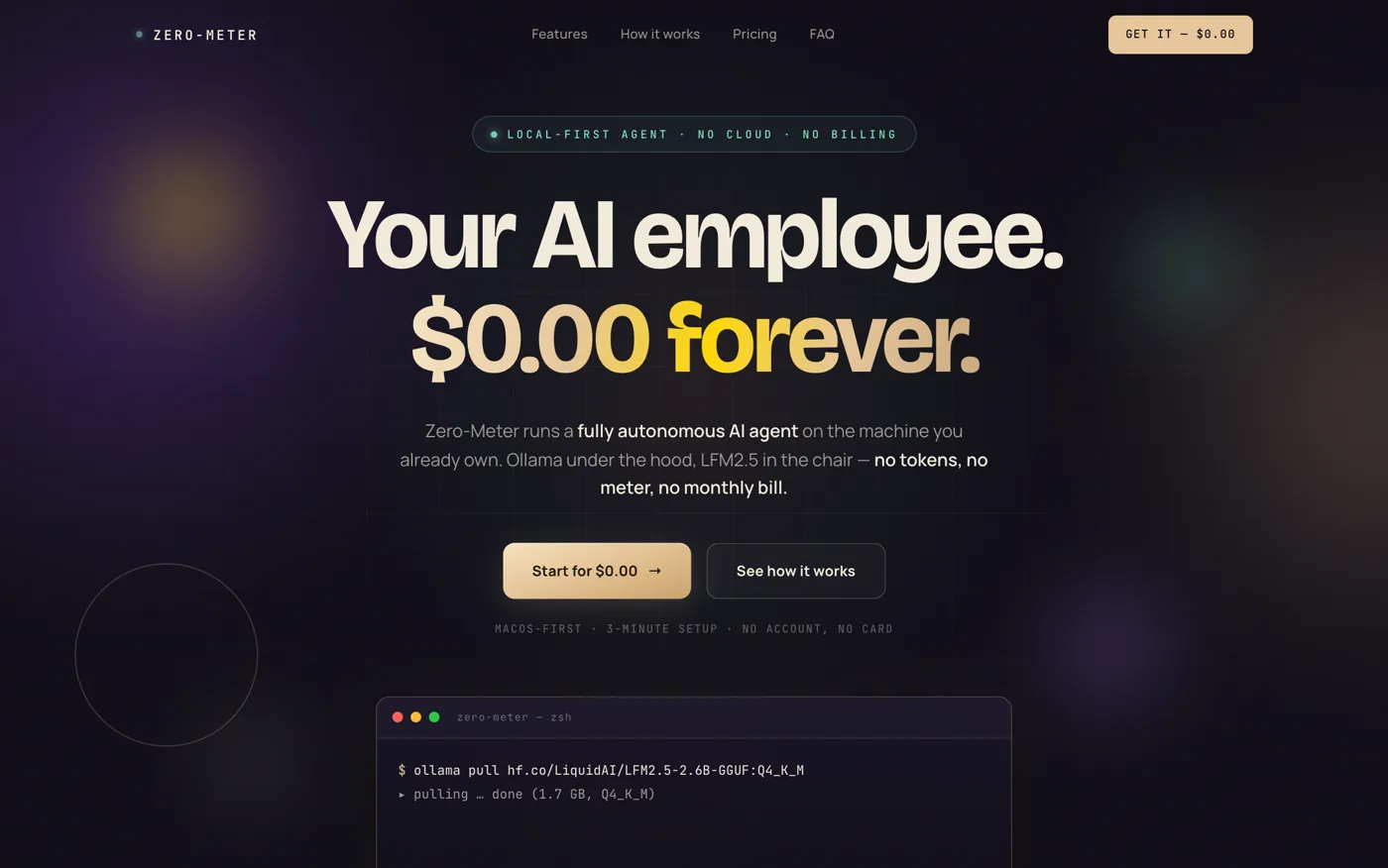
And one more, built fresh while this page was being written — I asked the stack for a full SaaS landing page for the engine itself. One prompt to a builder profile, one factual fix round, playtested, done:
And the free brain's own contribution to this page: while those builds came from the heavyweight lane, the local swarm did the grunt work — four parallel LFM workers auditing this whole OS in 178 seconds, for nothing. Builders build, the free brain runs the errands. That's the routing rule working exactly as designed.
And the speed receipt, straight off the terminal:
$ ollama pull hf.co/LiquidAI/LFM2.5-2.6B-GGUF:Q4_K_M # 1.7 GB
$ hermes -p lfm -z "Reply with exactly: READY"
READY
benchmark · this Mac
LFM2.5-2.6B ......... 140.6 tok/s · warm load under a second
LFM2.5 8B-A1B ....... 185.0 tok/s (the speed-variant sibling)
Give it this — its lane
it flies
Chat, Q&A and summaries, instantly
Multi-step tool chains with correct facts
File chores, reports, watchers, cron
Anything private — it never leaves the desk
Don't give it this
wrong tool
Building whole web apps in one go
Hundreds of lines of interlocking code
Jobs you'd hand a frontier-size builder
"So what do I do when a job IS the heavy kind?"
Swap profiles for ten minutes — hermes -p <big-brain> — then swap back.
The free brain stays your default; the giants are one flag away. That's the whole routing rule.
✦
VI ────── My story · why this matters
I used to pay for every thought. Now the API is free.
Here's how this actually worked for me until now. Every single thing my agents did ran through a paid API. Every chat, every summary, every scheduled check — a metered call to someone else's cloud, on someone else's servers, with my documents riding along.
So I did what everyone does: I rationed. Automations I wanted got scaled back. Watchers ran hourly instead of constantly. Some ideas never shipped at all, because they'd have been "always on" — and always on meant always paying.
This model flips that. The same API my agents call is now a free one, running on my own Mac. Same Hermes, same tools, same skills — but the everyday layer costs nothing per message, works with the WiFi off, and nothing I feed it ever leaves the machine.
Old path: metered and outbound. New path: a loop on your own machine.
The ideas I used to turn down are just… running now. You can have the same thing set up tonight — it's the five commands above.
✦
VII ────── The receipts
Real people. Real wins. Inside the Boardroom right now.
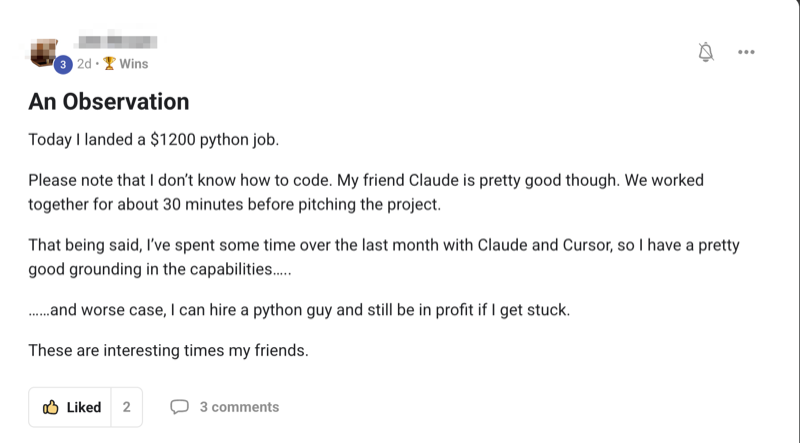
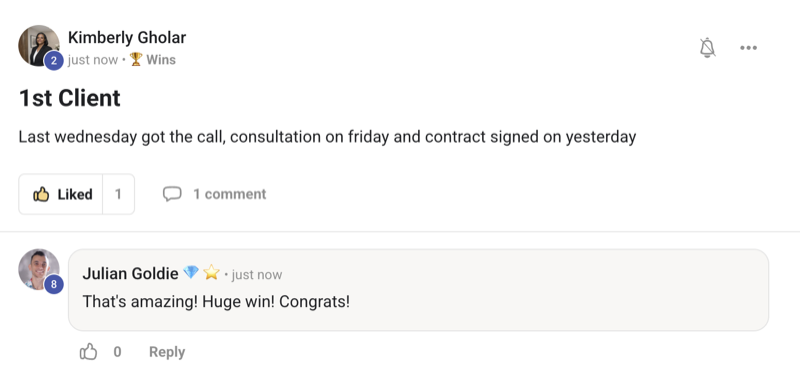
These are members' own posts as they happened — agency owners, ecom founders, course creators running this same stack.
You're not buying a tool. You're getting the operating system I run a seven-figure business on — and it absorbs launches like this one without breaking stride.
Inside the AI Profit Boardroom · skool.com/ai-profit-lab
Set up in an afternoon · used in 38 countries · new tools added every week
IX ────── Three beliefs to drop
What's actually stopping you isn't technical.
"Small local models are toys." The scorecard above says otherwise: perfect five-step tool chains at 185 tokens a second. Small models stopped being toys the day they learned to call tools properly — this one benchmarks ahead of models four times its size at exactly that.
"Free means fiddly." The whole setup is five commands, and the only genuinely fiddly part — the template trap — is a three-line file you can copy from this page. Two minutes, no accounts.
"I have to pick local OR powerful." You run both. The free brain is the default; the giants are one profile flag away. Picking a side is the amateur move — routing is the operator move.
✦
X ────── The SOP
Do it properly — five steps.
1 · Pull the right model. The 2.6B from the announcement, by its full address — not the bare tag. This is the fork most people get wrong.
2 · Apply the renderer fix. The three-line Modelfile from section IV. Skip it and agent tasks die mid-flight with a cryptic template error.
3 · Make the profile and verify. Config from section IV, then run the status command and confirm the Model line before trusting anything.
4 · Give it agent work, not authoring work. Summaries, file chores, watchers, multi-step tool chains. Check its first few file writes for literal backslash-n text.
5 · Route the heavy jobs. Keep a big-brain profile beside it and swap with one flag when a job needs a builder. The meter only runs when you choose.
✦
XI ────── Recap
The whole thing in 30 seconds.
Hermes supplies the hands, LFM2.5 supplies the brain — 2.6 billion parameters trained on ~34 trillion tokens, 128K context, living entirely on your machine.
Setup is five commands and zero accounts. Pull the real 2.6B by its full address, apply the three-line renderer fix, drop the profile, verify with status.
The traps: the bare tag pulls a different 8B variant; the raw download's template kills agent loops mid-flight; and small models sometimes write literal backslash-n into files — check the first write.
The scorecard was honest: perfect multi-step tool chains at 185 tokens a second, offline and private — and a real fail on full web apps, exactly as its benchmarks predict.
The real win is the routing. The free brain runs your everyday 90%; giants stay one profile flag away for the heavy 10%. The meter stops taxing your ideas.
The shortcut
Skip the wiring. Run my exact setup.
Hermes, the free local LFM profile, and every heavyweight engine — pre-wired inside the Agent OS. 4,000+ founders, 258 documented wins, 38 countries.
The AI Profit Boardroom is where the actual Agent OS lives — the templates, the prompts, the daily rooms, the weekly walkthroughs. Same builds you read about here, taught hands-on inside.