II · my story · why this matters
I was you. Then I built this.
Before
Making short videos was a nightmare.
I had to write a script in one tool, generate the avatar in a second, drop the avatar into a third tool to make a talking-head clip, then edit it in a fourth.
Three separate SaaS subscriptions. Combined bill: over $200 a month.
Every render came back broken in some small way — wrong avatar pose, missing inflection, audio out of sync.
Files scattered across four download folders.
And the final video would land in a Drive folder somewhere I'd never find again.
Then I wired the new Hermes video agent into Agent OS.
After
Now I open the Video tab inside Agent OS.
I type one prompt. Pick the avatar. Pick the voice. Hit render.
90 seconds later the finished MP4 is sitting in my Workspace, ready to share.
Monthly video tooling bill: $0.
Every render auto-saves with a meta sidecar — I can find any video from six weeks ago in two clicks.
I'm shipping more social content in a week than I shipped all last month.
You can have this too. Same agent. Same forge. Same dashboard.
Before you scroll on —
Commit to transitioning today. Not tomorrow.
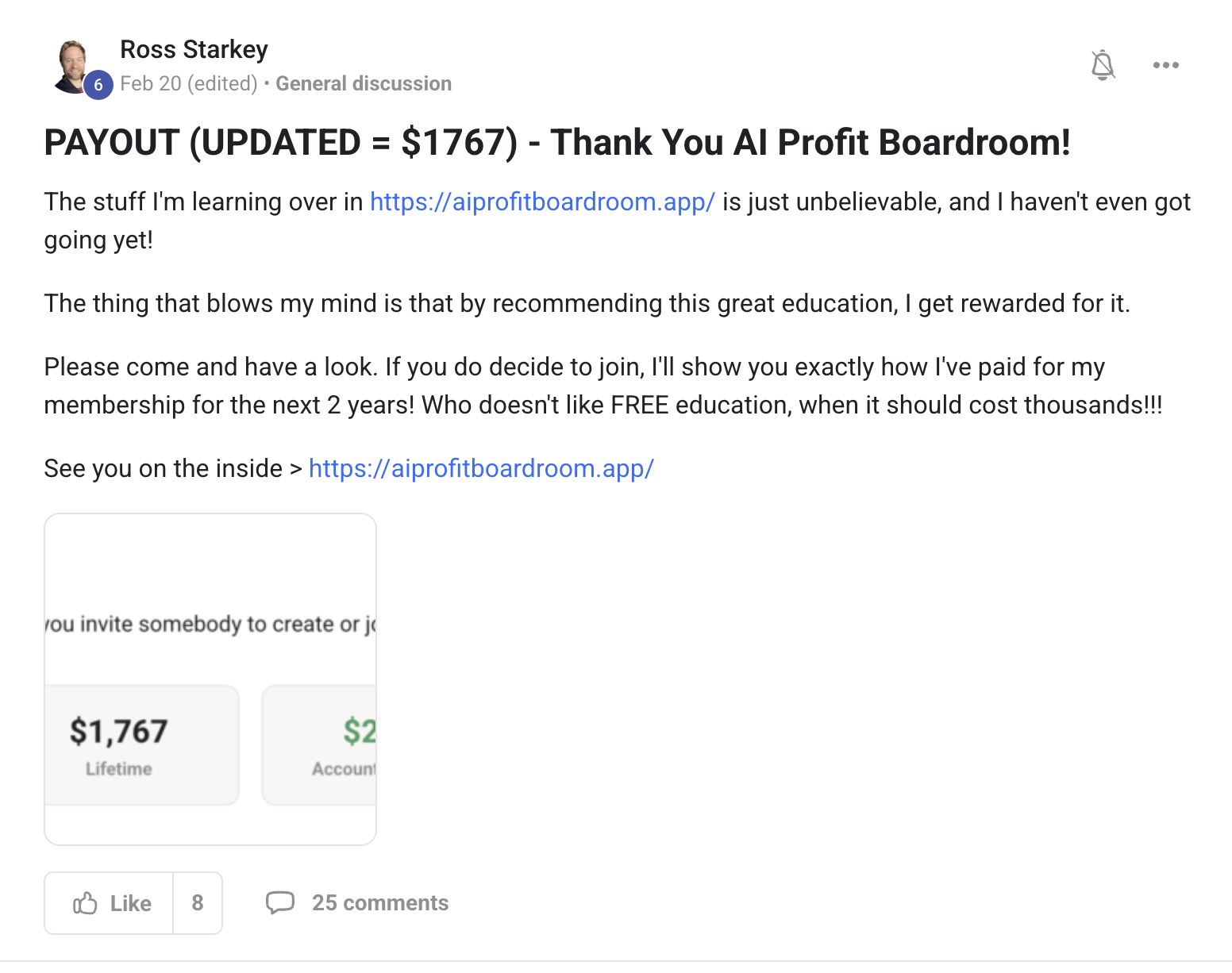
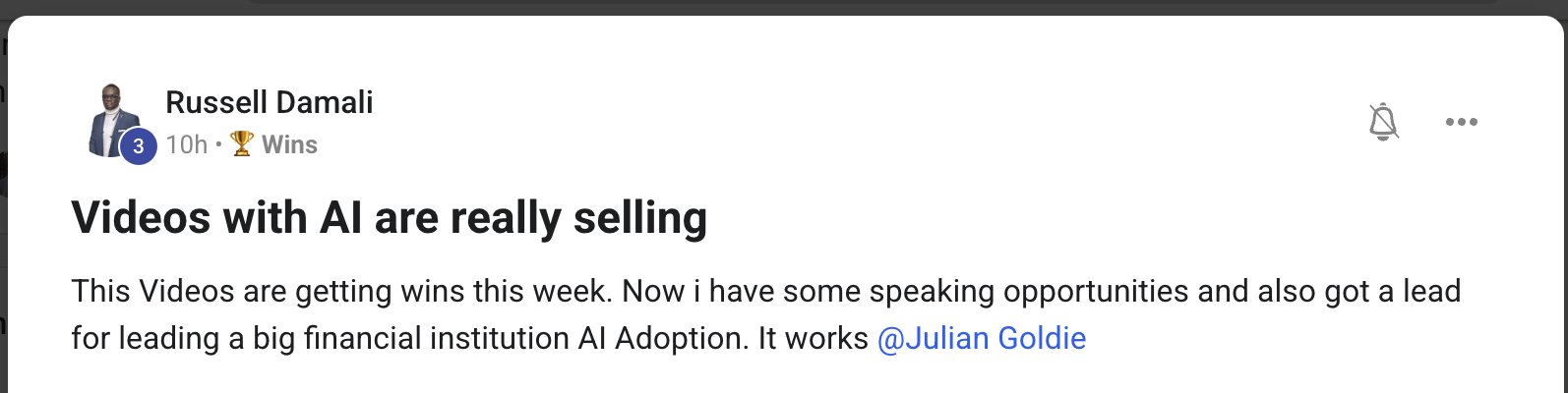
You've seen the proof above. Real people. Real videos. Already being shipped.
The next 10 minutes show exactly how I wired the new Hermes video agent into Agent OS.
So here's the deal.
If you're reading this — promise yourself one thing right now. You're going to finish this guide AND render one video before you sleep tonight. Just one. Because the moment you make this transition, your whole social content workflow changes.
The people sitting still are getting passed. The people shipping today are the ones who'll look back in six months and say "that was the moment."
Be one of those people.
Commit to the transition. Commit to rendering your first video today. This changes everything about how you make content.
IV · the framework
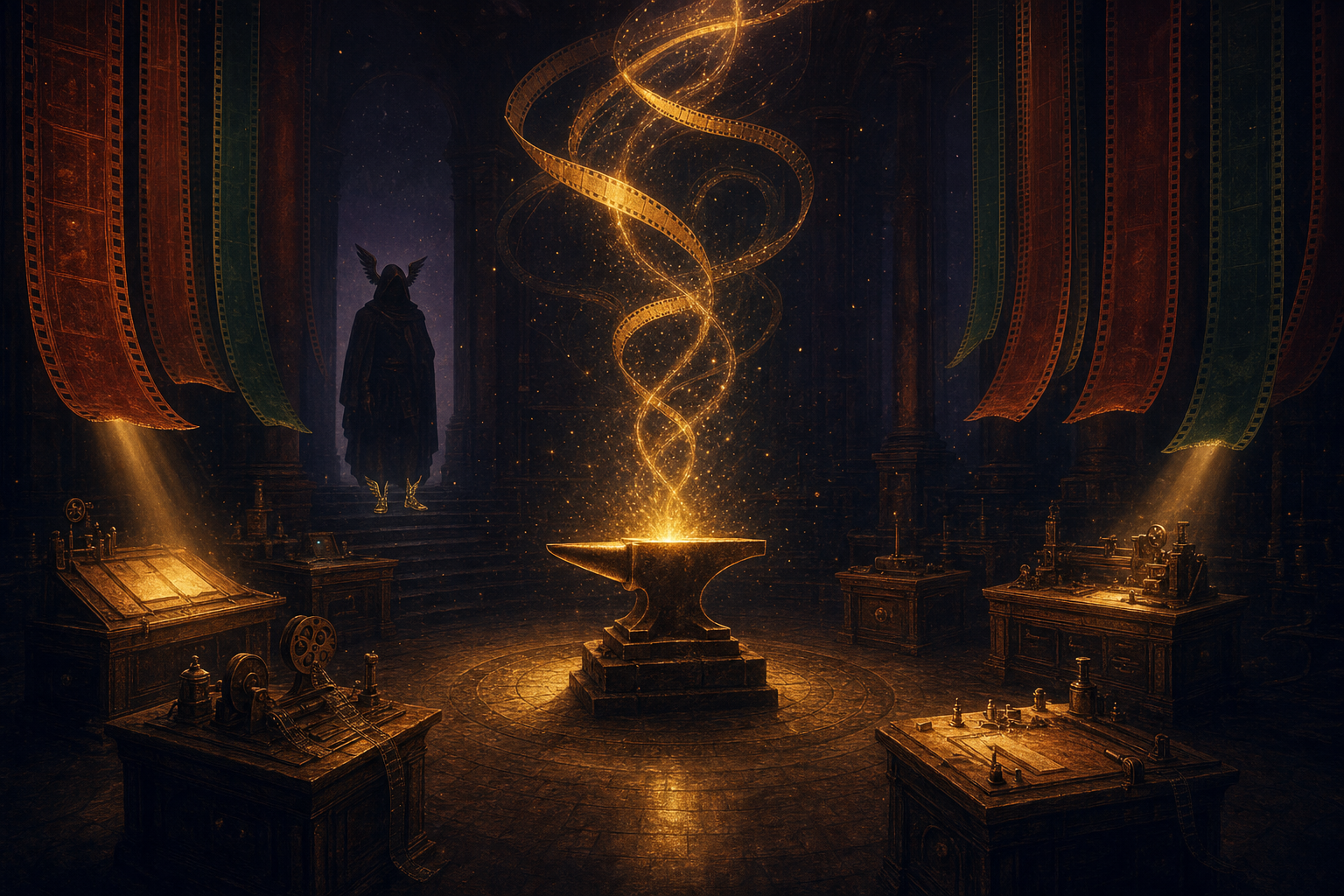
The Goldie Vision Forge™.
Five stations that turn one prompt into finished video.
You don't have to think about them when you're working — the forge does. But understanding the path is how you start trusting it. And once you trust it, you ship more in a week than you used to ship in a month.
The five stations of the forge — Spark, Form, Frame, Forge, Filing.
i.
Spark — the idea becomes a prompt.
You type what you want. "A 90-second cinematic feature reel for Agent OS — gold-on-aubergine palette, ambient particles, fade-in title." That's the spark. You stop writing scripts in one app, building shots in another. One field. One thought.
ii.
Form — your avatar locks in.
Pick the avatar once. Pick the voice once. Every render after that — they're already loaded. You stop re-uploading your face every single time. Your brand stays consistent across every video you ship.
iii.
Frame — HyperFrames assembles the visual.
The HyperFrames CLI turns HTML into MP4. Every shot. Every transition. Every motion of text on screen. It runs locally on your machine. You stop paying per-render fees to a cloud SaaS. The render machine is yours.
iv.
Forge — everything fuses into one MP4.
Avatar + visual + voice + music — fused together in one pass. No After Effects timeline. No premiere stack. No third-party render farm. You walk away. You come back to a finished video.
v.
Filing — the finished video saves itself.
Every MP4 auto-saves to your Workspace tab with a metadata sidecar — the prompt, the model, the avatar, the date. Click any past render → it plays inline. Click "render again" → it rebuilds with one tap. You never lose a video again. Six weeks from now you'll still find it in two clicks.
XI · why inside agent os
Why this can't live on its own.
This is the part most people miss when they try to copy this setup.
The Hermes video agent on its own is useful. The Hermes video agent inside Agent OS is what changes your week.
Here's why.
a.
Shared memory across every agent.
When you ask the video agent for a feature reel about Agent OS — Claude has already written the script outline. Codex has already pulled the feature list. OpenClaw has already captured the screenshots. The video agent reads from the shared Obsidian vault, so it knows your tone, your brand, your customers cold.
The video doesn't start from zero. It starts from everything every other agent has ever logged.
b.
One dashboard, one tab away.
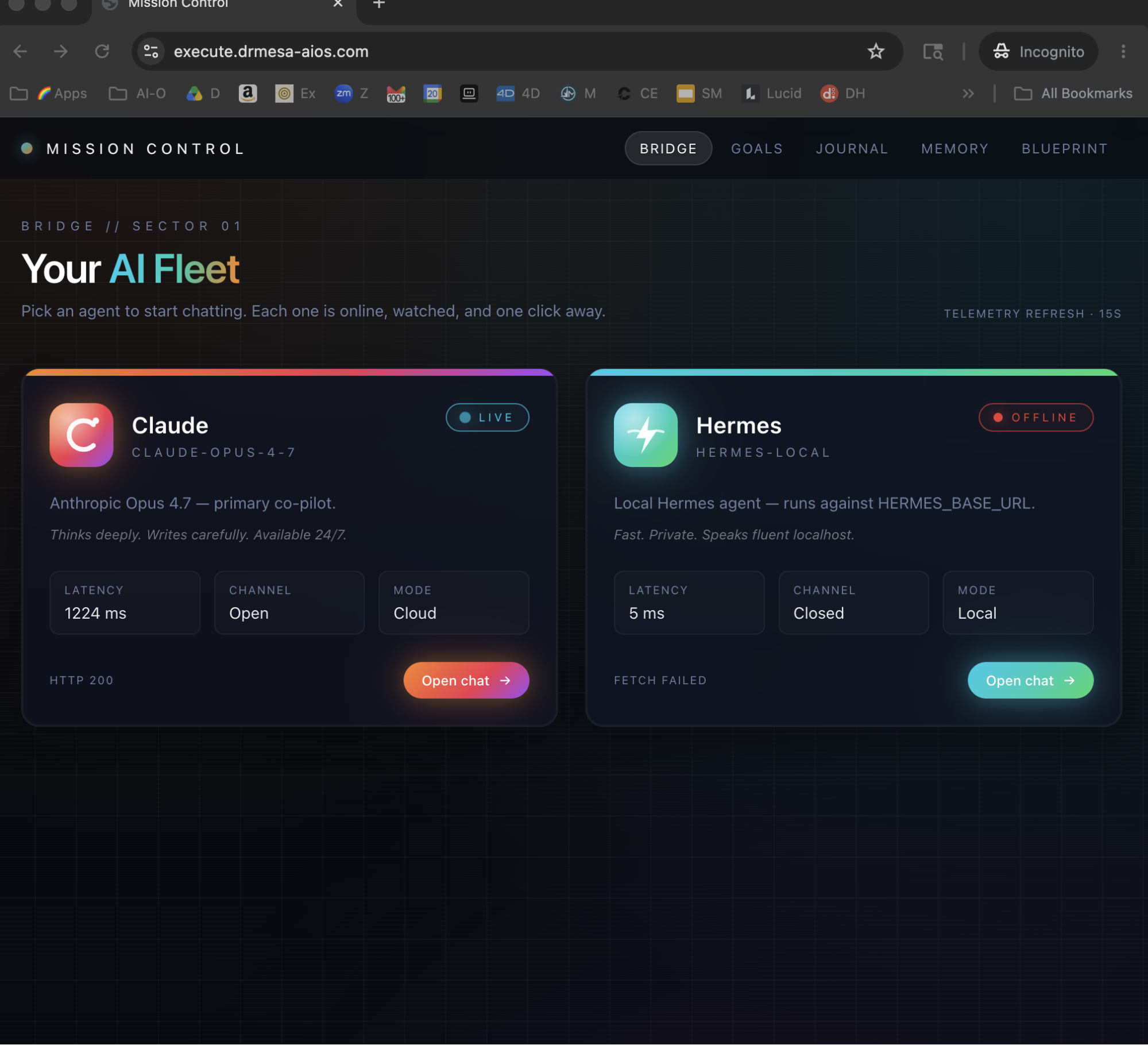
Mission Control sits next to Video. Goals sits next to Studio. Notebook sits next to Workspace.
You write a goal — "ship five social videos this week." Hermes Goal Mode picks it up. The video agent renders the videos. The Notebook auto-files the prompts. Mission Control shows you status.
No tab juggle. No context switch. The whole pipeline runs on one screen.
c.
Outputs compound across the stack.
Render a video. The MP4 lands in Workspace. The Notebook auto-tags it. Claude can reference it next week. Codex can wrap it in a landing page. OpenClaw can post about it on social.
One video isn't one video. It's a seed every other agent draws from.
d.
The bill stays zero.
Inside Agent OS the video agent has Free Claude Code as a fallback for any text generation. The HyperFrames render is local. The avatar pass uses cloned data you set up once.
On its own, you'd be paying $50/week to Anthropic + a video SaaS sub. Inside Agent OS, the same workflow costs $0.
The dashboard is the cost-killer. Standalone Hermes is the leak.
The video agent is the engine.
Agent OS is the chassis that turns the engine into a vehicle.
Thinking it?
"I'll just install Hermes alone — I don't need the whole dashboard."
You can. And in two weeks you'll be wiring everything else in anyway.
Without the shared memory layer, every video starts from zero context.
Without the Workspace scanner, every render disappears.
Without Goal Mode driving it, you have to babysit each render manually.
The agent shines when it's plugged into the rest. Standalone, it's just another tool. Wired in, it's a system.
✓
Members who tried Hermes standalone first all moved to the full Agent OS setup within two weeks.
XII · the voice in your head
Three beliefs holding you back.
✕ "Making video is too time-consuming for me right now."
That's true if you're stacking three SaaS tools. It's not true with one prompt + one avatar pick + one render. The bottleneck was never the work — it was the friction between the tools.
✓ With the forge, time-per-video drops to under two minutes.
You spend more time deciding what to make than actually making it. That's the right ratio.
✕ "My avatar will look obviously AI."
Generic stock avatars do. A clone built from your own real source material doesn't.
✓ Your audience won't be able to tell the days you used the avatar from the days you filmed.
The wins compound: you stop being the bottleneck on your own content. You ship even on the days you can't sit in front of a camera.
✕ "Free video is going to look cheap."
Free cloud tools look cheap because they cap quality. Local rendering doesn't cap anything — you're using your own machine's full capability.
✓ The cinematic look comes from the prompt + the composition, not the price tag.
The Vision Forge runs on the same HyperFrames spec the agency uses for client work. You get the production tier, free.
Don't take my word for it
258 real members already broke through these exact beliefs. Their wins — real businesses, real videos, real outcomes — are documented here.
Read the 158-page testimonials doc →