Free Claude Code forever.
Open-source CLI. One million tokens of context. Native tool use. Wired into Agent OS with workspace preview, persistent history, and an Obsidian memory layer. Four pillars you own. Zero monthly bill. This is the read-along.

"There's a free open-source version of Claude Code that plugs into free AI models on OpenRouter. When you combine these two things, you get a Claude Code setup that is free and gets more powerful every single day."
— Julian, opening the read-alongFree Claude Code, now inside Agent OS
Free Claude Code has been live for a while as a standalone CLI. What changed this weekend: I wired it into Agent OS as a first-class sibling. Three upgrades, all shipped:
- Workspace tab with inline preview. Anything Free Claude Code writes during a chat — HTML pages, images, HyperFrames videos, audio, PDFs — renders live in the workspace. No file-hunting. No tab-switching.
- Persistent conversation history. Every chat saves. Reload the page, switch tabs, restart the dev server — your history is right where you left it.
- Active project scoping. Each chat is pinned to a project folder under
~/freeclaude-scratch/<active>/. Files Free Claude Code writes land in the right place. Spin up a fresh project (aipb-landing,vsl-hyperframes, whatever) and point future chats at it with one click.
The result: the same OSS Claude Code experience, free, but with the memory and orchestration of a paid product.
What Free Claude Code actually is
Most people think Claude Code only works one way — Anthropic models, paid tokens, locked to the official CLI. None of that's true.
Free Claude Code is an open-source project (MIT licensed, on GitHub) that's a faithful rebuild of the Claude Code CLI — same harness, same agent loop, same tool use — but it routes requests to whatever model provider you point it at. Anthropic, OpenAI, OpenRouter, anything that speaks the OpenAI-compatible chat API.
Plug it into Owl Alpha — a free 1M-context model on OpenRouter designed for agentic work — and the cost of running Claude Code drops to zero. Same CLI experience. Same workflow. Different bill.
"Same engine. Free fuel. Yours forever."
The Goldie Sovereign Stack™ — four pillars you own
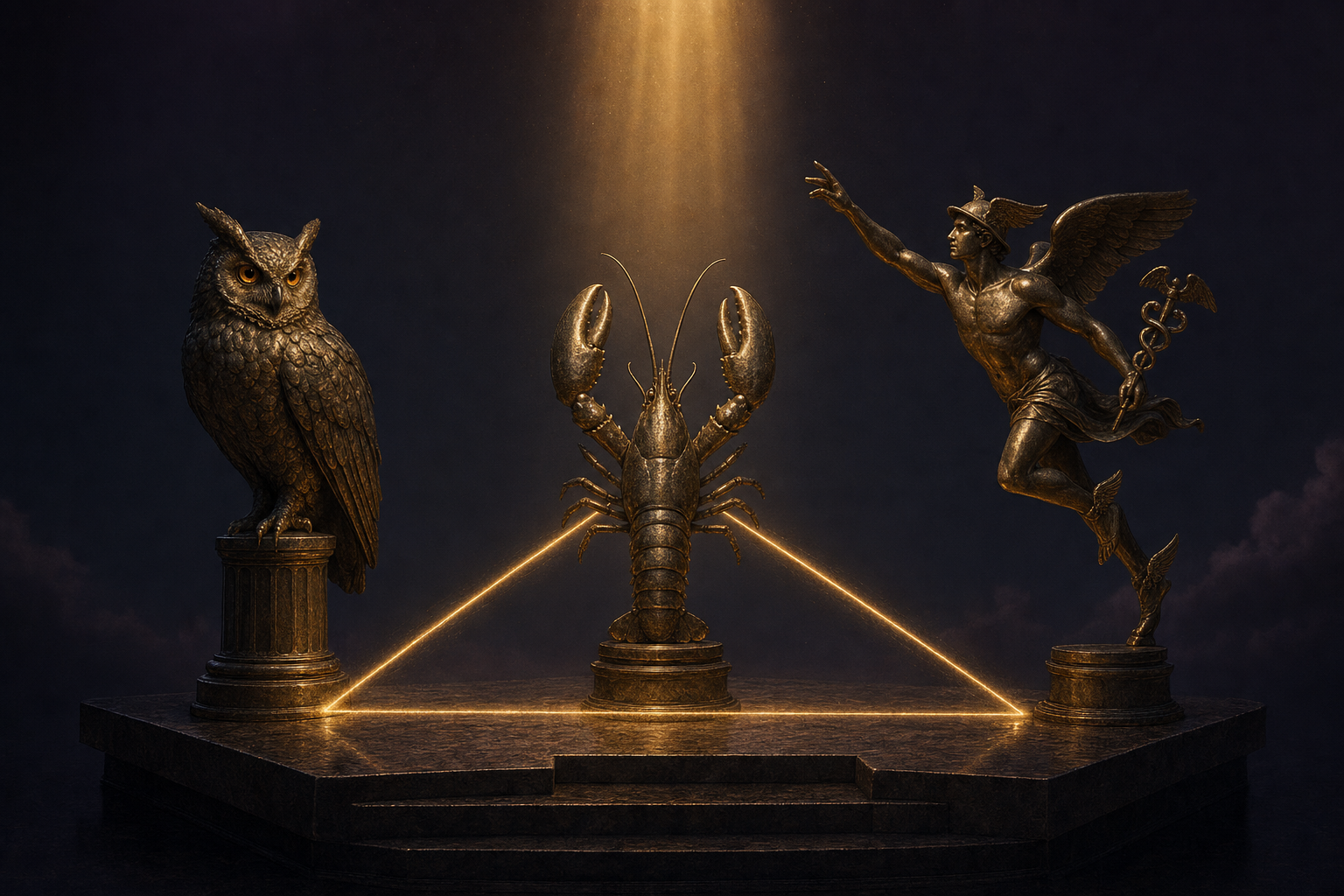
The CLI alone is powerful. But the CLI inside a system is a different category of thing. Here's the four-pillar stack we build inside the AI Profit Boardroom:
Brain — Owl Alpha
The model. 1 million tokens of context, native tool use, agentic-tuned. Free on OpenRouter. The intelligence layer of the stack.
CLI — Free Claude Code
The harness. OSS rewrite of Claude Code that routes to any model. Same workflow, same agent loop, MIT licensed. Yours.
Memory — Obsidian
The vault. Plain markdown, queryable, versionable, on your machine forever. The persistent memory across every agent you run.
Command — Agent OS
The dashboard. Mission Control for every agent — Free Claude Code, Claude, OpenClaw, Hermes, Antigravity, Codex, Gemini — all in one workspace.
Other people rent. You own.
— this is the moveBrain — Owl Alpha, the free 1M-token engine
Owl Alpha is the model that makes the rest of the stack possible. It's on OpenRouter — the OpenAI-compatible routing layer — and it ships with three things that matter:
- 1 million tokens of context. You can hand it an entire codebase, a hundred markdown notes, a year of meeting transcripts. It holds it all in working memory.
- Native tool use. Built for agents from day one, not retrofitted. The same tool-calling primitives Claude Code expects.
- Free. Right now. Today. Hermes uses it. OpenClaw uses it. Kilo Code, Root Code — they all run on it in production.

One question I get every time: "What if Owl Alpha disappears or stops being free?" Fair question. The honest answer: it might. New providers ship free agentic-tuned models every few weeks now — Nous Research dropped Qwen 3.6 last week, Step 3.5 this week. The architecture stays the same. You swap the model and keep moving. The cost of running AI is collapsing. People who set up the right architecture today have a free AI stack forever.
CLI — Free Claude Code, the OSS rewrite
Free Claude Code is the open-source project on GitHub that mirrors the Claude Code CLI experience — but routes through any model provider you point it at. It's published under MIT licence, which means you can use it commercially, modify it, ship products on top of it, and nobody can pull the rug.
Setup is one terminal command. The team has put the install behind a single bootstrap script — you copy it, you paste it, you're running in 60 seconds. If you'd rather not touch the terminal, you can literally ask Claude to set it up for you — it knows the project, it knows the install steps, it'll walk you through it.
Once it's running, you have the same Claude Code interface you'd use with a paid subscription. The same chat. The same agent loop. The same file edits. The same workflow.
Memory — the Infinite Context Engine
This is the pillar most people skip — and it's the one that turns a tool into a system. Free Claude Code on its own is stateless. Every session starts cold. Every conversation begins from zero. You spend 20% of every prompt re-explaining yourself.
Wire it to Obsidian via MCP and that ends. Every conversation can read your vault. Every conversation can write back to your vault. Suddenly the agent knows who you are, what your business does, who your clients are, what your brand voice sounds like — because it's all there, in plain markdown, queryable forever.

This is the system I call the Infinite Context Engine. Full read-along on the vault side: The Goldie Infinite Knowledge Engine →
Command — Free Claude Code inside Agent OS
The CLI alone is powerful. Inside Agent OS, it's a different category. Free Claude Code shows up in the sidebar as its own agent — sitting next to Claude, OpenClaw, Hermes, Gemini, Antigravity, Codex, Goals, SEO, Studio, Notebook, Kanban, Journal, Memory.
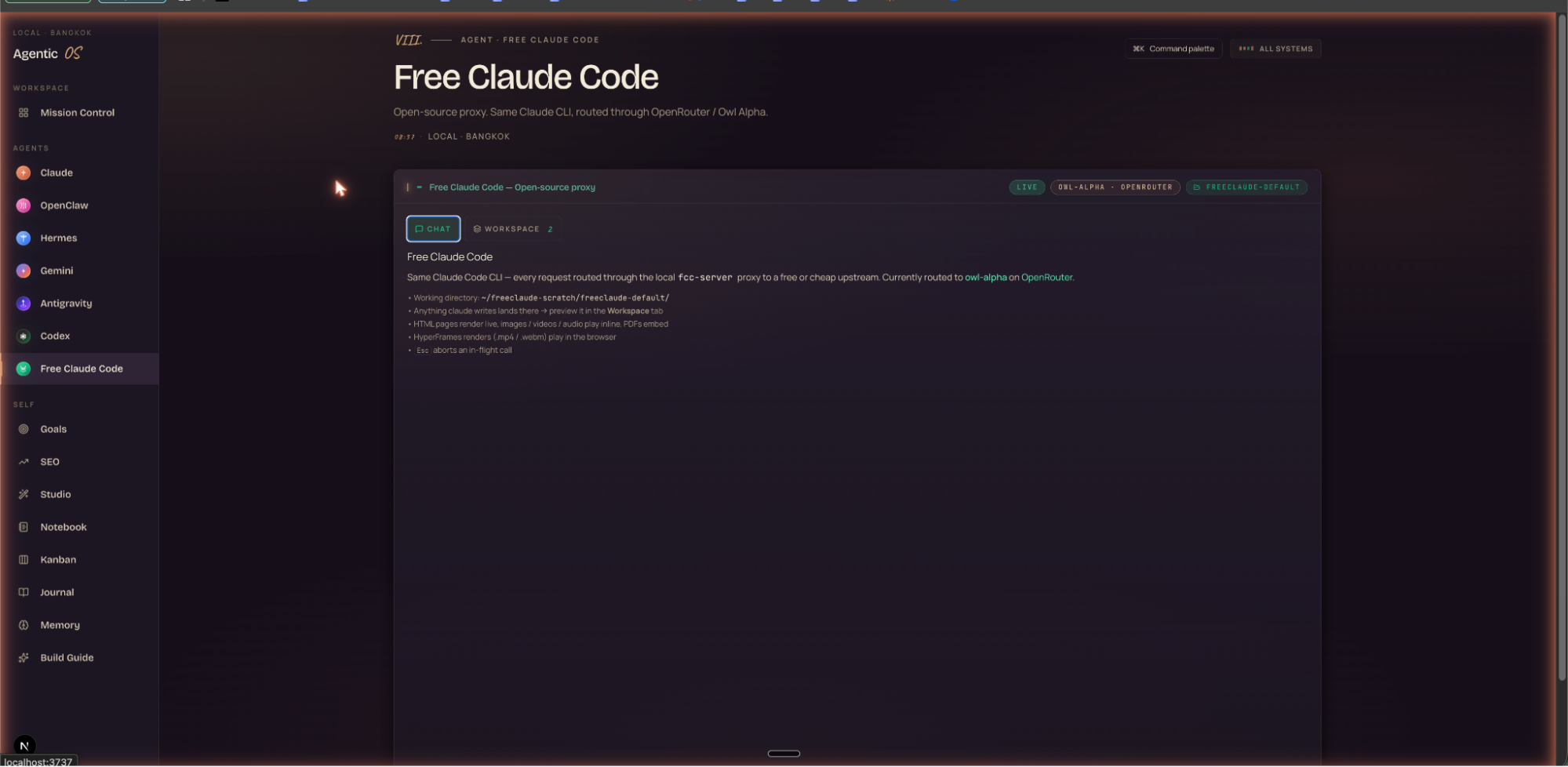
And here's the part that just shipped — the Workspace tab. Anything Free Claude Code writes during a chat appears inline. HTML renders live in an iframe. Images preview. HyperFrames videos play with full scrub. Audio plays. PDFs embed. Source view is one click away. The Preview/Source toggle is the same flow as the Antigravity and Codex workspaces — same proven pattern.
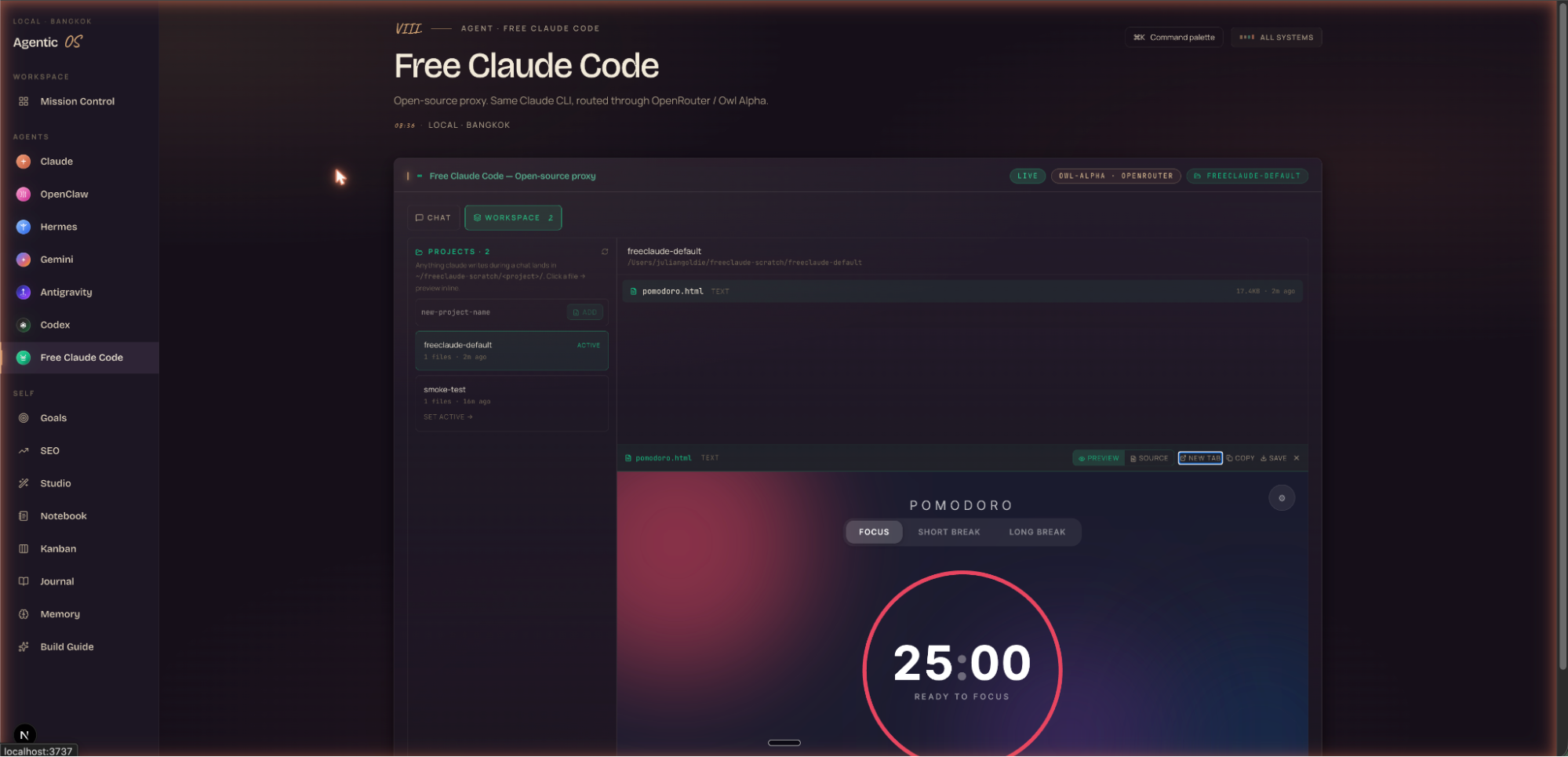
~/freeclaude-scratch/freeclaude-default/, and previewed live inside Mission Control. No exporting. No file-hunting.Add a new project, scope a build (aipb-landing, vsl-hyperframes, anything), click "Set active" — and the next chat writes to that folder. Every project keeps its own files, its own preview, its own history.
"You stop juggling tools. You start orchestrating fleets."
The Sovereign Stack setup, zipped
Inside the AI Profit Boardroom: the full Agent OS install with Free Claude Code wired in, the Owl Alpha + OpenRouter setup, the Obsidian + OMI memory layer, the prompts, the SOPs, the 30-day roadmap, the video walkthrough, and the zip of files you can drop in.
Get Agent OS in AIPB →Six myths about Claude Code, debunked
Most people watching this never set it up. Not because they can't — because they believe six wrong things. Let's clear them all:
"Claude Code only works with Anthropic. You have to pay per token."
TruthClaude Code's harness talks to any model that speaks the OpenAI-compatible chat API. Free Claude Code is the OSS rewrite that proves it — point it at Owl Alpha, you're done. Same CLI, different bill.
"Free models are useless for agentic work."
TruthOwl Alpha ships with 1M tokens of context and native tool use, built for agents from day one. Hermes, OpenClaw, Kilo Code, Root Code — all production systems running on it. It's not "good enough." It's the same class as paid models.
"Setting this up sounds scary."
TruthOne terminal command. Or if you'd rather not touch the terminal, ask Claude to set it up for you — it knows the project. The barrier isn't technical. It's whether you start.
"If I leave Claude I lose all my chat history and memory."
TruthInside Agent OS, you get better persistent memory than any vendor's chat history — because it's in your Obsidian vault, queryable, versionable, yours forever. Switch to Gemini tomorrow? The memory survives.
"Owl Alpha will disappear and I'll be stuck."
TruthNew free agentic-tuned models ship every few weeks. Nous Research released Qwen 3.6 last week, Step 3.5 this week. The architecture stays the same — you swap the model in the OpenRouter config and keep moving. The cost of running AI is collapsing.
"Why use Free Claude Code inside Agent OS? The CLI alone is enough."
TruthThe CLI alone is powerful. The CLI inside Agent OS is a different category — workspace preview, persistent history, Obsidian memory, sidebar next to every other agent, project scoping, kanban orchestration. The CLI does one thing. Agent OS makes it part of a system.
Three beliefs holding you back
Same pattern every time. The myths are about the tool. The beliefs are about you.
Still not sure free agentic stacks pay off? Read 258 unfiltered member wins from the AI Profit Boardroom →
"Paid tools are better than free ones."
Sometimes. Often not. The architecture around the model matters more than the model. Two people running the same Owl Alpha — one in a chat box, one inside the Sovereign Stack — get incomparable results. Free isn't the limitation. The system around free is the leverage.
"I'll just use Claude Code with Anthropic, no need for this."
You can. And you'll watch other people who set up the sovereign stack swap models the day a better one drops, while you wait for Anthropic's release cycle. Ownership beats subscription.
"This is just for developers."
Free Claude Code is good at building, but it's better at running tasks that have a finished outcome. Build a sales page. Generate a CSV of 200 keywords. Draft 50 outreach emails. Render a video with HyperFrames. The CLI doesn't care if you're a developer. It cares if you can write a clear goal.
30-day roadmap
Each layer powers the next. The order matters.
obsidian-mcp). Confirm Free Claude Code can read and write notes. Migrate any existing ChatGPT/Claude exports into the vault.The Goldie Sovereign Stack™ — recap
Most people are paying Anthropic for Claude Code in 2026 because they don't know the alternative exists. Or they do, and they believe one of six myths about it. Or they got past the myths, and got stuck on the setup.
The Sovereign Stack is the answer. Brain: Owl Alpha — free, 1M context, native tool use. CLI: Free Claude Code — OSS, MIT, yours. Memory: Obsidian — plain markdown, yours forever. Command: Agent OS — every agent, one workspace, workspace preview, persistent history, project scoping.
Other people rent. You own. The monthly bill is zero. The system gets smarter every day.
The whole stack, files included.
Inside AIPB: the Agent OS with Free Claude Code wired in, the Owl Alpha + OpenRouter config, the Obsidian + OMI memory layer, the prompts, the SOPs, the 30-day roadmap, and the video tutorial. One link, one weekend, one system.
Join the AI Profit Boardroom →