Keep exploring · more guides
Xiaomi just released MiMo-V2.6, an open-weight AI model that matches Claude Opus 5 on most agent benchmarks.
It scores 46 on the Artificial Analysis Intelligence Index, the highest of any open-source model, and it costs cents per million tokens.
I wired both versions into my Agent OS this morning, and in this guide you'll watch them build real apps live on screen.
You'll see exactly where it beats the big closed models, and the one place it still loses.
Stick with me to the end, because the setup takes five minutes and I show every click.
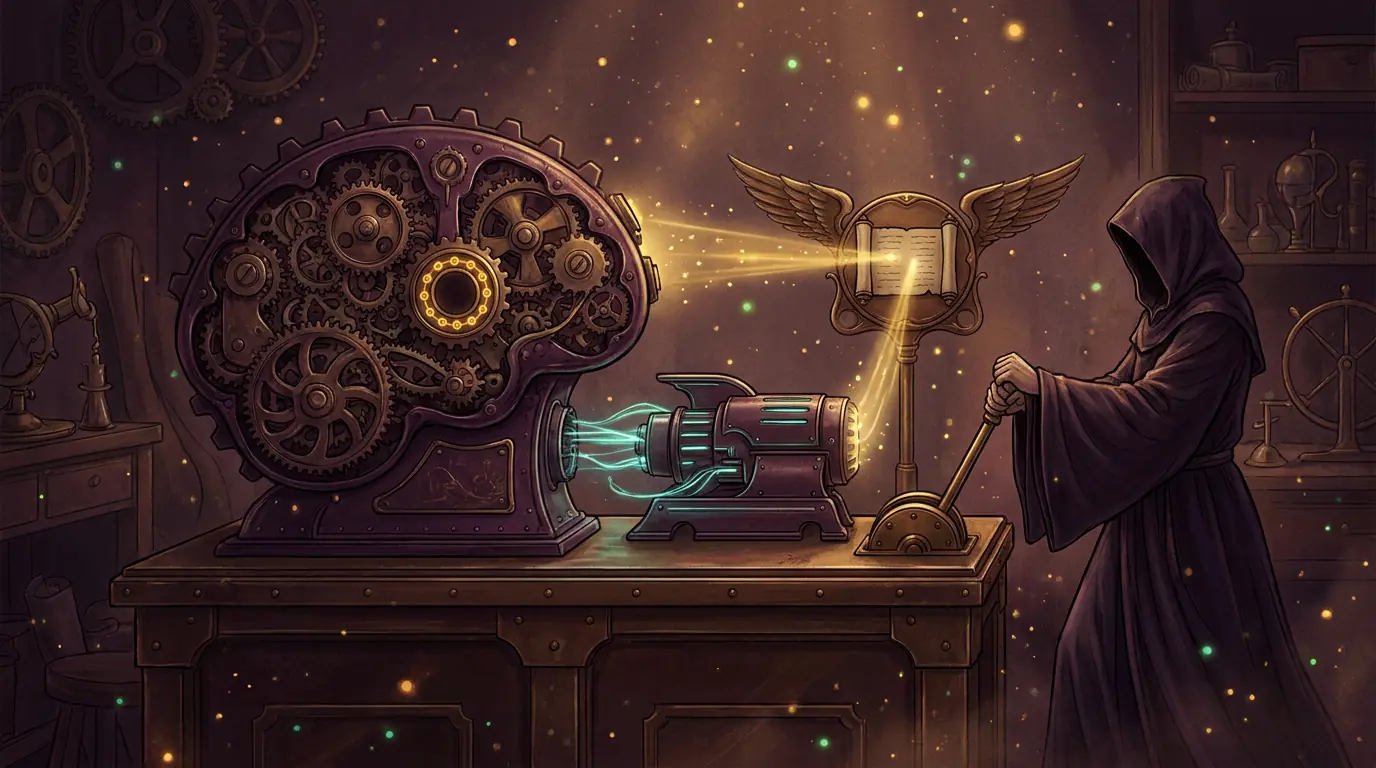
The vault opens. The weights pour out. Everyone gets to build with them. That is what open weights at this level means.
Imagine the smartest person you have ever worked with.
Now imagine you can only talk to them through a locked window, at a price someone else sets.
You can't see how they think. You can't take them home. You can't run them on your own machine.
And one morning the window can simply close.
That's what building on a closed frontier model is like.
Every app you build, every agent you run, is rented from the one company that holds the weights.
MiMo-V2.6 breaks that. Opus-level agent scores, and the weights are yours to download.
Not any more. On DeepSWE it's two points behind Opus 5, and on AutomationBench it's ahead.
The numbers are in the next sections, from Xiaomi's own model card.
Most people think of these as three separate things. They're one pipeline.
1.02 trillion parameters, 42 billion active. On par with Opus 5 and GPT-5.6 Sol on most agent benchmarks. $0.435 in, $0.87 out per million tokens.
The smaller sibling, a 159B-class open model. Only a few points behind Pro, at $0.14 in and $0.28 out. It thinks before it writes, so give it token room.
A new tab in my Agent OS. Pick Pro or Flash, type a prompt, watch it build live, save the build. Same workspace pattern as every other agent in the OS.
The weights are public, under MIT, on Hugging Face. You can run them on your own hardware where nothing leaves your machine.
In the Agent OS I run it through OpenRouter for speed, and I'd never paste client secrets into any cloud model, this one or Claude.
Here is exactly what happens when you hit Build in the MiMo Code tab. No mystery.
You type what you want in plain words. The tab adds one steering line: ship a complete single-file app that renders on load.
MiMo thinks first. You see the thinking stream in as it plans the build. Flash spent 86,000 characters planning one starfield before it wrote a line.
The HTML streams into the panel token by token, the same way you'd watch it type.
The moment the code block closes, it renders live in the preview pane. Games run, charts animate, buttons click.
One click writes it to your workspace folder on disk, and the chat auto-saves beside it. It survives a refresh, a restart, a new machine.
For a one-shot app build, minutes is fine, because you get a finished thing at the end instead of a draft.
For quick chat you use Flash, or turn the reasoning effort down. Both take one click.
Every build below came out of the tab in one prompt. No fixes, no second try, including the one that came out weak.
What you're watching: the neon snake game Pro built from one sentence, played by my test harness. Arrow keys work, the score climbs, the trail glows. Build time 8 min 28 s.
real run on my Mac · Agent OS at localhost:3737What you're watching: the weak one. Pro built a slick orbital atlas with a click-to-select planet panel, but the 3D scene itself came out too dark and it threw three console errors. Build time 8 min 11 s. I left it in on purpose.
real run on my Mac · Agent OS at localhost:3737What you're watching: the analytics dashboard Pro built with no chart library, count-up numbers, a canvas line chart and bar chart, and a glass sidebar. Build time 4 min 10 s.
real run on my Mac · Agent OS at localhost:3737Flash is the one I'd run all day. Same tab, same prompt style, a fraction of the price.
What you're watching: the parallax starfield Flash built, with the warp effect on mouse hold. It planned for 3 min 31 s before writing, then shipped 29 kilobytes in one go.
real run on my Mac · Agent OS at localhost:3737What you're watching: the pricing page Flash built, monthly-yearly toggle animating the prices, hover glow, FAQ accordion. Build time 1 min 50 s.
real run on my Mac · Agent OS at localhost:3737These are Xiaomi's numbers from the model card, side by side with the two best closed models.
True, which is why the loss is on this page too. On MiMo Code Bench, Opus 5 is five points ahead.
For app builds, computer use and automations, the gap is one to two points, or reversed.
Because 90% of your builds don't need the most expensive brain, and this one is a rounding error on the bill.
The Agent OS keeps Claude for the hard thinking and hands the volume work to MiMo.
Get an OpenRouter key from openrouter.ai/keys. Both MiMo models are listed there, first-party from Xiaomi.
Put it in ~/.hermes/.env as OPENROUTER_API_KEY=…. The Agent OS reads it from there.
Run the curl below. If you see OK from MiMo, you're connected.
Give Flash a real token budget. It reasons before it answers, so a 60-token cap comes back empty. 4,000 is plenty for chat, 64,000 for builds.
Open localhost:3737/mimo-code. The status pill goes green when the key is found.
Pick Pro or Flash at the top of the prompt box. Type what you want. Hit Build.
When the preview renders, click Save build. It lands in ~/.agentic-os/mimo-coder-workspace/builds/.
Your chats auto-save beside it. Come back tomorrow, click the session, keep going.
What you're watching: my first contact with both models. Pro answers straight away. Flash comes back empty at 60 tokens because it spent them all thinking, then answers fine with room to reason.
real session · replayed at reading paceWhat you're watching: the Agent OS status endpoint for the new tab reporting both models live, then the tab opening.
real session · replayed at reading paceIn the Agent OS, steps 5 to 8 are already wired. You add the key once and the tab does the rest.
You can wire this together yourself with the SOP above. Or get the whole thing done inside the Agent Operating System: the MiMo Code tab, Claude, Hermes, OpenClaw and every other agent, all sharing one memory.
No. That's the biggest myth about it. The everyday 90% runs on free local models and cheap open ones like MiMo Flash, and the frontier work drives the CLIs you already pay for, like the Claude CLI inside your Claude subscription.
Inside the Boardroom there are token-efficiency tutorials too, so you learn to cut usage and stop thinking about it.
This isn't theory. The tab in this guide is the one I built this morning, and every build above came out of it today.
Members post their wins every day, agency owners, ecom founders, course creators and solo operators, in their own words.
Read the 158-page wins doc →158 pages of members, real businesses, real wins, already building on this stack.
Read the 158-page testimonials doc →Add the key, open the tab, build five small things with Flash. Get a feel for how it thinks before it writes.
Move your volume jobs to Flash, your hard builds to Pro, and keep Claude for the thinking. Watch the bill drop.
Landing pages, dashboards, internal tools. One prompt each, saved to the workspace, previewed before anyone sees them.
Pull the MIT weights from Hugging Face and run Flash on your own hardware for the jobs that can never leave the building.
Grab the Agent Operating System inside the AI Profit Boardroom. MiMo Pro and Flash, Claude, Hermes, OpenClaw, one workspace, one memory, all wired and ready. You add one key and go.
You solved the Rented Brain Problem. Opus-level scores, weights you can download.
Pro + Flash + the Agent OS. Two models, one tab, one workspace.
The five steps. Prompt → Reason → Write → Preview → Save.
Five real builds. Snake, solar system, dashboard, starfield, pricing page. One prompt each.
The honest scoreboard. Ahead on automations, level on computer use, behind on pure coding agents.
The price. $0.14 to $0.87 per million tokens. Frontier scores for cents.