Keep exploring · more guides
A real AI model, running 100% on your own Mac — free, instant, and nothing you type ever leaves the machine.
For months I paid for every single AI message.
Every word I typed left my Mac and flew off to someone else's server.
So I tried running a model on my own machine, for free.
The first message lagged for seconds before it even started.
It felt slow and clunky — so I gave up and went back to paying.
Then I found the one trick that changes everything: keep the model warm.
Now there's a fast AI living inside my Mac.
It answers before I finish reading the question.
It costs nothing — no bill, no tokens, no limits.
Nothing I type ever leaves the machine.
And it builds whole apps when I just say the words. That changed everything.
A real AI model that lives inside your own computer — warm, instant, free, and private. Five things make it work.
The model stays pinned in your Mac's memory. No slow reload on the first message. It's ready the second you are — every time.
It runs on a loop inside your machine. Your words, your code, your ideas — none of it ever touches the internet. Truly private.
No monthly bill. No per-message cost. No rate limits cutting you off. It runs on the Mac you already own, as much as you want.
Say "build me a countdown timer" and it writes a whole working app — then shows it to you live. Talk, watch it appear.
It sits right next to your cloud agents as its own fast, free helper. Grab it for the quick stuff; save the cloud for the heavy lifting.
Almost everyone who tries a local model gives up in the first ten minutes. Here's the exact reason — and the fix.
Here's the thing nobody tells you.
When a local model "feels slow," it's almost never the speaking that's slow.
It's the loading.
The model gets pushed out of memory between messages.
So the first thing you ask, it has to drag 15 gigabytes back off your disk before it can even start.
That's the lag you feel. That's what made me quit the first time.
The fix is one setting: tell it to stay in memory.
Once it's pinned warm, the lag is gone — and the same model that "felt slow" now answers instantly.
Here's it pinned warm on my machine — the model sitting in memory, ready, running on the graphics chip:
"Offline" is easy to say. So I tested it.
The model only listens on one address — the loop inside your own Mac.
Then I watched every network connection it made while it wrote a full answer.
There were none. Not one byte went out.
The actual test — where the model listens, and every connection it made while writing a full answer:
This is the part that feels like the future.
You don't even have to type.
Tap the mic and say "build me a glowing neon countdown timer."
The model writes a whole working web page — all the code, in one shot.
It shows up live in a preview, right there, running.
And it's saved in your workspace, so you never lose it.
A real build, start to finish — one sentence in, a working app out:
I wired this into the Agent OS — the dashboard where all my agents live on one screen. The local model is just one more agent in there, sitting right next to the cloud ones.
link in the description ↗
Pick a model that fits your Mac's memory — that's the one rule. gpt-oss:20b is the sweet spot — a fast mixture-of-experts that sits ~12 GB warm, so even a 16 GB Mac is comfy. Want lighter still? llama3.1:8b (~5 GB) is smaller and quicker. Never load a giant 28–30 GB model on a 36 GB Mac; it'll swap and crawl (learned that one the hard way). Then four steps.
It's a free app that runs AI models on your own machine. One download from ollama.com, and it's done.
This downloads the brain to your disk. It's a one-time grab. After this, it's yours forever, offline.
One setting tells the model to stay in memory for half an hour after you use it. Warm through your whole work session, so it's instant — then it frees the memory when you walk away. (Don't pin it forever: if a too-big model never lets go, your Mac swaps and slows right down.)
Send it a quick "hello" so it loads into memory. Check it's warm — and you're live.
That's the whole engine. Got less memory? A smaller model like llama3.1:8b (~5 GB, 64k context) runs the exact same way — lighter and even faster, perfect for the quick stuff.
Belief: "Local models are too slow to be useful."
Truth: They're not slow — they're cold. The lag you feel is the model reloading from disk. Pin it warm and the very same model answers at ~75 words a second. I proved it on my own Mac. It was the loading all along, never the thinking.
Belief: "A free local model is too dumb to do real work."
Truth: This is gpt-oss:20b — OpenAI's open model. It's a mixture-of-experts, so only about 3 billion of its 20 billion parts fire per word: it runs light (~12 GB) and fast (~75 words a second) but reasons like a much bigger model. It's great at pages, UIs, dashboards and simple games. For the giant, novel jobs you still reach for a cloud agent — but for the dozens of quick builds you do all day, it's free, private, and right there.
Belief: "Setting up a local model is too technical for me."
Truth: It's one app install and three short commands. If you can copy and paste a line, you can run this. The hard part — making it fast — is a single setting. Ten minutes, start to finish.
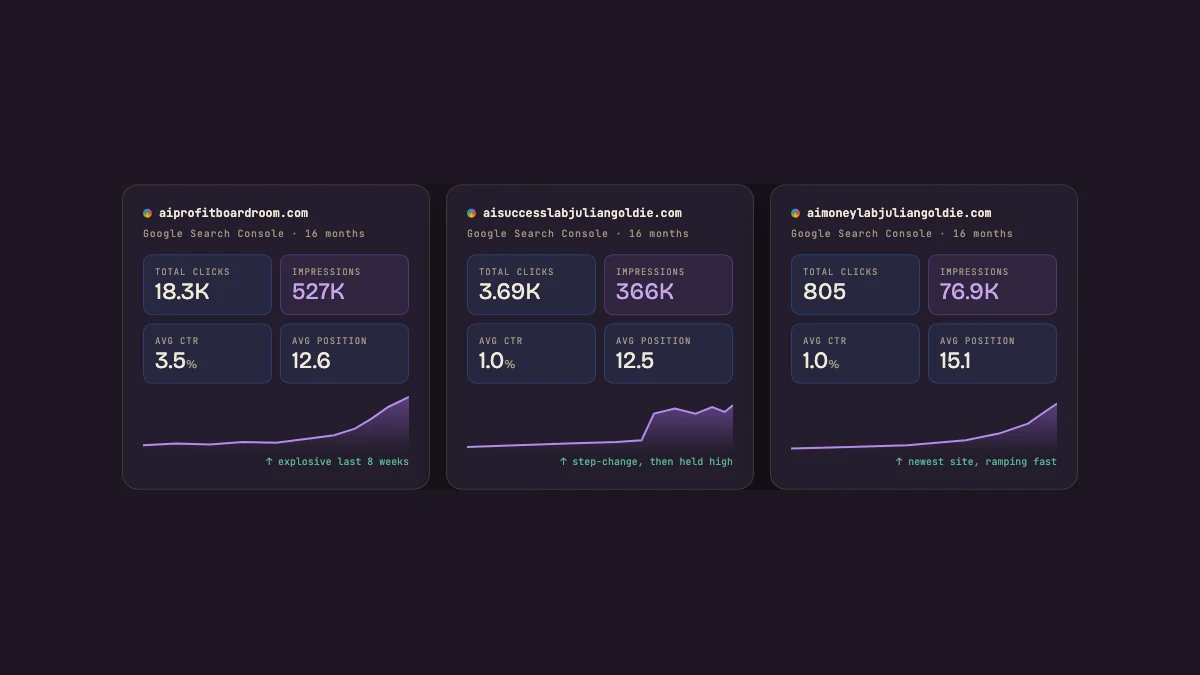
3,900+ founders are wiring agents like this inside the Boardroom right now. Their wins — real businesses, real results — are documented here.
Read the member wins →You've seen it. It runs offline, costs nothing, answers instantly, and builds whole apps when you say the word. If you want it set up with you — step by step, right next to your cloud agents — it's all inside the AI Profit Boardroom.
I'll see you inside ↗