The Goldie Socratic Society + Hermes Agent OS.
My new framework — the way the AI Profit Boardroom actually works. Not a guru on a podium. A room of equals — builders, agency owners, creators, and operators — bringing real problems AND real insights, challenging each other, and getting smarter faster together. Below are thirteen real questions from this week alone. Each one with the original community post linked, and the room's answer broken down so you can use it today.
A room of equals. Not a guru on a podium.
Most online communities go silent.
The AI Profit Boardroom is different. It is a Socratic Society for AI builders — a room full of operators, agency owners, and creators bringing better questions every day.
You ask. I answer. Other members answer. People who have already solved your exact problem chime in. Members challenge ideas. Members share what's actually working in their business right now.
Then the answer becomes part of the collective brain of the Boardroom. The next person asking the same question gets the answer in two minutes instead of two weeks.
That is the Socratic Society. And it is the whole reason the Boardroom works.
The Goldie Socratic Society™

Most online communities work in one direction. Guru talks. Everyone listens.
That is not how the Boardroom works.
You don't have to be the smartest person in the room. You just have to ask the right question. Then the room — me included — sharpens it together.
Three pillars. One loop.
Bring problems. Bring insights.
Everyone brings both. The "I'm stuck on setup" person also brings the "here's what worked for my SEO" insight. The "which Mac do I need" person also brings the "here's how I closed my first AI client" win.
Nobody is just a student. Nobody is just a teacher. Everyone is both.
Challenge ideas. Share what's working.
Members challenge each other in service of getting to the right answer faster. Someone posts a workflow — five members refine it. Someone shares a result — three members copy it and adapt.
I weigh in too. But not as the final word — as one of the voices in the room. Where I'm wrong, someone usually is right behind me with a better answer.
The whole room gets smarter every day.
Every question, every challenge, every answer becomes part of the collective brain. Big ones become tutorials, SOPs, and videos. Stored in the classroom. Searchable forever.
So instead of wasting two weeks Googling, you ask a room full of people building the same AI stack right now. One person asks. Everyone learns. Everyone ships faster.
You don't have to be the smartest person in the room. You just have to ask the right question. The room handles the rest. — The Socratic Society
If you want to be inside the room.
Everything below is from this week alone. Thirteen members. Thirteen real situations. Thirteen answers that came from the room — not from any single expert.
If you want to be the next one asking — and get the room's collective answer, with my reply on top, plus other members who've already solved it — here's the door.
Bring your problems. Bring your insights.
Inside the AI Profit Boardroom, you get the full Agent OS — Hermes, Claude, OpenClaw, and your Obsidian memory all wired together — plus the room. 2,800 builders, agency owners, creators, and operators all running the same stack and helping each other ship.
- The Agent OS zip file ready to deploy — Hermes, Claude, OpenClaw, NotebookLM, Obsidian all pre-wired.
- The community itself — drop your question, get answers from members who've solved it AND from me.
- Weekly coaching calls where the whole room troubleshoots together in real time.
- Daily new tutorials built from the best questions and answers in the community.
- A 30-day Agent OS roadmap for getting your full stack running.
- 2,800 members already running this stack — someone is online 24/7.
- A member map so you can connect with operators near you.
"I'm looking at HeyGen but the free plan only does thirty minutes of video a month. Not enough if I'm posting content every day. Is there a cost-effective alternative? I'm open to using local hardware — I've got an AMD Strix Halo 395+ Max with 128GB of RAM."
You don't need HeyGen for daily video content. With your hardware, you can run video generation locally for free.
- Use HyperFrames — open source, runs locally, builds animated videos.
- Plug it into Hermes Agent — Hermes triggers the video build automatically.
- Or use any other agent you already run — Claude, OpenClaw, whichever your stack is built on.
- Output goes to your local asset gallery — no monthly cap, no per-second pricing.
"Upgrading from a Mac M2 with 8GB of RAM to a Mac M5 Pro with 48GB. Four sub-questions — is the new Mac enough for Agentic OS + Hermes/Claude Code + a local model? Is OpenClaw required for the stack? Should I sandbox each agent? Which Claude model do I use to build Agent OS — and does it have to be Claude?"
Going through each one in order.
- Is 48GB enough? Yes — comfortably. The Agentic OS dashboard, Hermes, Claude Code, and a small local model all fit. You'll have headroom for asset generation too.
- Is OpenClaw required? No. Agent OS works fine with just Hermes + Claude Code. OpenClaw is a powerful addition for specific automations, but not required to get started.
- Should you sandbox each agent? It's good practice for production work, but not required for getting started. Locker is solid. So is Daytona for cloud sandboxes.
- Which Claude model? Use Claude Sonnet 4.5+ inside Claude Code to BUILD your Agent OS locally. The model runs through Claude Code, which runs on your Mac. You're not running Claude weights locally.
- Does it have to be Claude? No. Free Claude Code uses Owl Alpha on OpenRouter — also free. Same harness, different API.
"Today we set up the Hermes agent team around AI Shift News, with each agent having a clear role. Crystal — orchestrator. Elon — workspace. Alex — content writer. Elvis — thumbnail creator. Joe — review editor. Took a month of testing, breaking things, fixing things. First article is published live."
Joe just shipped what most people get stuck planning forever. A real working multi-agent team. Live article. Repeatable workflow.
Here's the pattern he used that works for any business.
- Give each agent ONE specific job. Not "marketing assistant" — "thumbnail creator." Narrow.
- Name them. Crystal, Elon, Alex. Names make the system easier to think about and easier to debug.
- Give each agent skills and memory. So they're not random chat windows starting from zero.
- Build a "work proof" layer. So you can see what they're producing instead of just watching icons move.
- Test end-to-end on real content. Real article. Real publish. Find the gaps. Fix them.
Huge shout-out to Joe. Live article here: aishiftnews.ca/investing/spacex-ipo-june-12
"How do you go about identifying the current digital trends on Instagram, LinkedIn, YouTube, and TikTok? Are there tools or methods you currently use?"
I have a full ideation process I run daily to find trending topics. This is the exact one.
- Analyze daily — what's working from the content I've posted this week. Update with latest views.
- Use a custom Claude Project for more ideas based on what's already working.
- Analyze the best X pages who cover new stuff in your space.
- Analyze previous best-performing podcasts — what made them hit.
- Search socials for related terms in your industry (for me — OpenClaw, Hermes).
- Check the latest open-source projects — usually a great early signal of what's trending.
- Check trending products on GitHub.
- Look at what worked recently and re-make it with a fresh angle.
- Check trending topics on X.
- Check your competitor list.
- Check Google Trends and similar tools.
- Journal what went well, what worked, what to improve.
"Does free Claude Code have all the same capabilities as regular Claude Code?"
Yes. Anything you can do with Claude Code, you can do with free Claude Code.
- Same harness — the Claude Code CLI is identical in both.
- Same commands — every flag, every workflow, every plugin works.
- Different API under the hood — free Claude Code uses Owl Alpha on OpenRouter instead of Anthropic's billed API.
- Connected via the fcc proxy — a tiny piece that pretends to be Anthropic and routes to Owl Alpha.
That's the whole trick. Same CLI. Same UI. Free model.
"I'd like to set up Agent OS at home on a Mac mini with the M1 chip, 16GB of RAM, and 512GB of storage. Would that be sufficient?"
Yes — for the dashboard and connecting to cloud APIs. No — if you also want to run local LLMs alongside.
- Run the Agent OS dashboard — fine.
- Run Claude Code + Hermes + free Claude Code — all calling cloud APIs — fine.
- Run a small local LLM alongside — tight. RAM will be the bottleneck.
- Run multiple agents calling the cloud — comfortable.
"The Gemini 3.5 Flash + Antigravity 2.0 + Agent OS training from yesterday is an absolute game changer for my SEO Agency. If you haven't seen it yet, suggest you get on it without delay."
Wins like this are the whole reason the Boardroom exists. Real agency owners using Agent OS to ship real client results.
Mark's stack is the exact one we cover in the latest training — three pieces working together.
- Gemini 3.5 Flash — for fast, cheap content generation at scale.
- Antigravity 2.0 — for the structured agentic workflows that turn keywords into pages.
- Agent OS — the dashboard that connects them, holds the memory, and tracks every deployed site.
Together it changes the entire economics of an SEO agency. Less hand-writing. More deployed sites. Faster client wins.
"I just joined the community and I'm really excited. What caught my eye was the info about Hermes OS. But I can't find anything on it inside the platform. Which section or classroom tab has the details?"
Welcome in. Everything you need is right here in one place.
Click here for the full Hermes OS module — zip files, prompts, video tutorials, and the setup guide.
"After setting a goal, I finally have a win. Had a small issue to solve with a button that didn't work — took longer to find that bug than to complete the build. It's v1 but it does what I need for now."
Tom just did the most important thing — shipped v1.
- Set the goal first. Tom's win started because he set a concrete goal. Vague goals never ship.
- Build the basic functions first. Don't try to make every feature perfect on day one.
- Debug as you go. The single button bug took longer than the whole build — that's normal. Budget for it.
- Ship v1 before perfecting. v1 that runs beats v3 that's still in your head.
Now Tom has a real Agent OS he can iterate on every week. That's the entire game.
"Just started using OpenClaw and Hermes to run a fully automated social media platform called AI Once a Day. Posting daily across Instagram, Facebook, Podcast, TikTok, YouTube, X. What's the best way to build an audience?"
I run the same systems daily. Here's what actually moves the needle, in order.
- Content multiplication — one source becomes audio, video, slide deck, infographic, social posts. NotebookLM + the Knowledge Engine is built for this.
- Daily ideation — the 12-step ideation process from Q.04 above. Run it every morning.
- Agent OS as your content factory — Studio for media, Kanban for routing, Journal for what's working, Hermes for execution.
- Community-first publishing — show up where your audience already lives. Don't wait for them to find you.
- Document the systems publicly — every workflow you build becomes content too.
- Personal voice + automation — automation handles the repetition. Your personality handles the trust.
You're already further than most. Six platforms running daily is real distribution. Now the work is making each one feel less like an automated feed and more like Tony showing up.
"So close to what I want. I need free Claude in the mission control panel of Agent OS. Plus Obsidian so my team of agents never forgets what we're working on. I'm not technical — need something I can paste to Manus and have it walk me through step by step like I'm five years old."
You're closer than you think. Here's the exact paste-into-Manus approach.
- Give Manus the GitHub URL — github.com/Alishahryar1/free-claude-code — that's the free Claude Code repo.
- Tell Manus to install it — "Install the free Claude Code project from this repo on my Mac, step by step, explain each step like I'm new to this."
- Tell Manus to set up the API — "Now sign me up for OpenRouter, generate an API key, and configure Owl Alpha as the model inside free Claude Code."
- Plug it into Agent OS — open the Agent OS mission control panel, add Free Claude Code as an agent, point it at the local fcc-server.
- Wire in Obsidian — Agent OS reads from your Obsidian vault. Both Claude and Free Claude pull memory from the same place.
"I want to build a web app where you enter a URL, the app runs an AI-search-engine-aware SEO audit, then connects to WordPress to fix the errors automatically with an auto-backup. I can build this in a week. Looking for marketing collaborators."
Solid idea — the auto-fix piece is the real differentiator. Most SEO audit tools stop at "here's a list."
- Get the Ahrefs API. Best signal source for keyword + page-level data right now.
- Create a Claude dashboard where the user enters WordPress login details and their WordPress API key.
- Pair Ahrefs + WordPress API — that combo gives you everything you need to audit AND fix.
- Auto-deploy fixes — Claude logs into WordPress through the API and pushes updates with a snapshot backup first.
For marketing collaborators — drop this idea inside the Boardroom community. There are agency owners and developers in there actively building products like this.
"What's been the easiest AI service to sell recently? AI chatbots, GEO optimization, AI content systems, automated lead generation, AI appointment booking, SEO swarms, local business automations — trying to understand where the fastest path to revenue is."
Lead generation. Without question.
The reason is simple. Clients want to see a clear return on what they pay you. They don't care about your tool, your tech stack, or whether you call it "geo optimization" or "AI content systems." They care about one thing.
So sell something that ladders directly into that.
- AI avatar videos — great for outbound + paid. Direct response capable.
- AI-generated content (blog, social, podcast) — inbound lead engine. Slower start, compounds harder.
- SEO content swarms — same as above with AI search engines layered in.
- Cold outreach automation — direct path to qualified leads.
Anything else, you're selling a tool. Sell a result. The lead count is the result.
The three beliefs holding you back right now.
You've read thirteen real questions. You've seen real answers. If you're still on the fence, three beliefs are probably in the way. Let me handle each one.
I just want one expert to give me THE answer. Not a community of random people.
No single expert — including me — has seen every problem you'll hit. The room of 2,800 builders, agency owners, and creators has. Together they've already solved every issue you're about to run into. That collective brain beats any single guru, including me. That's why the Socratic Society works.
My question is too basic. I'll look out of place asking it.
Every question in this guide came from a real member this week. "Is 16GB of RAM enough?" is not a basic question — it's the exact question that keeps people stuck for weeks. The Boardroom rewards the people who ask first — because they get the room's answer first.
I can find all this on YouTube for free. Why pay for a community?
YouTube gives you yesterday's answer to someone else's question. The room gives you this week's answer to your specific question. There's a 17-month gap between AI updates and YouTube tutorials. Members get the answer the same day — from people who shipped it themselves, not from people who only wrote about it.
158 pages of members who already broke through these exact beliefs. Their stories — real businesses, real wins, real Agent OS builds — are documented here.
Read the 158-page testimonials doc →You can do this alone. You shouldn't.
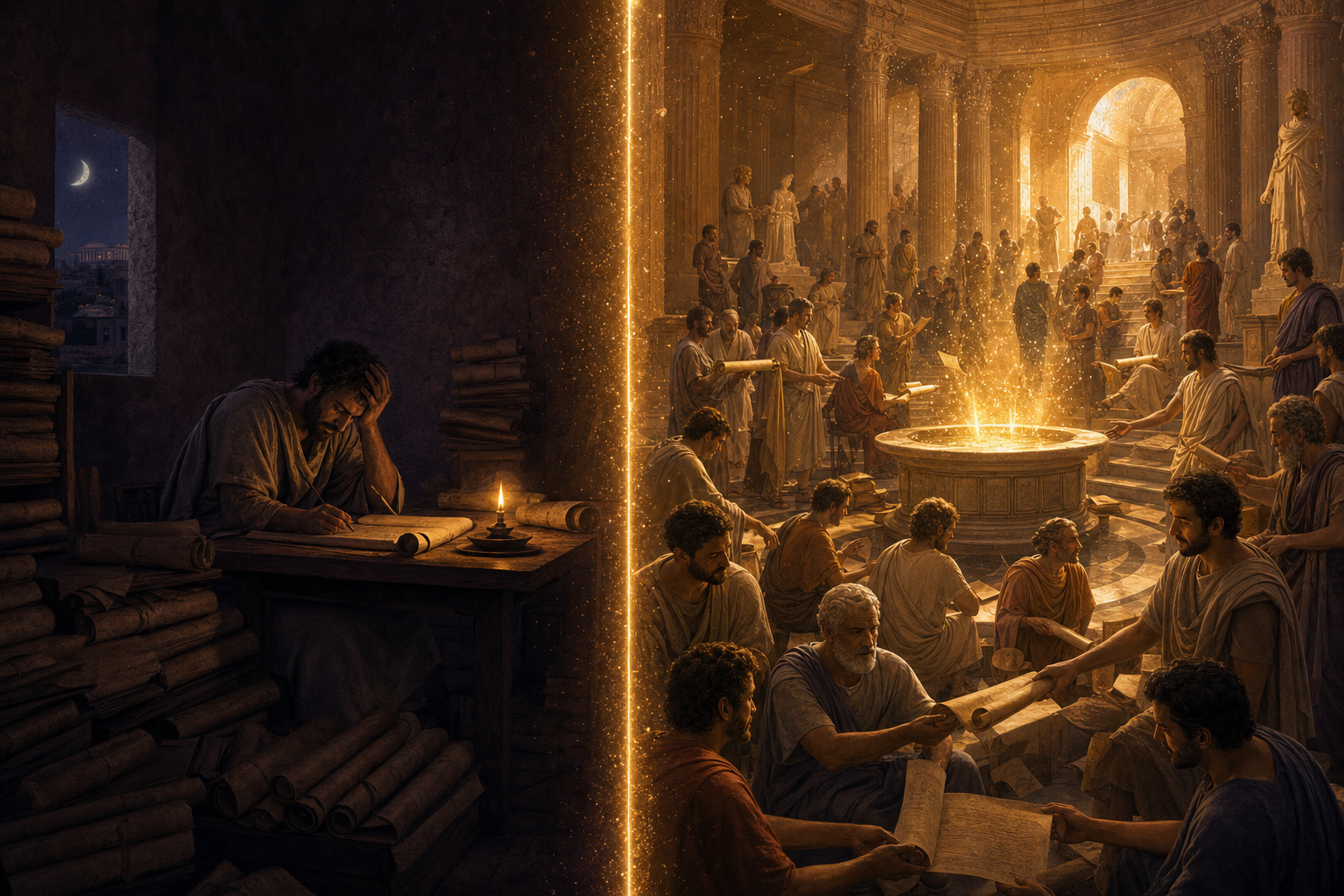
Solo. Slow. Stuck.
- Hit a wall. Google it. Read three outdated blog posts.
- Watch a YouTube video from six months ago.
- Try the steps. They don't work because the tool updated.
- Post on Reddit. Get one half-helpful reply in two days.
- Give up. Switch tools. Hit the same wall again.
- Repeat for every single problem.
Together. Fast. Shipping.
- Hit a wall. Drop the question in the Boardroom.
- 2,800 members are running the same stack — someone has solved this.
- I read every question personally. Reply with the actual fix.
- The answer becomes a tutorial. Stored forever.
- Coaching calls every week to set things up live.
- The wins compound. Yours and everyone else's.
Thirty days to a shipping Agent OS.
If you join the Boardroom today, here's exactly what your first thirty days look like.
Week One — Install
Days 1–7Download the Agent OS zip. Install Hermes, Claude Code, free Claude Code. Wire in Obsidian. Watch the setup walkthrough video. Ask your first question in the community.
Week Two — Wire in your business
Days 8–14Connect your contacts, calendar, vault, and tools. Set up your first three Agent OS panels (Studio, Kanban, Journal). Run your first real automation. Join the weekly coaching call.
Week Three — Build your team
Days 15–21Define three named agents (orchestrator, writer, reviewer — like Joe Vajda did with AI Shift News). Give each one a specific job. Run your first multi-agent workflow end-to-end.
Week Four — Ship
Days 22–30Pick one client deliverable, one content project, or one internal process. Run it through Agent OS end to end. Document what worked. Post your win in the community.
Day one you install. Day thirty you ship. Day three hundred and sixty-five you run a business no solo operator could match. — The Open Door Compounding Effect
Thirteen questions. Thirteen answers.
HeyGen Alternatives
Use HyperFrames + Hermes. Free, local, no monthly cap.
Mac M5 Pro Setup
48GB plenty. OpenClaw not required. Claude Sonnet 4.5+ to build.
Agent Teams
One job per agent. Name them. Give them memory. Ship v1.
Digital Trends
12-step daily ideation process. Journal what worked.
Free Claude Code
Same harness. Different API. Fully equivalent.
Mac Mini M1
Good for the dashboard. Route through cloud APIs, not local LLMs.
SEO Agency Stack
Gemini 3.5 Flash + Antigravity 2.0 + Agent OS.
Building v1
Set the goal. Ship before perfecting. Debug the buttons last.
Brand Building
Content multiplication + daily ideation + personal voice.
Free Claude + Manus
Paste the GitHub URL. Manus installs and configures.
SEO + WordPress Auto-fix
Ahrefs API + WordPress API + Claude dashboard.
What to Sell
Lead generation. Always. Sell the outcome, not the tool.
Every answer came from a real question this week. Every member who asked got a reply.
One person asks. Everyone learns.
The Goldie Socratic Society
Stop building alone.
Trying to build AI systems alone is slow. You hit one tiny issue — setup, prompts, APIs, agents — and you've lost three hours. Inside the room, that becomes three minutes.
A room of equals. Building together.
Inside the AI Profit Boardroom, you get the full Agent OS — Hermes, Claude, OpenClaw, NotebookLM, and Obsidian all wired into one dashboard — plus the room. 2,800 builders running the same stack, helping each other ship faster.
The thirteen questions in this guide are from this week alone. Every week looks like this. Members ask, members answer, I weigh in, and every answer becomes part of the collective brain.
- The Agent OS zip file ready to deploy — Hermes, Claude, OpenClaw, NotebookLM, Obsidian all pre-wired.
- 2,800 fellow builders — your questions get answered by members who've already solved them, plus me.
- Weekly coaching calls where the room troubleshoots together in real time.
- Daily tutorials built from the best questions and answers in the community.
- A 30-day Agent OS roadmap (the exact one above) to get you running.
- A member map so you can connect with Agent OS operators near you.
- 158 pages of testimonials from members who already built real businesses with this stack.
You can build the stack free with Hermes + Owl Alpha. But you can't build the room alone. That's what the Boardroom is.
Bring your question. Bring your insight. Get smarter together. I'll see you in the next one.