The Goldie Game Forge™.
A viewer asked. An agent built it.
During my livestream, a viewer typed one question into the chat: "can you set up a Coding Video Game Agent?" Twenty minutes later the agent was hired, working on its own kanban board, and shipping playable 3D games into the Agent OS. Three games are on the shelf already. This is one of them — click it and play.
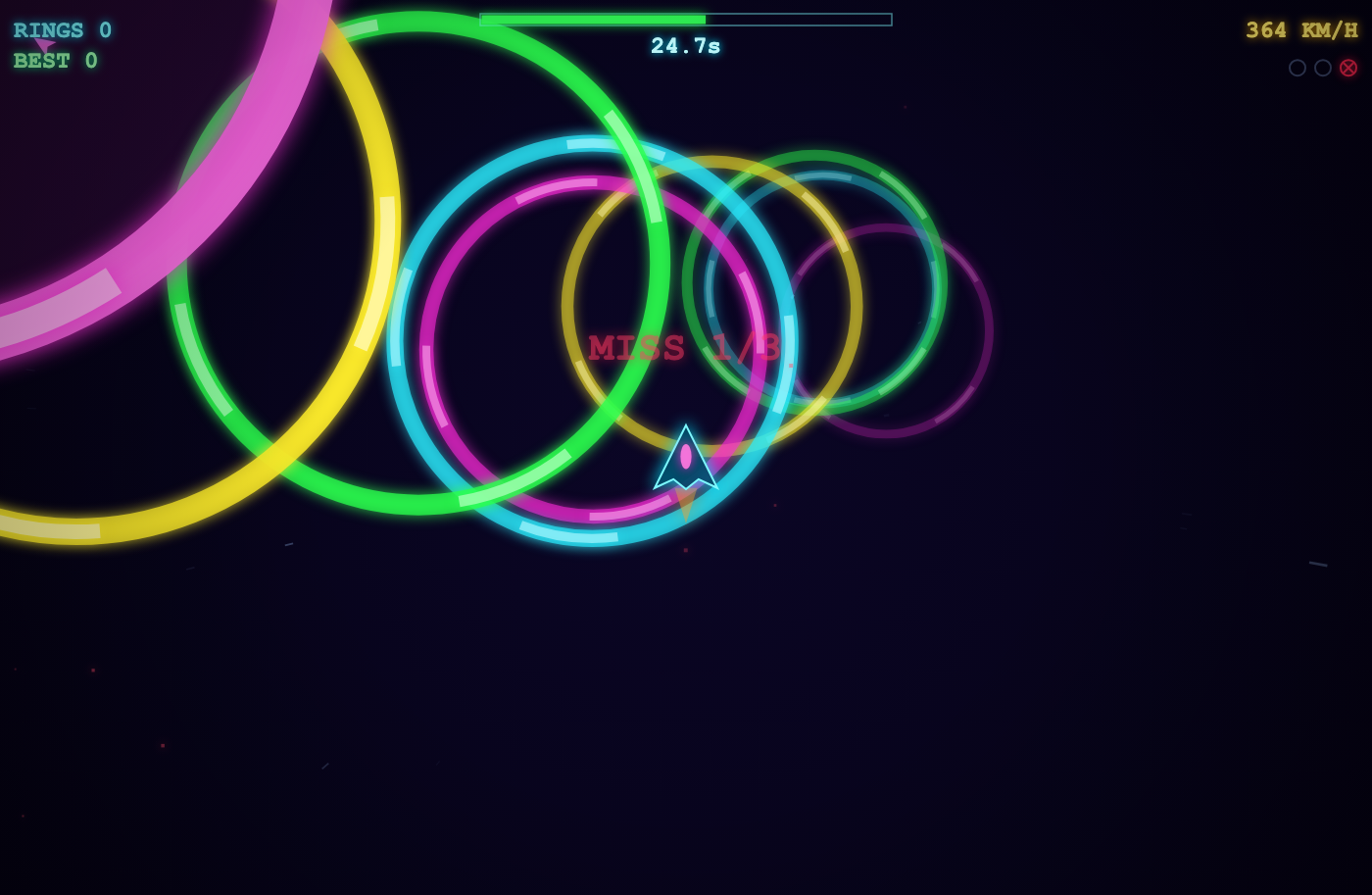
↑ The agent built this. It's playable — click it.
I was you. Then a viewer's comment became a working game studio.
Before
When someone asked me to build something live on stream, it used to mean one thing: me, coding, while everyone watched me Google.
One game would take a weekend.
A "game studio" was something other people had — with developers, budgets and deadlines.
Viewer ideas died in the chat scroll.
Then a viewer asked for a Coding Video Game Agent — so I hired one. Live.
After
Now there's a Game Studio tab in my OS, next to SEO and Video.
I type one sentence — the agent designs, codes and ships a playable 3D game while I keep streaming.
The viewer's asteroid game was on the shelf the same hour they asked.
Every game is one file, no libraries, with its own from-scratch 3D engine — and the whole thing runs on a kanban board I can show anyone.
You can have this too. Same tools. Same path.
Real people. Real wins. Inside the Boardroom right now.
Here's what's happening for the members already running this stack — agency owners, ecom founders, course creators, solo operators.
158 pages of members documenting real wins with this exact stack — real businesses, real screenshots, real numbers.
Read the 158-page testimonials doc →Commit to transitioning today. Not tomorrow.
You're about to see a request become a hired agent, and a sentence become a playable game.
Every step is reproducible on your machine.
So here's the deal.
Promise yourself one thing right now: you'll finish this guide AND commission one build from an agent before you sleep tonight. Just one.
Because the moment your ideas go to a workshop instead of a to-do list, you stop being the bottleneck in your own creativity.
The people sitting still are getting passed. The people implementing today are the ones who'll look back in six months and say "that was the moment."
Be one of those people.
Commit to the transition. Commit to taking action today. This changes everything about your workflow.
The Goldie Game Forge™.
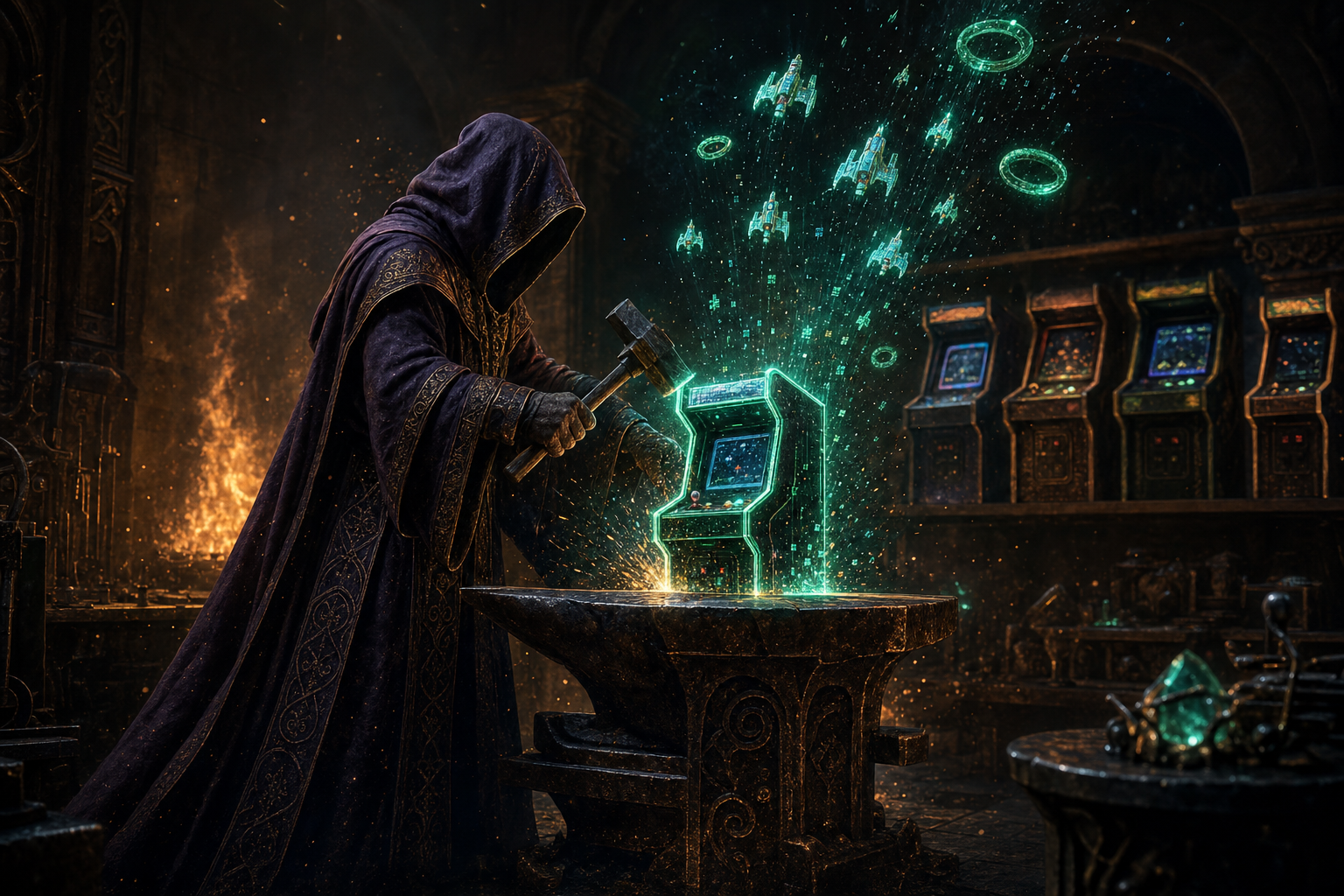
A forge takes raw metal and hammers it into something you can use.
This one takes a sentence and hammers it into a game you can play. Four parts:
The Commission
A prompt box in the Game Studio tab. You describe the game in one sentence. That's your entire job.
The Forgemaster
The game-dev agent — a Hermes profile with a Claude 5 brain and a SOUL file that defines its craft: one file, no libraries, write your own 3D engine, game feel first.
The Anvil
The game-studio kanban board. Every commission is a card with a full event trail — claimed, run, completed. The work is visible, never vibes.
The Shelf
The gallery. Finished games appear with live animated thumbnails — click to play in the OS, no downloads, no setup.
One agent. One craft charter.
The agent is a Hermes profile called game-dev — hired with two commands.
Its SOUL file is the whole secret. It carries the craft into every job:
🎮 Build COMPLETE, genuinely playable games — never demos.
📦 One self-contained file. No libraries, no CDNs. Everything drawn in code.
🧊 3D when asked: write your own perspective projection — it always works offline.
✨ Game feel first: responsive controls, score, difficulty ramps, screen shake, particles, replay.
The brain is Claude 5 — the same Mythos-class model that tops every coding benchmark — running inside the Hermes agent runtime on my Mac.
You don't check code. You press LAUNCH.
The game either plays or it doesn't — and every game on the shelf was tested by actually steering the ship before it counted as done.
One sentence in the box. That's it.
The Game Studio tab sits in the sidebar next to SEO and Video — it's a workflow now, not an experiment.
Type the game you want. Press Build it.
The studio creates a card on the game-studio board, wakes the Forgemaster, and shows the job in the Workshop strip with a live status.
The ring race at the top of this guide was commissioned exactly this way — one sentence: "a 3D ring race: fly a neon ship through glowing rings before the timer runs out."
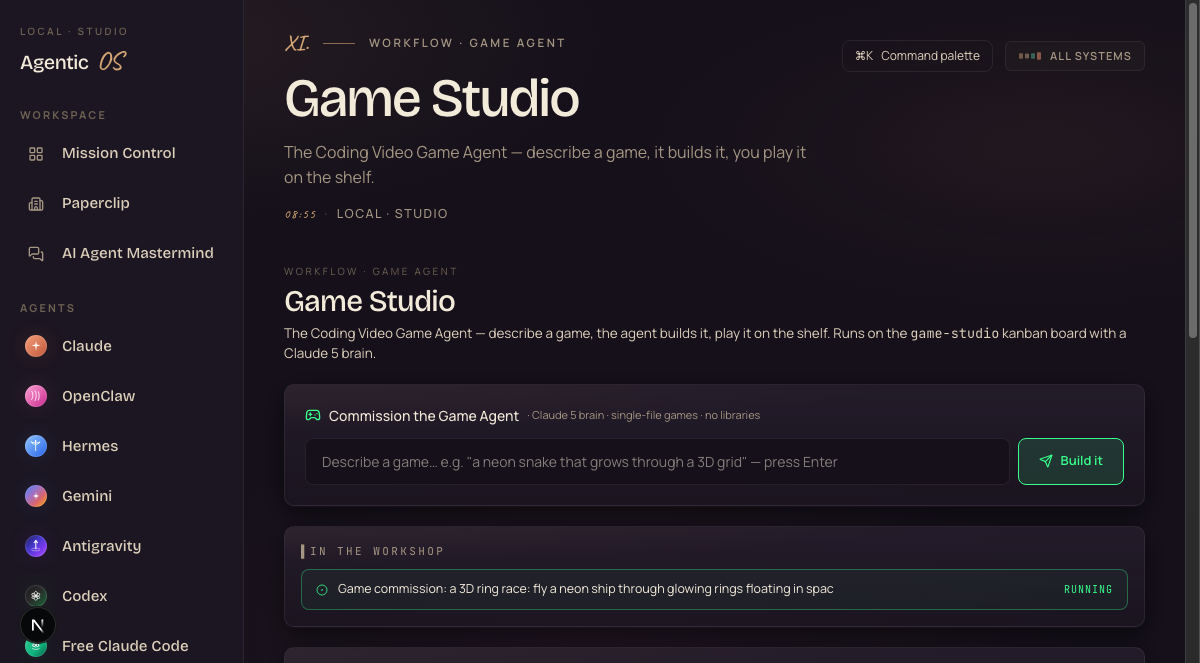
→ Sidebar → Game Studio — the commission box + workshop queue
→ Kanban → game-studio board — every commission card
▶ Open the Game Studio · new tabThe viewer's request, built while we streamed.
Here's the part that made the chat go quiet.
The first commission was the viewer's own words — a 3D asteroid dodger.
The agent claimed the card, wrote its own perspective-projection engine, and shipped a complete game: tumbling wireframe asteroids, a neon ship with an engine trail, star parallax, screen shake — and it even implemented near-miss bonuses from the spec.
Then it marked its own card complete.
I audited it the way you'd audit any game: pressed LAUNCH, steered, crashed. Zero console errors. It just works.
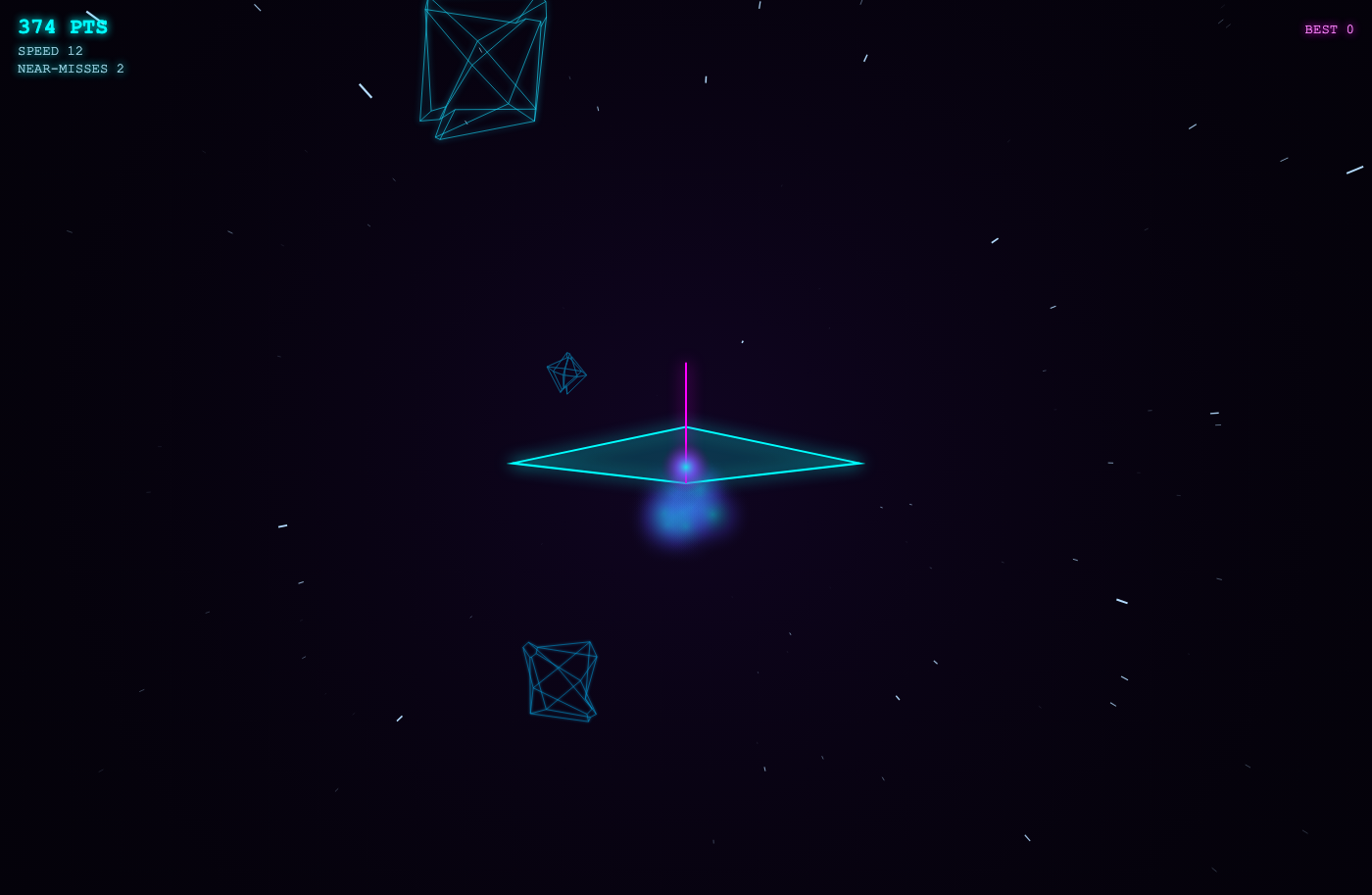
→ play it: asteroid-dodger-3d.html
→ the card: game-studio board — "Viewer commission… requested live by Lil Suspense Beats"
▶ Play the viewer's game · new tabThat's what happens with one lazy prompt and no standards.
The Forgemaster's SOUL demands controls, scoring, difficulty ramps and a replay loop on every build — and each game gets steering-tested before it ships to the shelf.

Run the Game Forge on your ideas.
Everything you just saw — the agent, the SOUL charter, the board, the studio tab — ships as one system: the Agent Operating System inside the AI Profit Boardroom.
And the Forge pattern isn't just games. The same loop runs my SEO team, my video pipeline, my AI company. Describe → board → agent → shelf.
- The full Agent OS zip — the exact system in every screenshot above
- A 30-day roadmap — hire your first agent, wire the board, ship your first build
- Every prompt + every SOUL file — copy the exact setup
- Coaching calls — we set it up together, step by step
- 3,100+ founders building with this stack · someone's online 24/7
Click a thumbnail. You're playing.
Finished games land on the Shelf — with live animated thumbnails, not static screenshots.
Click one and it opens in a play modal right inside the OS. No downloads. No setup. No "open your terminal."
The flagship below is the standard the agent is held to: a real 3D tunnel racer whose entire perspective engine — project x, y, z to the screen — is about forty lines of hand-rolled maths. No Three.js. No libraries. One file.
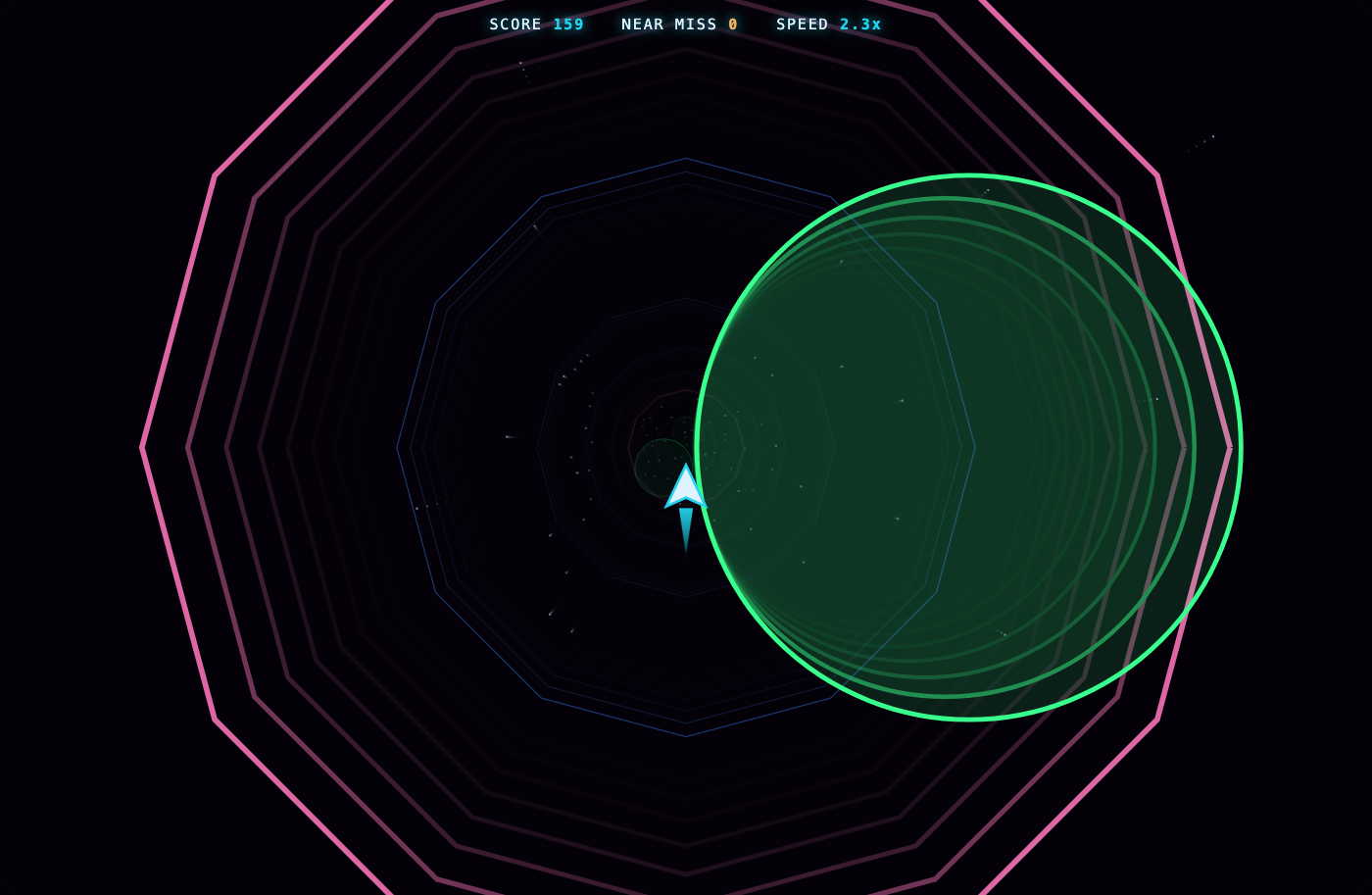
→ play it: neon-tunnel-racer-3d.html
→ the shelf: Game Studio → The Shelf — all three, click to play
▶ Play the Tunnel Racer · new tabAgent Rush — the game my agents designed last week — teaches delegation in 60 seconds and now lives on one of my funnel pages.
Playable content is the most shareable content there is. A game with your message in it IS marketing.
A weekend of coding vs a sentence.
- Learn a game framework before you write a line
- Fight build tools, bundlers and asset pipelines
- Viewer ideas die in the chat scroll
- "I'll prototype it someday" — someday never ships
- One broken dependency and nothing runs next month
- Result: zero games, one abandoned repo
- Type one sentence into the commission box
- The agent writes the engine, the juice and the replay loop
- Viewer requests become shipped games the same stream
- Every game is one file that runs offline forever
- The board shows every step — claimed, run, completed
- Result: three playable 3D games before lunch
Start with one commission.
Don't build the whole studio tonight.
Hire one agent profile, give it a SOUL with real standards, and commission one game on one kanban card.
Press LAUNCH on what comes back. You'll know in ten seconds whether your SOUL file is sharp enough — then tune it like you'd coach a junior dev.
Then wire the studio tab so the whole loop is one prompt box. That's an evening, not a month.
The people who figure out AI agents now, while the tools are evolving fast, are going to be way ahead when everything settles. Every workflow you build compounds.
Each game is one short agent run — pennies on the API, and Claude 5 is included free on paid Claude plans until June 22.
The games themselves run in any browser. There's nothing to host.
What you just gained.
You turned a comment into a studio.
A live viewer request became a hired agent with its own board and gallery — in twenty minutes.
You stopped coding games.
One sentence in the commission box — the agent writes the engine, the juice, the replay loop.
You got real 3D, no libraries.
Every game ships its own perspective engine in one offline file. Nothing to break.
You can show the receipts.
Every build is a kanban card with an event trail — claimed, run, completed, playable.
You got a shelf, not a folder.
Live animated thumbnails, click-to-play modals — your builds are a gallery, not a graveyard.
You learned the Forge pattern.
Describe → board → agent → shelf. The same loop that runs my SEO team and my AI company.
"Stop coding your ideas. Commission them."
Build your own Game Forge.
If you want this exact setup — the agent, the SOUL file, the board, the studio tab, the shelf — grab the Agent Operating System inside the AI Profit Boardroom.
You get the zip file. Every prompt and SOUL. The Obsidian memory setup. Coaching calls where we wire it in together, step by step.
3,100+ members. Daily tutorials. A 30-day roadmap. A member map to find builders near you.
Get the Agent OS → Inside the AI Profit Boardroom · aiprofitboardroom.com link in the description ↓Commission one game tonight. Press LAUNCH tomorrow.
I'll see you in the next one.