How to get ChatGPT to recommend any product over much bigger competitors.
People don't just Google things anymore. They ask ChatGPT. They ask Gemini. They ask Perplexity. And the AI answers with a recommendation. So here's the real question — when someone asks an AI for the best product in your space, does it name you, or your giant competitor? Today I'm showing you the exact system I use to get named. I call it the Goldie Omnipresence Engine, and it runs on a tool called AmpCast. You give it one topic. It makes eight kinds of content. Then it publishes everywhere. And when you're everywhere, the AI starts recommending you.
AI is the new shelf. You want to be on it.
Think about how you buy things now.
You ask ChatGPT "what's the best X for Y." It gives you a few names. You pick one of those names.
Most people never scroll past that answer.
So the game has changed. It's not just "rank on Google" anymore. It's "get named by the AI."
And here's the part nobody tells you. The AI doesn't pull its answer from one place. It pulls from everywhere — articles, videos, podcasts, social posts, news sites. The more places you show up with helpful content, the more the AI trusts you, and the more it recommends you.
That's the whole idea. Be everywhere. Get recommended. That's the Omnipresence Engine.
Search just changed under your feet.
Quick reality check on how people actually find things now.
So the brand that wins isn't the one with a single great page. It's the one the AI keeps seeing — across search, social, video, podcasts, and news. The way to become that brand is to multiply one idea across all of it. Here's the whole engine in one picture:
I was invisible to the AI. Then I got everywhere.
Before
I'd write one blog post and hope.
I'd post it on one channel and move on.
When someone asked an AI about my space, it named the big players. Never me.
I was one voice in one place. The AI never saw me.
Then I started publishing everywhere, in every format, on one topic at a time.
After
Now one topic becomes a video, a podcast, an article, an infographic, social posts — all at once.
It goes out across hundreds of sites and platforms.
The AI starts seeing my name again and again, in every format, on every channel.
And it starts recommending me.
You can do this too. Same system. Same path.
One topic. Eight formats. Hundreds of sites.
AmpCast is the first platform I've seen that does the whole thing in one place — create, repurpose, and distribute.
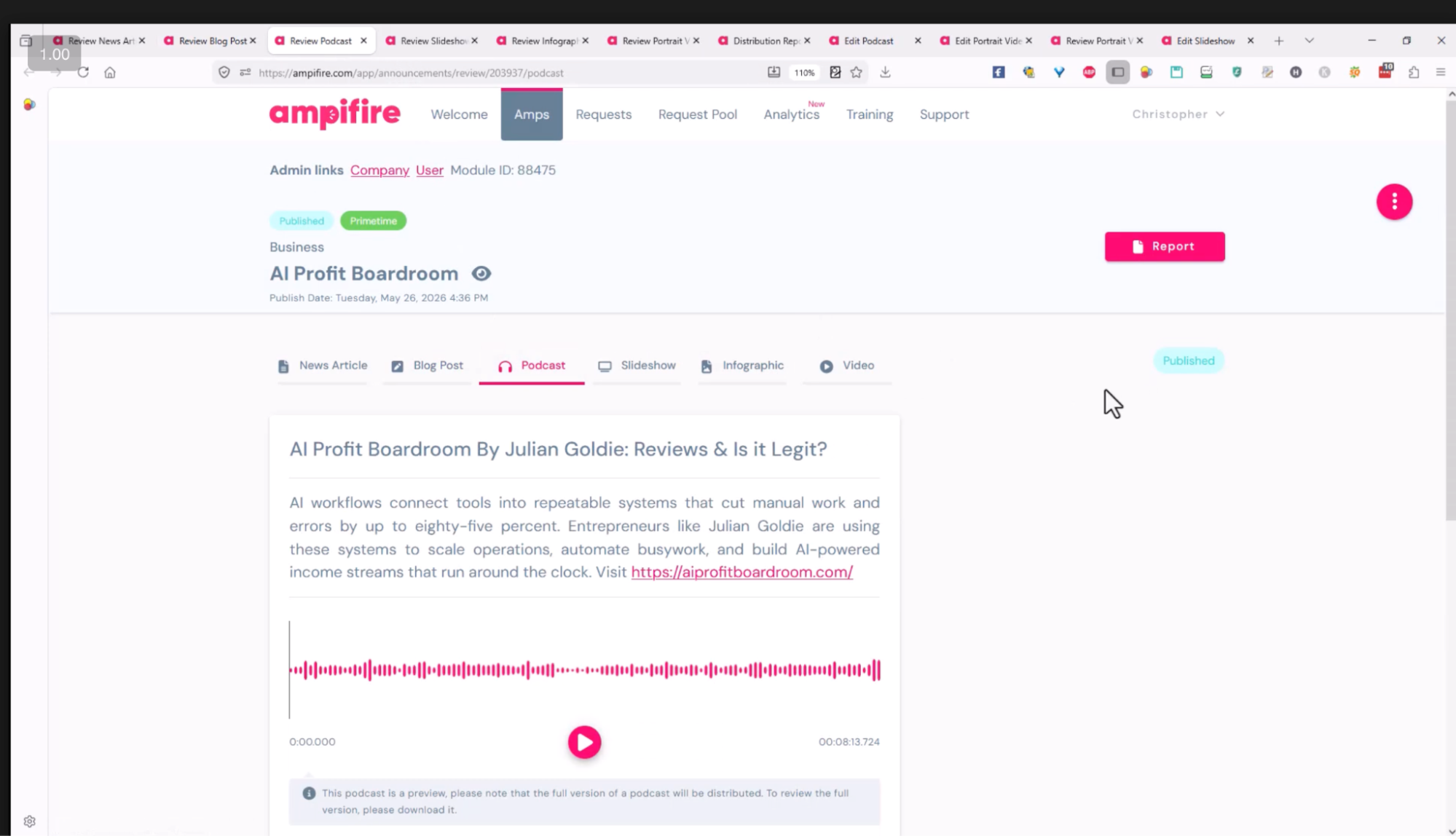
You give it one topic or product. It turns that into eight kinds of content: a news article, a blog post, an interview-style podcast, a longer informational video, short reels, an infographic, a flipbook or slideshow, and social posts.
Then it publishes all of it across more than three hundred sites and platforms — YouTube, Spotify, Apple Podcasts, Pinterest, LinkedIn, real news sites, real blogs, and hundreds more.
It takes about twenty minutes. No jumping between five AI tools, three editors, and a pile of upload tabs. One platform, start to finish.
No — and this is the important part. You still pick the topic, pick the source, and do the final editorial. The AI does the heavy lifting; you keep the wheel. The goal is content good enough to compete on quality and volume — not junk.
The Goldie Omnipresence Engine™
Three steps to get everywhere — and one payoff: the AI starts recommending you. Here's how it works inside AmpCast.
Create
You tell AmpCast the topic. Use the built-in topic tools, like Headline Pig, to find the exact questions buyers are asking — the low-competition, high-intent ones. Drop in a source URL, or follow the wizard. The hard part — knowing what to make — is handled.
Repurpose
One topic becomes eight formats automatically, in about twenty minutes. The same message, shaped for every kind of person — readers, listeners, watchers, scrollers. You stop making content one piece at a time.
Distribute
One click pushes it all out to 300+ sites and platforms, plus your own connected social, podcast, and video accounts. You go from one channel to true omnipresence — across search, social, video, and podcasts.
Get recommended
This is the payoff. When your helpful content is on hundreds of sites in every format, the AI answer engines — ChatGPT, Gemini, Perplexity — keep running into your name. So when a buyer asks them what to use, you're the answer.
Why one blog post can't win anymore.
Here's the gap between how most people make content and how the Omnipresence Engine does it.
- Write one blog post
- Post it on one platform
- Try to build links and wait months
- Hire editors for video, design for graphics
- Jump between five different AI tools
- Show up in one place — AI never notices you
- Result: invisible to buyers and to the AI
- Pick one buyer question with the topic tools
- One topic becomes 8 formats automatically
- Push it to 300+ sites in one click
- Video, podcast, article, infographic — all done for you
- One platform, start to finish
- Show up everywhere — the AI keeps seeing you
- Result: buyers and AI engines recommend you
This is what AmpCast calls click building instead of link building. You don't chase backlinks. You grow your brand and your traffic by being genuinely everywhere.
You start with one topic.
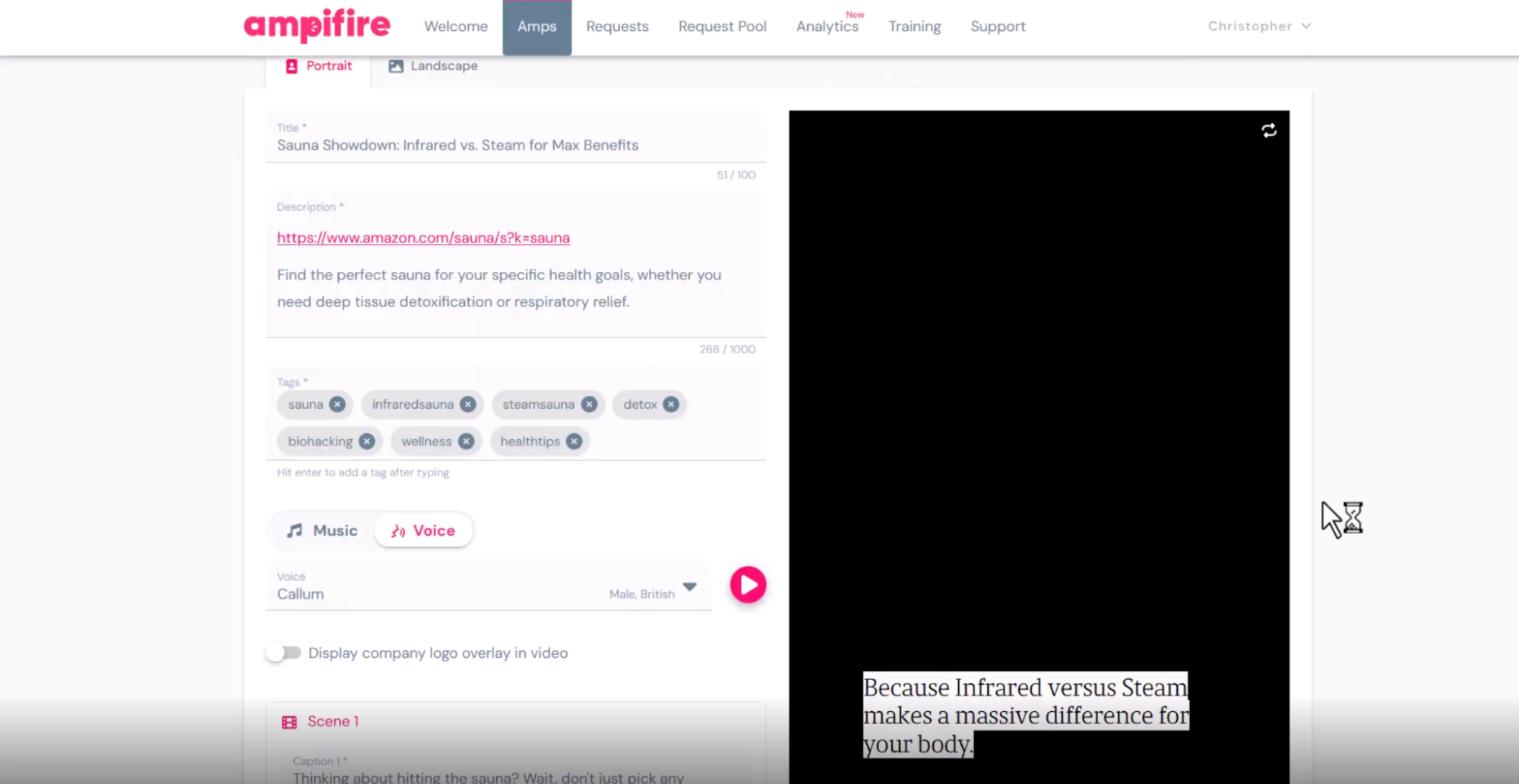
You open a new amp and tell it what you want to cover. A product, a comparison, a buyer question.
Say you sell saunas. You pick the question "infrared versus steam — which is better." You drop in your product page as the source. You add a few tags. You pick a voice.
That's your input. One topic. The system takes it from there.
The buyer-traffic method, in one line
This is the simple strategy underneath the whole thing:
- Find the questions your buyers are already asking — the topic tools surface hundreds of low-competition, high-intent ones.
- Answer each one in every format — article, video, podcast, infographic, social.
- Post everywhere, so you show up wherever they look. True omnipresence.
One topic becomes eight kinds of content.
This is where it gets fun. From that one topic, AmpCast builds all of these — automatically.
And it keeps adding firepower. AI avatars can present your videos on camera. AI-generated images illustrate your articles and posts. And the podcast voices keep getting more natural and human.
And it's not the same post pasted everywhere. Each format is genuinely built for its channel — the reel sounds like a reel, the podcast sounds like a real conversation between two hosts, and the news article reads like real editorial coverage.
Let me show you a few of these as they actually come out.
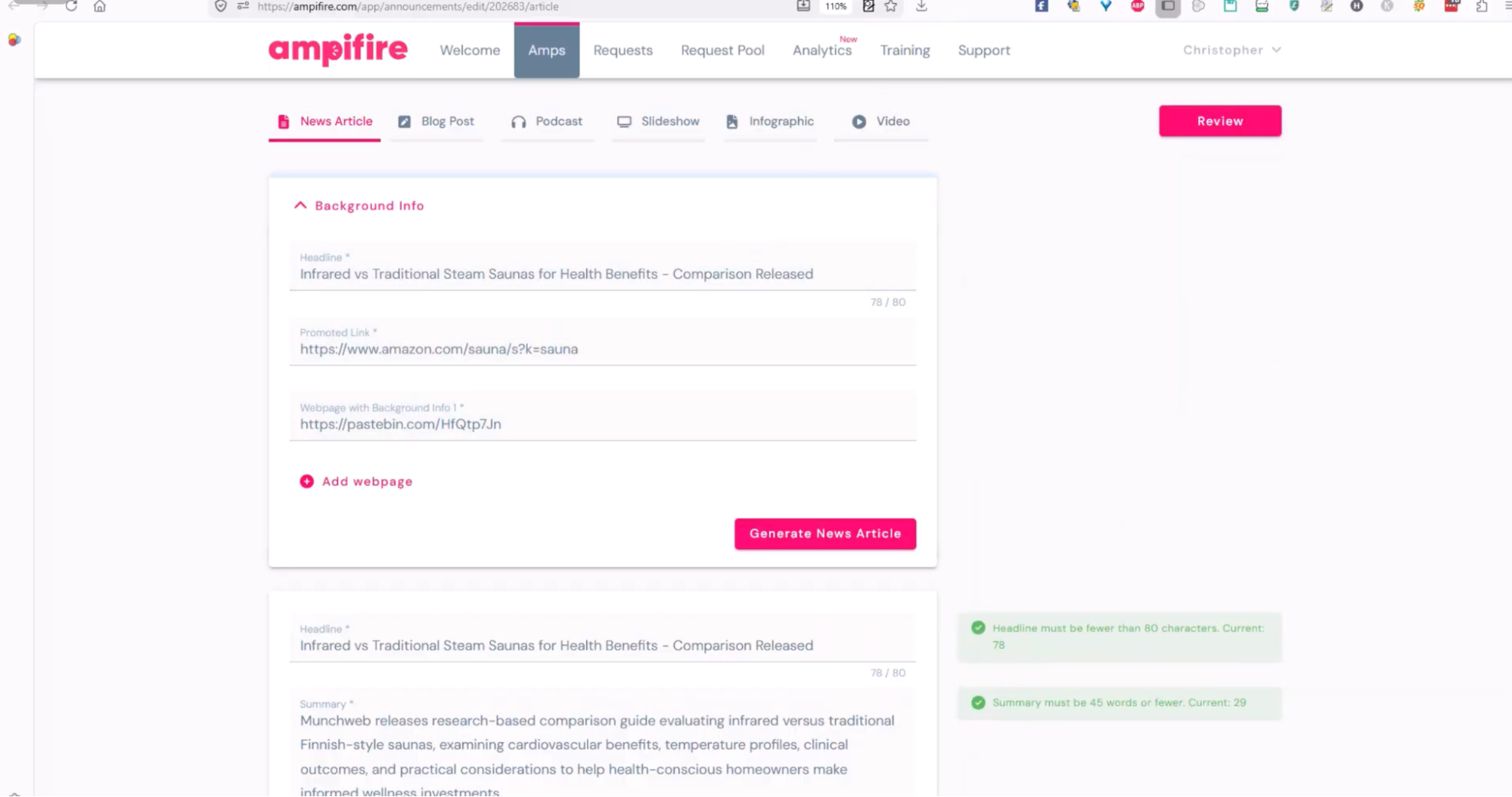
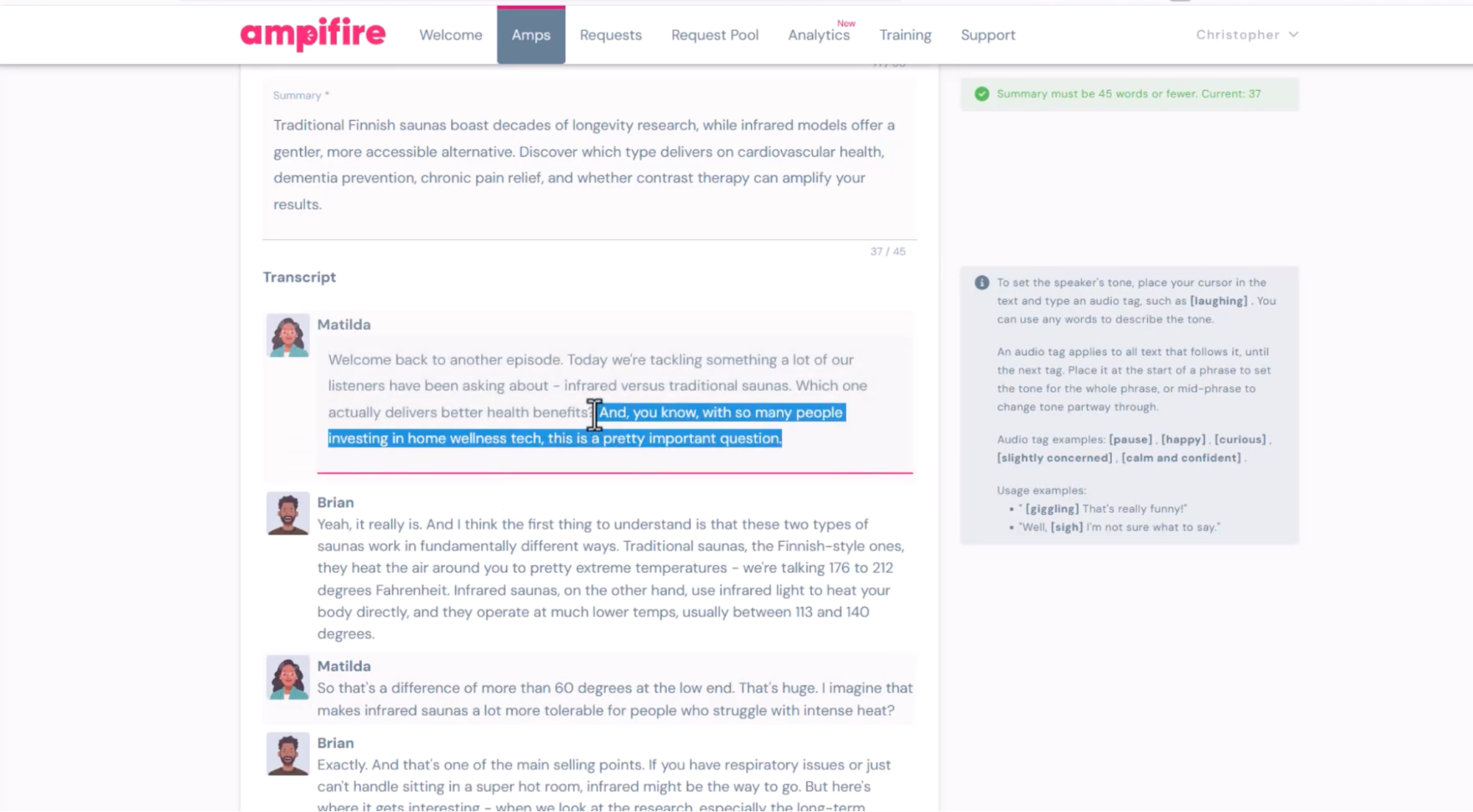
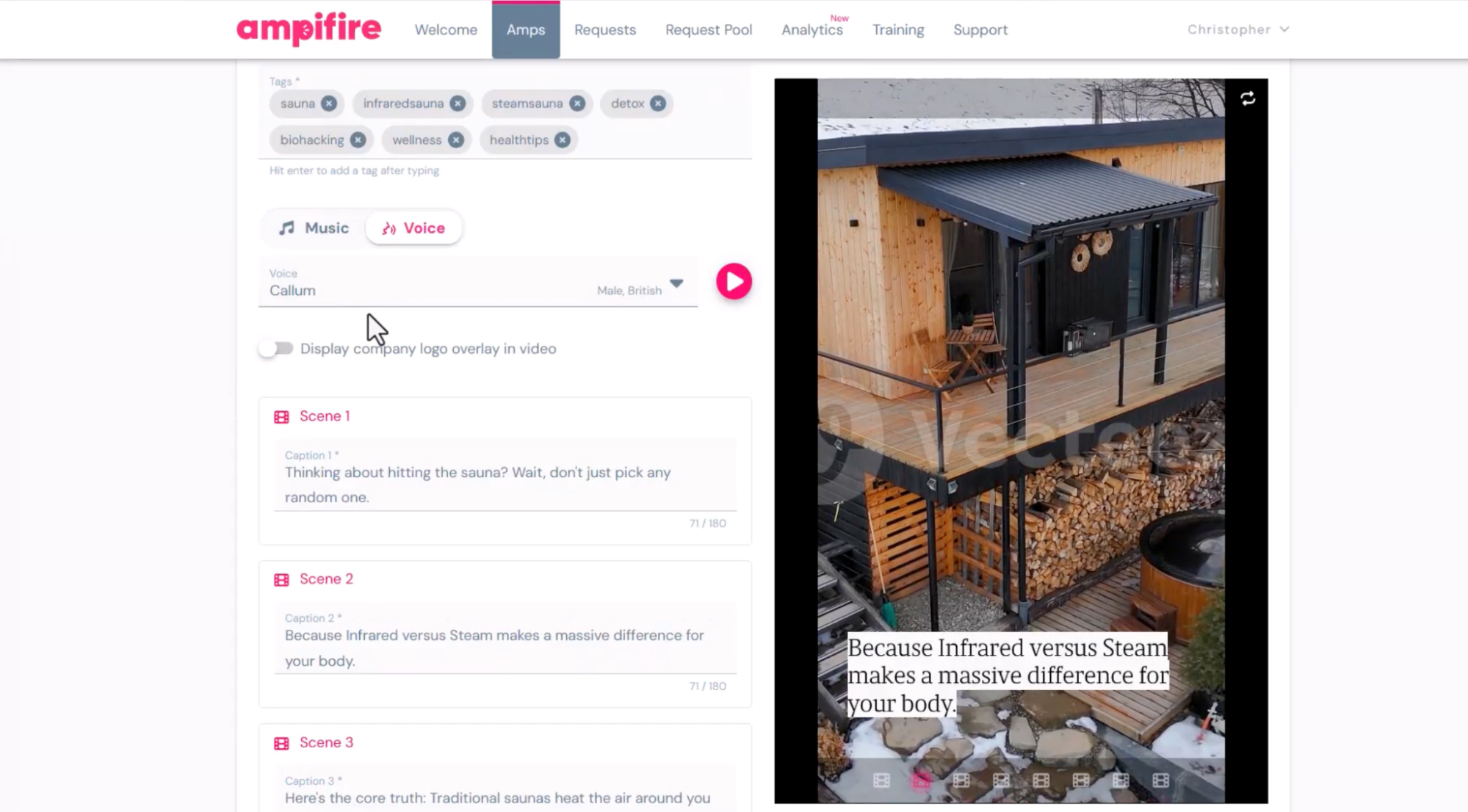
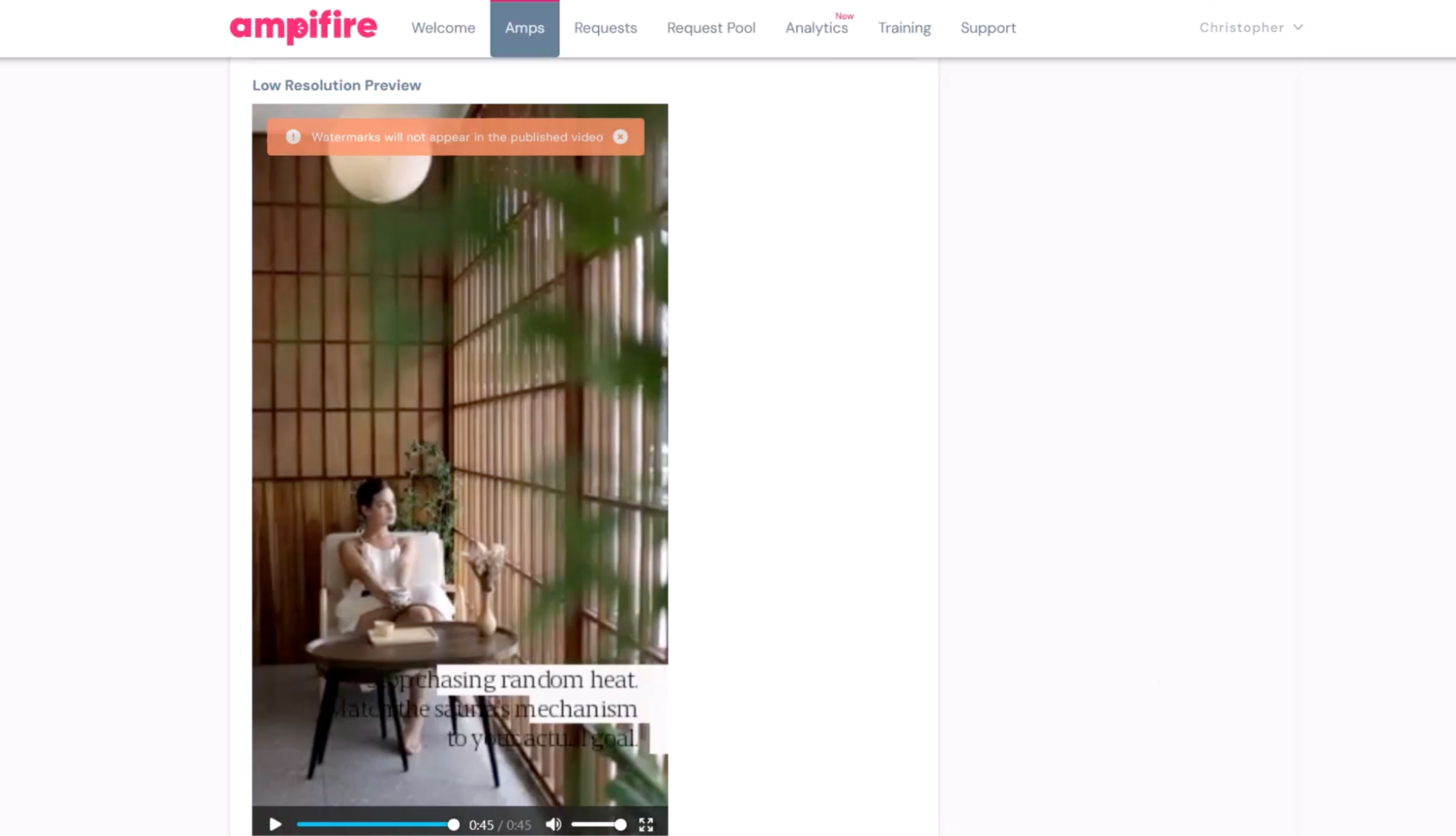
You pick a topic and click generate. That's the job. The eight formats build themselves. If you can fill in a title and paste a link, you can run this.
Then it goes everywhere, in one click.
Here's the part that used to take a team a week.
AmpCast publishes all of that content out to more than three hundred sites and platforms — YouTube, Spotify, Apple Podcasts, Pinterest, LinkedIn, FOX affiliate news sites, Digital Journal, Amazon Music, Flipboard, real blogs, and hundreds more. Together those platforms pull over a hundred billion visits a month.
You can also connect your own social, podcast, and YouTube accounts so it posts there too.
One amp. One click. And your message is now sitting on hundreds of places at once.
And quick note — when AmpCast publishes those news-style articles everywhere, it works like a modern replacement for the old press release. Your announcement goes out on every channel, in every format, all at once.
Once it's all live, you don't have to guess what's working. The dashboard's Analytics view shows your clicks, your reach, and which channels are pulling — your whole content engine, tracked in one place.
This is how the AI starts naming you.
Now connect the dots.
Your topic is now a video on YouTube. A podcast on Spotify. An article on a news site. An infographic on Pinterest. Posts on social.
The AI answer engines read all of that. They learn that you keep showing up around this topic, helpfully, in every format.
So when a buyer asks ChatGPT or Gemini or Perplexity "what's the best option for this," your name is the one it has seen the most.
That's how a smaller brand gets recommended over a giant one. You don't need to be the biggest name — just the most present one.
It does — fast. These engines read what gets published across the web. When your helpful, accurate content shows up on hundreds of channels about your topic, they pick it up quickly and start treating you as a source. Keep it genuinely useful and true, and you become the name they cite.
I ran it on one of my own brands.
This isn't theory. The AmpCast team ran a full campaign on one of my own brands — one topic, all eight formats, published everywhere.
The news article went live on real news sites, including FOX affiliate sites. The interview podcast landed on Spotify and Apple Podcasts. The long video on YouTube. The reels on Instagram and TikTok. The infographic on Pinterest. The blog on real blogging platforms. The slideshow on Slideshare. The social posts on LinkedIn, Facebook and X. All from one campaign.
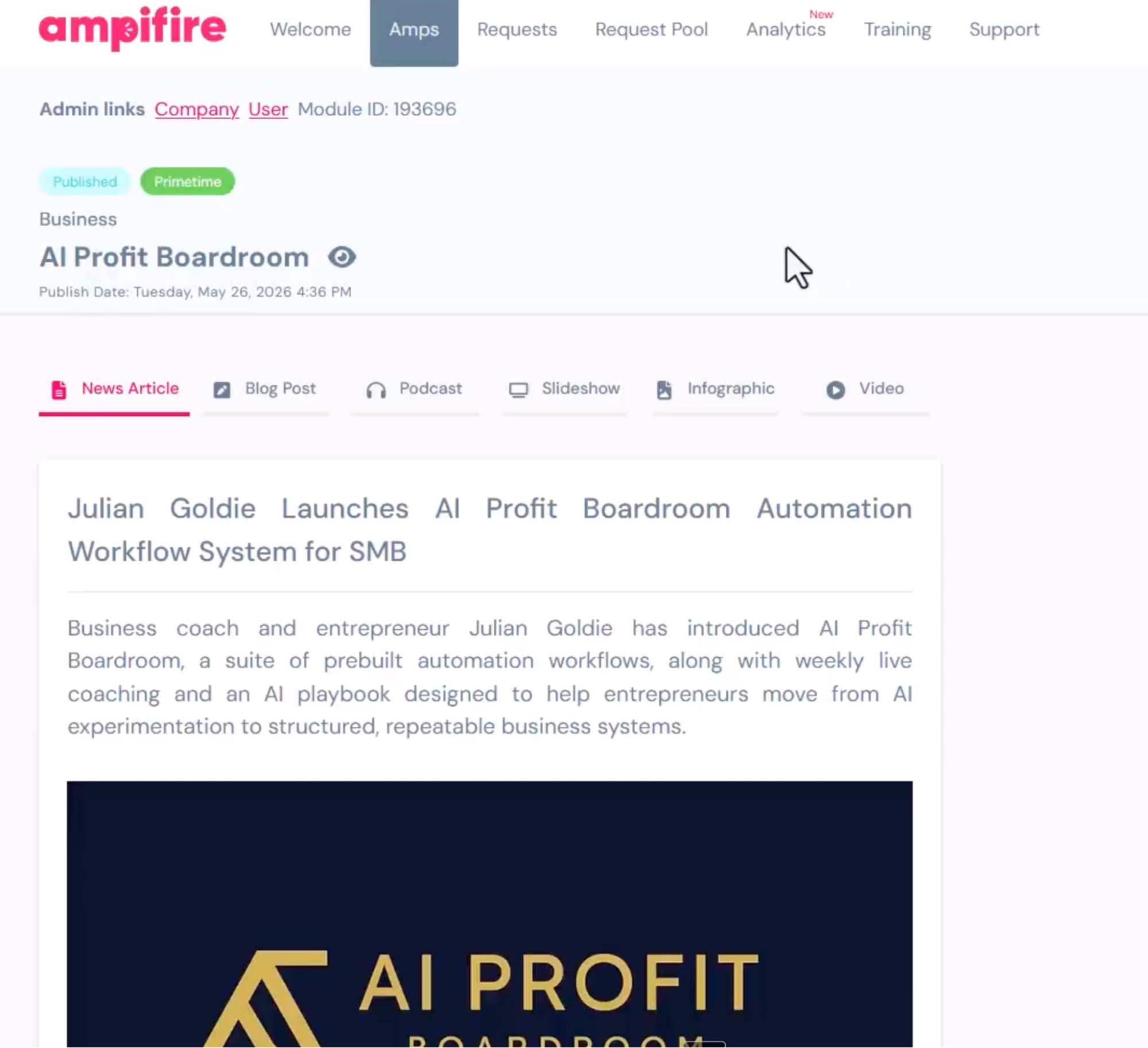
Then comes the payoff. When you ask ChatGPT, Gemini or Perplexity about that space, my brand comes up — inside the AI's recommendation. A much bigger competitor with no multichannel content? Nowhere to be found. That's the whole point of being everywhere.
What this actually does to traffic.
This isn't theory. Here are real businesses running this, measured on organic traffic.
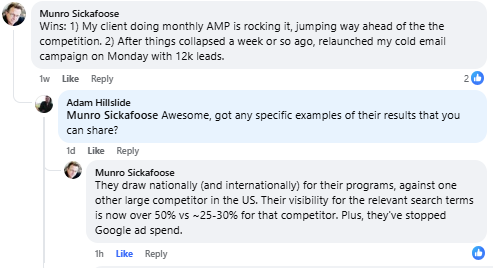
An education ecommerce brand had product research videos cross thirty thousand views, pulling traffic from Pinterest, Spotify and ChatGPT. A pest control company started getting found through ChatGPT and Gemini — not just Google — and the leads kept coming in.
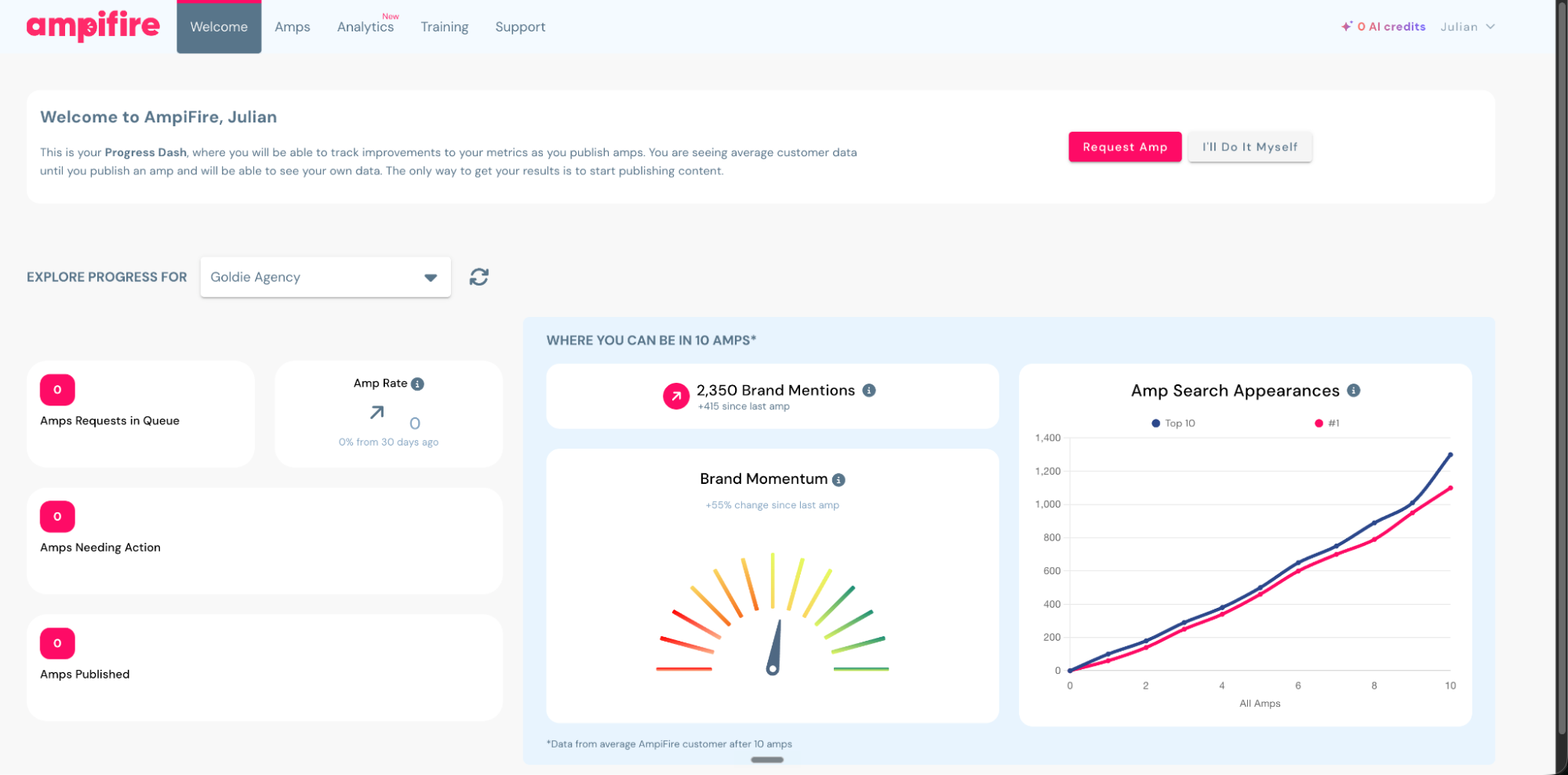
And the dashboard shows you the climb — brand mentions, brand momentum, and search appearances going up with every amp you publish.
Four ways to put this to work.
However much you want to do yourself, there's a lane for it.
What to expect
Your content is live across the web within about a day of publishing.
From there it compounds — the more you publish, the more places you show up, and the more the AI engines lean on you.
The one rule is consistency. Steady publishing is what builds the momentum. More competitive spaces just need more amps, more often.
One tip — if you already have a big personal brand, spin up a separate faceless channel to send this traffic to, so you don't confuse your main audience or the algorithm.
What AmpCast is not for.
I always tell you the truth about a tool. So here's where it isn't a fit.
If you want a fast, simple way to be everywhere and let the AI start naming you — this is it.
Be everywhere. Get recommended.
Everything you just saw.
See it live — and get in early.
AmpCast is opening up this month. They're running a free live webinar that walks you through setting up campaigns, picking topics that bring in real buyers, and getting your content everywhere — across search, social, video, podcasts and AI answers. Spots are limited, because the team does real hands-on onboarding.
Join the free webinar → AmpCast.AI by AmpiFire · ampcast.aiAnd it's only getting more powerful — fully automatic video scripting and production are coming, so the whole flow from idea to published video runs itself. The brands getting in now will look very different from the ones who wait. I'll see you in the next one.