agentos.guide › blog
Herald OS: A Quick-Start For The Free Hermes Agent OS, And Where It Fits Your Agent OS
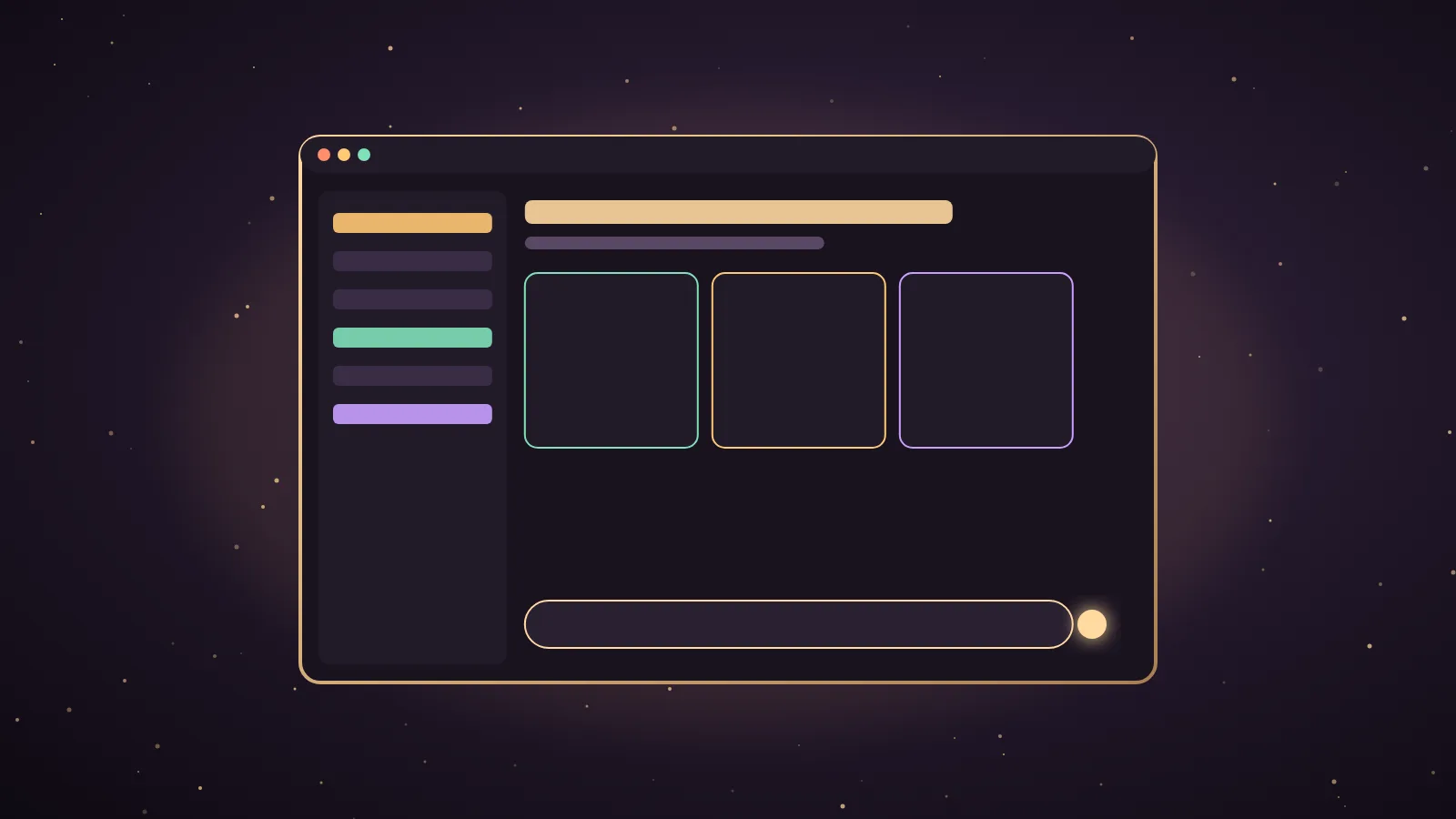
Herald OS is a free, open-source operating system that puts Hermes Agent at the centre, so you run your computer by talking or typing to one agent.
It was built by an independent developer called Luke The Dev, and it runs on the same Hermes install you may already use.
I tested every page and every setting on camera, and my automations synced into it almost instantly.
Here is the five-step quick-start, every feature, and exactly where Herald OS fits in an Agent OS workflow.
What Herald OS is
Herald OS turns your computer into a workspace where Hermes Agent is the way you do everything.
Instead of clicking through menus and folders, you talk or type to Hermes, and it opens apps, organises files, remembers things, runs routines and builds software.
Anything that changes something goes through a permission system you control.
| Question | Answer |
|---|---|
| What is it? | Herald OS is an agent-native operating system with Hermes Agent as the interface. |
| Who makes it? | Luke The Dev (iamlukethedev on GitHub) makes it as an independent project, and it is not affiliated with Nous Research. |
| What does it cost? | Herald OS is free and MIT-licensed, and you only pay for your model unless you choose a free one. |
| How new is it? | The repo was created on 6 October 2026, and it is labelled alpha (0.1). |
| Where does it run? | It runs full screen on Apple Silicon Macs with macOS 13 or later, as Herald OS Linux on a PC, on Arch and Omarchy, on other Linux from a tarball, and in a virtual machine. |
| What brain does it use? | It uses your normal Hermes Agent install, with Nous Portal, OpenRouter, OpenAI, Anthropic, a local model or another supported provider. |
Herald OS does not fork Hermes.
It runs a standard Hermes Agent install and adds its system tools as a regular Hermes plugin called herald-os-bridge.
That matters for an Agent OS, because it means Herald OS is just another window onto the same brain.
I had Claude set it up for me in about two minutes, and I honestly think it looks nicer than Hermes Desktop.
Herald OS is not the Hermes v0.20 "Herald Release"
People mix these two up, so here is the short version.
Nous Research codenamed Hermes Agent v0.20.0 the "Herald Release" back in August 2026.
Herald OS is a separate, independent project from Luke The Dev that runs on top of Hermes.
If you were looking for the release itself, my Hermes v0.20 guide covers it, and my Hermes Herald AI agent explainer untangles the names in more detail.
Herald OS quick-start on a Mac
This is the fastest route from nothing to a working Herald OS.
| Step | What you do | What you get |
|---|---|---|
| 1 | Install Hermes Agent with the official install script, then run hermes setup to pick a model. | Hermes works on its own before Herald OS touches it. |
| 2 | Download the HeraldOS-<version>-mac-arm64.dmg file from the GitHub releases page and drag it to Applications. | The app is installed. |
| 3 | Run xattr -dr com.apple.quarantine "/Applications/Herald OS.app" once. | macOS stops blocking the build, which is not notarized yet. |
| 4 | Open Herald OS, and remember that Cmd+Ctrl+F toggles fullscreen and Cmd+Q quits. | Herald OS takes over the screen and adds its herald-os-bridge plugin to Hermes. |
| 5 | Press Cmd+2, ask Hermes what is using the most memory, and check it answers with a system tool. | You know the bridge is working and approvals are in place. |
Hermes needs a model provider, which can be a Nous Portal account or an API key for OpenRouter, OpenAI, Anthropic, a local model and others.
On first use, macOS asks for Screen Recording, Accessibility or Microphone access only when a feature needs it.
The Linux, Arch, Omarchy and virtual machine routes are all in my Herald OS GitHub install guide.
🔥 Want the exact Herald OS and Hermes Agent in the Agent OS setup I run inside my Agent OS?
Inside the AI Profit Boardroom you get the installable Agent OS, step-by-step video tutorials, four coaching calls a week and 3,400+ members building real automations.
Why Herald OS fits an Agent OS workflow
When I first used Hermes around March and April 2026, it lived in the terminal, and it was messy.
That was the old way, and it put most people off before they ever saw what an agent could do.
The new way is a proper interface, and Herald OS is the most polished one I have tried for Hermes.
The reason it fits an Agent OS so well is the shared brain underneath.
My automations synced across Herald OS, Hermes Desktop and my own Agent OS, because all three run the same Hermes.
So you are not choosing a new system, because you are choosing a new front end for the system you already run.
Every Herald OS page, mapped to an Agent OS job
Here is every page I went through on camera, and what each one does in an agentic workflow.
| Herald OS page | What it does | Its job in an Agent OS |
|---|---|---|
| Overview (dashboard) | It greets you, shows today's schedule from scheduled tasks, lists what needs attention, surfaces recent screenshots and holds a chat with Preview and Sources. | It is the morning cockpit. |
| Pick up where you left off | It reads the names of recent documents, projects, chats and calendar events and suggests up to three threads to continue. | It is the context layer, and it is off until you turn it on. |
| Spaces | It ships with Ideas, Work and Personal, lets you add spaces such as a client, and has a default space setting. | It separates companies and clients. |
| Missions | It takes a goal such as "build out a new website" and plans it step by step with a preview and activity timeline. | It is the project lane. |
| Memory | It shows everything Hermes remembers, with search, add and forget. | It is the visible memory layer. |
| Files | It has recent, favourites, projects, downloads, shared and deleted. | It is the file layer Hermes can act on with approval. |
| Automations | It lists routines you can switch on or off, run now or duplicate. | It is the scheduler, and it syncs with every other Hermes interface. |
| Connections | It is meant to bring tools, apps and external services into one workspace. | It is the integration layer, but it did not work for me yet. |
My dashboard said "Good morning, Julian. Your day already in motion." the moment I opened it.
The "here's what needs attention" panel and today's schedule turn it into a real morning briefing.
"Pick up where you left off" reads names and dates rather than file contents, and a suggested step only starts when you click it.
Spaces answer the most common Agent OS question
Inside the AI Profit Boardroom, people ask me all the time how to set up an agent OS when they run separate companies or clients.
Herald OS answers that with Spaces.
You get Ideas, Work and Personal out of the box, and you can add a space for each client.
Set your default space to the business you spend most time in, and Herald OS opens there every morning.
Missions, memory and files in practice
Missions are for work that takes more than one message.
I gave it "build out a new website", and Hermes planned the job step by step with a file preview and an activity timeline.
The repo docs also describe a Studio window that shows the files, the code as it is written, the commands it runs and a live preview while Hermes builds.
The Memory page shows everything Hermes remembers about you.
When I opened mine on camera, my Telegram details were on screen, so check this page before you share your screen.
The Files page covers recent, favourites, projects, downloads, shared and deleted, and the FAQ says Herald OS never deletes permanently.
🔥 Want the exact Herald OS and Hermes Agent in the Agent OS setup I run inside my Agent OS?
Inside the AI Profit Boardroom you get the installable Agent OS, step-by-step video tutorials, four coaching calls a week and 3,400+ members building real automations.
Automations: the part that syncs everywhere
These are the automations I had running when I tested it.
- I get a daily 6am to-do recap.
- I get a daily Japanese learning session.
- I get inbox triage with morning inbox summaries.
You can switch each one on or off from the Automations page.
Because they live in Hermes, they showed up in Hermes Desktop and my Agent OS without any extra work.
The manual also lists event triggers, such as running a job when you log in or come back after a break.
Every Herald OS settings area
Settings is deeper than I expected from an alpha.
| Settings area | What you control |
|---|---|
| Hermes & agents | You set the preferred model, where agents run tasks (including Docker), the number of background agents, remember preferences, autonomy, "Ask before sending messages" and activity history. |
| General | You set launch fullscreen, default space, default and projects folders, do not disturb, stay awake, screensaver, dictation and quit session. |
| Appearance | You change colours and themes, and the README lists twelve themes. |
| Software | You add or remove coding agents and local models, such as Claude Code, Codex and LM Studio. |
| Plugins | You paste a GitHub link to add a sandboxed plugin, which installs turned off. |
| Usage | You see tokens used this week and over 30 days, your plan and your token balance. |
| Voice | You switch the voice engine and speed, choose local or "live" voice, test it, and read the list of voice commands. |
| Privacy, notifications, network, storage, accessibility | You see the audit log and handle the usual system controls. |
On my machine, the preferred model showed GPT-6 Astra, which I had plugged in through a CLI.
Autonomy has three levels called Ask first, Balanced and Independent, and I would keep it on Ask first while you learn it.
Activity history is quietly brilliant, because it shows background work you set up and forgot about.
Switch on do not disturb if you work on calls, because there is a bell notification sound.
The repo docs say the free voice engine replies in about two seconds, and the optional Live engine uses OpenAI's gpt-live-1 at $0.05 a minute with your own key.
The voice commands list makes it feel very Jarvis-like.
Herald OS vs Hermes Desktop
Both sit on the same Hermes, so the real difference is the interface and the maturity.
- Herald OS gives you a full-screen OS with a dashboard, Spaces and Missions, and I think it is the nicer design.
- Hermes Desktop is the more settled app, and it has a one-click plugin marketplace with around 500 community plugins.
- Herald OS adds plugins by pasting a GitHub link in Settings.
- Your automations and memory follow you whichever one you open.
It is a great pick for people who want a nice UI but do not like Hermes Desktop.
Herald OS limits to know first
- Connections did not connect or sync for me, so do not build a workflow on it yet.
- The sidebar is resizable, but the UI was cut off slightly at the top on my screen.
- The Mac build is not notarized, so only download it from the official releases page.
- It is an alpha, and the README tells you to keep backups of anything you let an agent touch.
- Herald OS is free, but your model provider can still bill you, and the Usage page shows how much.
If you want to run it without paying for a model, my free Hermes Agent OS guide covers the free routes.
The bigger system this all plugs into is in the AI Agent OS guide.
Also On Our Network
FAQ
What is Herald OS?
Herald OS is a free, open-source, agent-native operating system with Hermes Agent as the interface. It was built by the independent developer Luke The Dev and is not affiliated with Nous Research.
Is Herald OS the same as the Hermes v0.20 Herald Release?
No. The Herald Release was the codename for Hermes Agent v0.20.0 from Nous Research. Herald OS is a separate, independent project that runs on top of Hermes.
Is Herald OS free?
Yes. Herald OS is free and MIT-licensed. Your model provider can still bill you unless you use a free model, and the Usage page shows what Hermes has used.
Does Herald OS work with my existing Agent OS?
Yes. Herald OS runs on your normal Hermes install, so my automations synced across Herald OS, Hermes Desktop and my Agent OS without any extra setup.
What do I need to run Herald OS on a Mac?
You need an Apple Silicon Mac on macOS 13 or later, Hermes Agent with a model provider set up, and the Herald OS DMG from the GitHub releases page. The build is not notarized yet, so you run one xattr command first.
What does not work in Herald OS yet?
Connections did not connect or sync for me, and the UI was cut off slightly at the top of my screen. It is an alpha, so keep backups and keep approvals on.
Final word on Herald OS
Install Hermes first, run the five-step quick-start, and set up one space and one automation.
If you want a beautiful front end for the Hermes brain you already run, start with Herald OS.
About Julian
I'm Julian Goldie, an AI entrepreneur, SEO expert and the founder of the AI Profit Boardroom, which has 3,400+ members.
I help business owners scale with AI agents, automation and SEO.
My YouTube channel has 400,000+ subscribers, and I run Goldie Agency, a seven-figure SEO agency.
Related guides on agentos.guide
→ Hermes v0.20, the Herald Release
Get the whole Agent OS
The installable system behind every guide on this site — dashboard, agents, memory and pipelines — updated as new tools land, with 3,400+ members and four coaching calls a week.
Join the AI Profit Boardroom →📺 Video notes + links to the tools 👉
🎥 Learn how I make these videos 👉