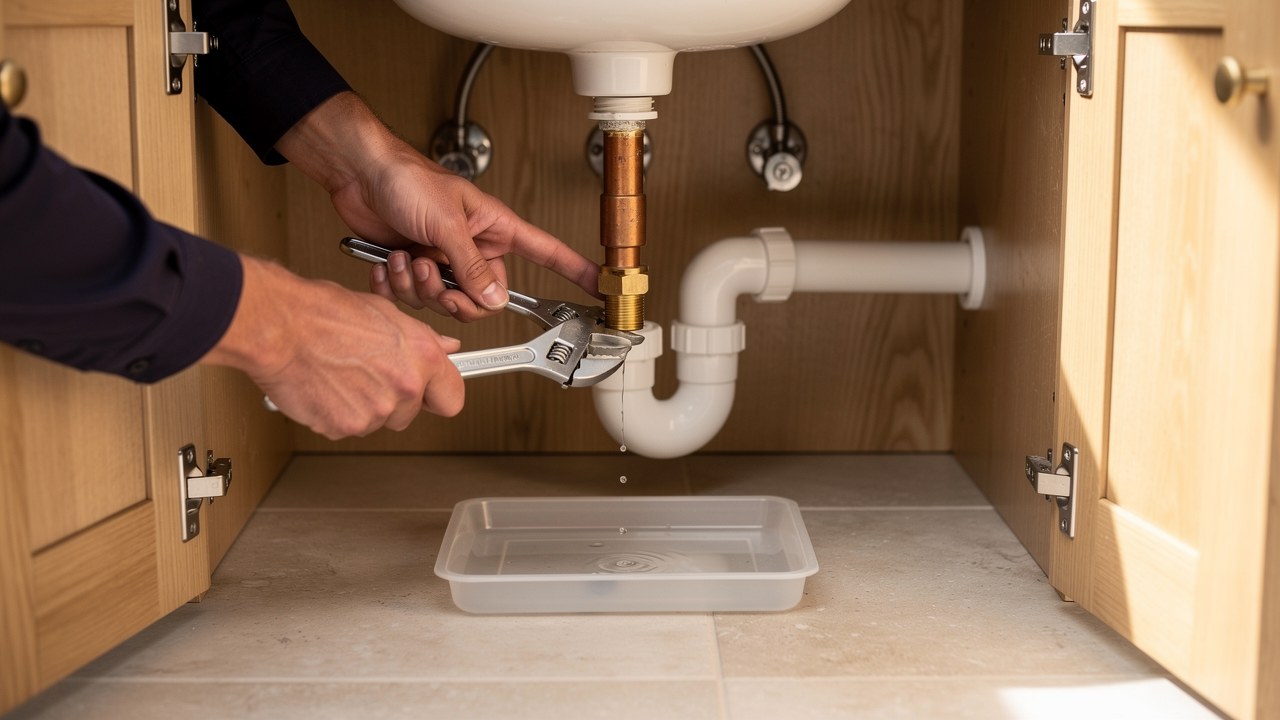
Describe the pattern of the leak
Does water appear continuously, only while a tap runs or after a bath empties? Is it around a joint, inside a cupboard or on the ceiling below? Share these observations and any recent plumbing changes. Do not recreate a leak just to demonstrate it; existing photos and a description are a useful starting point.
Agree how the source will be reached
An exposed connection is different from pipework beneath a fitted bath. Ask what can be inspected through existing openings before tiles, boxing or flooring are disturbed. If opening a surface is necessary, agree the extent of the work, its cost and responsibility for reinstatement.
Separate investigation from the repair
A plumber may need to inspect the source before pricing the full repair. Ask what the diagnostic charge includes and whether it counts towards subsequent work. The repair scope should identify the affected pipe or fitting, proposed parts and checks afterwards. Drying, plastering and decoration should be listed separately if needed.
When water is still escaping
Stop using the affected fitting. If you know where the relevant isolation valve or main internal stop tap is and can reach it safely, shut off the water without forcing a stiff valve. Keep away from wet electrical fittings and sagging ceilings. Seek a provider who confirms they can attend urgently; Lune Plumbing has no confirmed emergency availability.