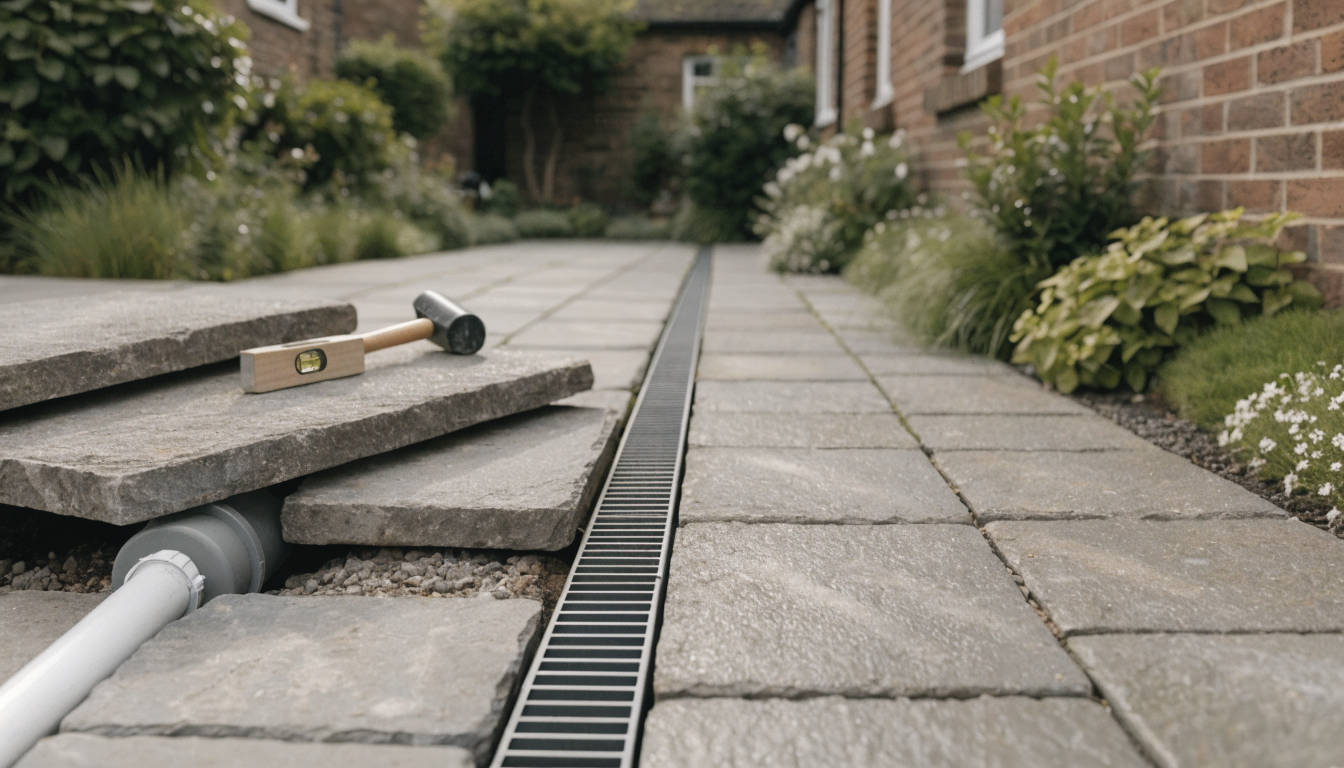
Record what happens after rain
Photograph puddles while they are visible and note whether water collects beside the house, at a low corner or across several slabs. Include nearby downpipes and existing drains in your photographs. This gives an installer useful starting information, although levels and the drainage route still need checking on site.
Find out why slabs are moving
Rocking or sunken paving needs an assessment of the support beneath it. Ask whether the proposed repair includes lifting slabs and examining the bedding or base, rather than simply renewing visible joints. Where the problem affects a larger area, request an explanation of why a local repair would or would not be sufficient.
Agree where collected water will go
A drainage channel is only part of a drainage proposal. Ask the contractor to identify the intended discharge point and assess whether it is suitable for the property. The scope should explain any changes to paving levels, excavation and reinstatement. Avoid accepting an unexplained assumption that a nearby drain or garden border can take the additional water.
Compare repair and replacement on the same basis
Ask how much paving can be reused, whether matching replacement slabs are available and what appearance differences may remain. A repair quote should identify the area covered and any limitations relating to the untouched patio. If replacement is also proposed, compare both options against the same drainage problem and intended use of the space.