agentos.guide › blog
StarNet GitHub Quick Start: Clone It, Run It, And Fit It Into Your Agent OS
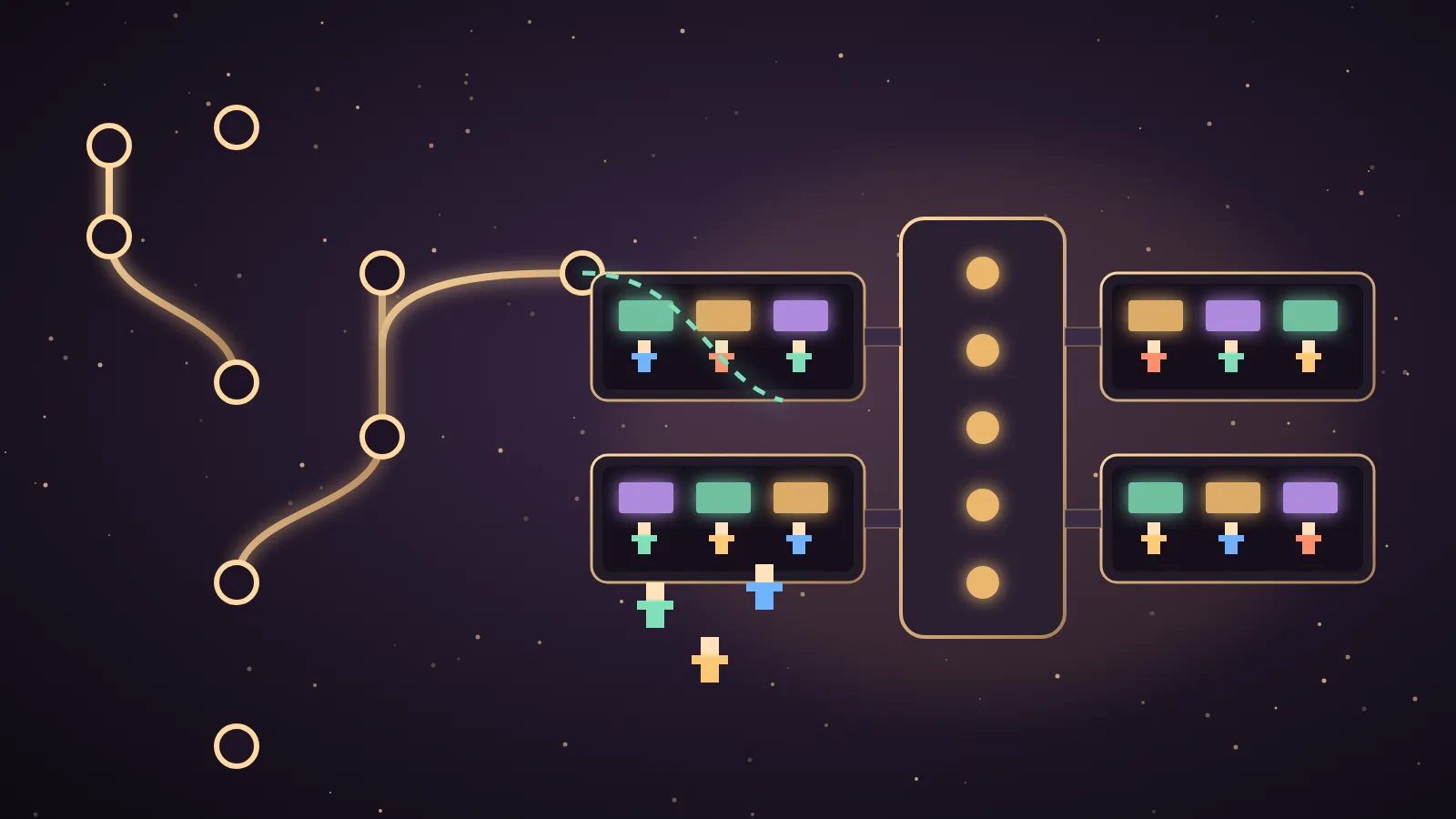
The StarNet GitHub repo is github.com/androoAGI/starnet, and it is the free, open-source code behind StarNet, a pixel-art space station where your AI agents live and work.
I cloned it, hit one install trap, and now run it as a tab inside my own Agent OS.
This quick start gives you the commands that worked, the brains you can plug in, how it fits an agent workflow, and how to keep it updated.
What the StarNet GitHub repo actually is
StarNet is a local-first desktop harness for building and running teams of AI agents, and its whole codebase is public on GitHub.
The repo calls it a living pixel-art station where real AI agents do real work.
Each agent gets its own workspace, transcript, memory and permissions, and the station shows them moving between rooms as they work.
The README is strict about honesty, because it says the interface must never show anything the harness cannot prove.
Here are the facts I checked in the repo myself.
| What you want to know | The answer from the repo |
|---|---|
| Where is it? | github.com/androoAGI/starnet holds the source code, and github.com/androoAGI/starnet-releases holds the signed installers. |
| Who made it? | Andrew Sims, who publishes as androoAGI, made it. |
| What does it cost? | StarNet is free, and you only pay for the model you connect. |
| What licence is it under? | The code is MIT, while the StarNet name, logo and artwork stay with the author. |
| What version is current? | v0.13.1 was the latest tag on 7 October 2026, and it was released on 4 October. |
| What do I need? | You need Node.js 18 or newer and Git, and Rust plus Tauri only if you build the desktop shell. |
| Where does it run? | It runs at localhost:8787 by default, or on any port you set. |
| How big is the clone? | The repo is roughly 1.8 GB, so the first clone takes a while. |
The repo had over 1,100 stars and more than 200 forks when I looked, which is a lot for a project created in June 2026.
🔥 Want the exact StarNet setup I run inside my Agent OS?
Inside the AI Profit Boardroom you get the installable Agent OS, step-by-step video tutorials, four coaching calls a week and 3,400+ members building real automations.
StarNet GitHub quick start: clone to crew
This is the shortest route from nothing to a working agent, using the commands from the README plus the one step my Mac needed.
- First, check you have Node.js 18 or newer and Git installed.
- Second, clone the repo with
git clone https://github.com/androoAGI/starnet.gitand move into the folder withcd starnet. - Third, run
npm ci, even though the README says you can skip it. - Fourth, start the sidecar with
node sidecar/index.js, or withnpm start, which runs the same file. - Fifth, open localhost:8787 in your browser.
- Sixth, connect a brain on the first-run screen and create your first agent.
The README claims the sidecar runs on Node core modules alone, but mine would not come up properly until I ran npm ci.
That is the one trap worth remembering.
If another tool already uses port 8787, start it with PORT=8788 node sidecar/index.js instead, which is exactly what I do.
If you would rather not touch a terminal, download the Windows or Mac installer from the StarNet releases page.
The install guide says Windows is the most-tested build, macOS has less real-world coverage, and Linux is not a public release target.
Connecting a brain to StarNet
StarNet does not come with its own model, so the brain is your choice.
| Brain in StarNet | How it connects | When I would use it in an Agent OS |
|---|---|---|
| Grok OAuth | You sign in with SuperGrok or X Premium+, with no API key. | This is what my own station runs on, using Grok 4.6. |
| Claude CLI | It uses the local claude command and your Claude Code sign-in. | Use it when Claude Code is already the main brain in your stack. |
| Kimi OAuth | You sign in with a Kimi subscription. | Use it for coding-heavy agents on a flat plan. |
| ChatGPT Codex | You sign in with a ChatGPT subscription. | Use it when your team already pays for ChatGPT. |
| OpenRouter | You paste one key and pick from a broad catalogue. | Use it when you want to swap models without new accounts. |
| Ollama | It talks to 127.0.0.1:11434 on your own machine. | Use it for free, private agents, accepting slower and rougher work. |
The repo also lists direct APIs for OpenAI, Anthropic, Gemini, xAI, Groq, Mistral, DeepSeek, Together, Fireworks, Perplexity and Cerebras, plus a custom slot for any OpenAI-compatible endpoint.
Keys are held by the sidecar and your operating system keychain, and never by the browser front end.
In the video I signed in with Grok in one step, picked the model, and set a reasoning level of low, medium, high or max.
I picked Grok 4.6 over Grok 4.7, simply because I prefer the way 4.6 talks.
If you want a free brain, the README says to run ollama pull qwen3:8b and pick OLLAMA, and to choose a model that supports tool calls.
It also warns that an 8B model takes about 10 GB of graphics memory and that local models are slower and rougher on long tasks.
My own station runs on a hosted brain rather than a local model, because I want my agents fast.
How StarNet fits an Agent OS workflow
Here is how I think about it.
My Agent OS is the control room, and StarNet is one of the rooms inside it.
I added StarNet to my Agent OS as its own tab, so I can check on my station without opening another app.
The sidecar runs in the background on my Mac, so the station is always there when I click the tab.
There are three things I learned doing that.
- StarNet sends a security header that stops other pages from framing it, so a dashboard tab needs your own local address allowed first.
- If you have StarNet open in two windows, the second window only catches up when you reload it, so I added a reload button to my tab.
- A new agent asks you a set of briefing questions when it first wakes up, so finish that briefing before you start giving it real jobs.
The repo also helps if you script your agents.
There is a terminal command in bin/starnet.js that runs one real agent task without the UI, using a -p flag for the prompt.
The package file also includes mcp:serve and acp:serve scripts, which start MCP and ACP servers from the sidecar.
That means StarNet does not have to live on its own island.
What you see once StarNet is running
I am keeping this tour short, because my full feature guide is the StarNet AI agent walkthrough.
- Creating an agent means picking a name, an appearance, a personality such as warm, dry, composed or unhinged, and an approval level of ask for approval or full power.
- A waking-up animation plays, and my agent said it was awake and asked to give the station a direction.
- The station view lets you zoom, change the frame and drag around, and everything you run lives in four docks.
- Agents level up the more you use them, so it feels like a Tamagotchi for an AI agent.
- The agent panel holds the model, personality, instructions, web and local-file permissions and approval prompts, with Brief, Growth, History and Memories tabs.
- The chat shows online status and level, and the left-hand list switches agents and manages projects and sessions.
- The plus button adds widgets such as connected apps, pinned widgets and a daily brief.
- The app catalogue adds abilities like Gmail, Notion, GitHub, flight search, physical letters, email and web search through Firecrawl.
- The skill market includes skills like ad copy testing and calendar scheduling, and the skill library holds frameworks you switch on or off, such as making a plan, a decision framework, humanising content and handling a hard conversation.
- The crew screen recruits roles like strategist, chief of staff, researcher and marketer, where Deploy rewrites an existing agent and Summon adds a new one beside it.
- Tasks, quests, the work list, builds and the Systems menu all sit in the same station.
There was a slight delay each time I sent a message, so give replies a moment.
Updating your StarNet GitHub install
Stop the sidecar, run git pull, run npm ci again, and start it back up.
If you have changed any files in the repo yourself, expect a pull to clash with them, and keep a note of what you edited.
Desktop installs update through the built-in Update Center, which checks each update's signature before installing it.
Version v0.13.1 was a repair release that fixed web requests failing since 0.12.5, stopped crew freezing in the halls and made spending limits hold during retries.
Hermes users: the honest answer
A viewer told me he was annoyed that StarNet does not work with Hermes.
You cannot run Hermes inside StarNet.
What you can do is import an existing Hermes or OpenClaw agent, and the README says it brings across the persona, instructions, memory and model.
API keys do not transfer, so you add them again in the KEYS tab.
My honest take on StarNet
I think StarNet is mostly fun to play with right now.
I do not see a massive number of practical use cases for most people yet.
But it is the smoothest office-style agent setup I have tested, it felt like a much more fun version of Paperclip, and it reminded me of the first time I tried Hermes Agent.
Use it as the visual layer of your Agent OS, and keep the serious pipelines where they already work.
Also On Our Network
FAQ
Where is the StarNet GitHub repo?
The source code is at github.com/androoAGI/starnet. The signed Windows and macOS installers are on the separate github.com/androoAGI/starnet-releases repo.
Is StarNet free?
Yes. The code is free under the MIT License from Andrew Sims. You only pay for the model you connect, and a local Ollama model costs nothing.
Why does StarNet not start after I clone it?
The README says no install step is needed, but Julian's Mac needed npm ci in the repo folder before the sidecar would start properly. Run npm ci, then start it again.
Can I run StarNet on a different port?
Yes. Start the sidecar with PORT=8788 node sidecar/index.js and open that port in your browser. Julian runs his on 8788 because another app uses 8787.
Can I put StarNet inside my Agent OS?
Yes. Julian runs StarNet as a tab in his Agent OS. StarNet blocks framing by other pages by default, so your dashboard's local address has to be allowed first, and a second open window only syncs when you reload it.
Final word on StarNet GitHub
Clone it, run npm ci, connect a brain, and let one agent prove itself before you recruit a crew.
That is the fastest way to get real value out of the StarNet GitHub repo.
About Julian
I'm Julian Goldie, an AI entrepreneur, SEO expert and the founder of the AI Profit Boardroom, which has 3,400+ members.
I help business owners scale with AI agents, automation and SEO.
My YouTube channel has 400,000+ subscribers, and I run Goldie Agency, a seven-figure SEO agency.
Related guides on agentos.guide
→ Run Hermes On Your Claude Subscription
Get the whole Agent OS
The installable system behind every guide on this site — dashboard, agents, memory and pipelines — updated as new tools land, with 3,400+ members and four coaching calls a week.
Join the AI Profit Boardroom →📺 Video notes + links to the tools 👉
🎥 Learn how I make these videos 👉