On August 7, SemiAnalysis — the chips-and-labs research firm big investors pay for — published a newsletter quoting their own private client note from July 9.
"OpenAI has overcome their pre-training issues, and a much larger model codenamed Doug is actively in the works."
— SemiAnalysis, private client note (July 9, 2026), published in their newsletter Aug 7, 2026
Four dates, one story: a paid research note in July, published in August — then the CEO and the leakers filled in the rest within 48 hours.
02 · The leaker
Then a leaker gave it a name.
On August 9, the account ChrisGPT posted the codename in public — and the post pulled 1.5M+ views in a day.
Tweet 1 · the leak
"Doug" goes public
Chris says Doug is OpenAI's biggest pre-training run ever, as far as he knows — and claims it will make Claude's Fable 5 seem "primitive". Big claims, anonymous source: hold that thought for the skeptic's section below.
03 · What's solid, what's not
Two sources, two very different weights.
SemiAnalysis put its name on "Doug exists and pre-training is fixed" — the "biggest ever" and "primitive" lines come from an anonymous leaker, so treat them as claims, not facts.
Even if you bin everything the leaker said, "OpenAI has overcome their pre-training issues" is one of the most important sentences of the year — and there's a second model, already finished, that could ship this month. Keep scrolling.
04 · The backstory
Same brain since May 2024.
Pre-training builds the brain; post-training polishes it. Per SemiAnalysis, every OpenAI release since May 2024 has been the same brain, polished harder.
o1 (Sep 2024), o3 (Apr 2025), GPT-5 (Aug 2025), 5.5, 5.6 — a two-year polish chain riding one foundation slab.
05 · Why they were stuck
The wall everyone believed in.
Pre-training kept breaking — and the industry concluded scaling had hit a ceiling.
Two years where the most famous lab in the world couldn't complete a shippable full-scale pre-train. Remember the verdict at the bottom — it turns out to be wrong.
06 · The trigger
Google punched, and OpenAI called Code Red.
Gemini 3 landed on November 18, 2025 — and by December 1, multiple outlets reported Sam Altman had declared "Code Red" inside OpenAI, pulling teams and moving resources.
07 · The fix
Garlic proved the problems were bugs.
One day after Code Red, The Information reported a new pre-trained model codenamed Garlic — with Chief Research Officer Mark Chen reportedly telling his team they'd solved the key problems breaking pre-training.
By January, SemiAnalysis wrote it plainly: pre-training issues resolved. By July 9: Doug actively in the works — the foundation scaling again for the first time in 2+ years.
Astra is the first of the two models, reportedly done and sitting in safety review — and this part is confirmed by Sam Altman himself, not a leaker.
Tweet 2 · CEO-confirmed
Altman on Astra: powerful, for everyone, held for cyber safety
Sam says Astra is powerful, that he wants it generally available, and that its cyber capabilities mean they need a little longer to release it safely. Leakers expect it this month — many believe Astra is GPT-6, though that name is unconfirmed.
Tweet 3 · the poetic timing
Four years to the day since GPT-4
Greg Brockman marked that GPT-4 finished training exactly four years earlier — August 8. Four years: an estimated ~1.8T parameters then, a reported ~10T now.
~1.8T is the widely-cited estimate for GPT-4; ~10T for Astra is reported and unconfirmed. The chips say so on the chart, on purpose.
09 · The second model
Doug: the end-of-year swing.
Doug is the end-of-year model — Chris expects it no later than November, after government review and cybersecurity testing.
Tweet 4 · the compute angle
Reportedly training on chips you can't buy
Pankaj Kumar's roundup adds the hardware detail: Doug is most likely training on NVIDIA's next-gen Vera Rubin chips — hardware that isn't widely rolled out and that most companies can't buy yet. Reported, not confirmed.
July reports say the next-gen foundation could reach a 1.5 million token context window — a full shelf of books held in mind at the same time.
10 · The skeptic's case
Now the honest case against all of it.
Before you get excited, here are the three best reasons to doubt everything above.
Skeptic point 1 · nothing is confirmed
OpenAI has confirmed nothing about Doug — no date, no price, no announcement, and nobody outside the lab has run a single prompt. The rumor pipeline is now doing pre-training too: 1.5M views for a model that doesn't officially exist.
Skeptic point 2 · big pre-trains have flopped before
GPT-4.5 landed soft, and Gemini 3.5 reportedly matched a months-earlier Anthropic model. Bigger has publicly failed to mean better — at both companies.
Skeptic point 3 · "makes Fable look primitive" ignores time
By November, Doug won't be competing with today's Fable 5 — Anthropic ships newer models by then, and Fable 5.1 is reportedly landing this month at the same price, timed to counter Astra. The target moves.
10b · Three beliefs to drop
What the skeptic's case actually means for you.
Wrong: "Nothing about Doug is confirmed, so I can ignore this whole story."
Right: The specific claims are unverified — but the direction is backed by three credible threads: SemiAnalysis in writing, The Information's Garlic reporting, and the CEO's own tweet. You plan around directions, not press releases.
Wrong: "Big pre-trains keep disappointing, so Doug will flop too."
Right: Maybe it will — that's exactly why you own the workflows and keep the model swappable. Winners slot in, duds get skipped, and you profit either way.
Wrong: "I'll wait until Doug actually ships before I build anything."
Right: If it lands in November, that's exactly enough time to build systems on today's models — so you're upgrading on launch day while everyone else is starting from zero.
Don't take my word for it
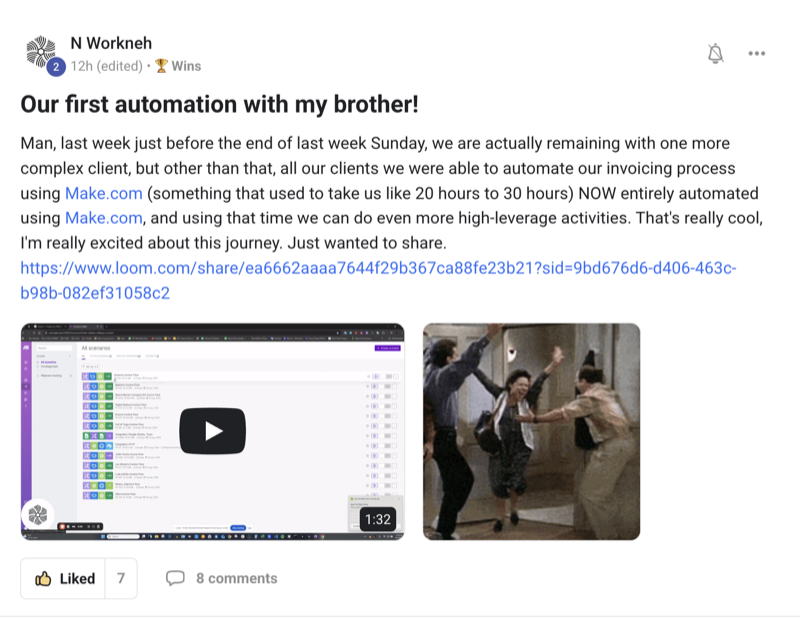
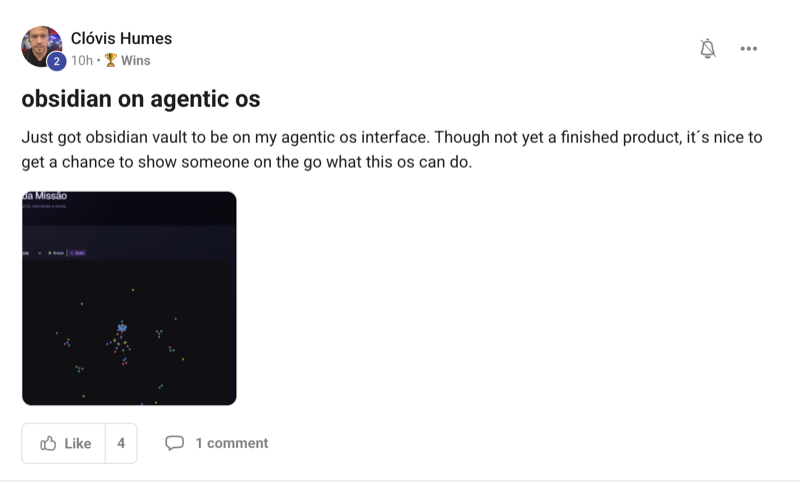
Members post their wins every day — agency owners, ecom founders, course creators, solo operators across 38 countries. Real businesses, real numbers, in their own words.
On August 5, Jeff Dean left Google after 27 years to start a new lab, the same day Demis Hassabis stepped down as DeepMind CEO to become chairman — and Alphabet fell more than 4%.
SemiAnalysis called Dean the "undisputed GOAT of Google engineering". The lab that invented the Transformer is bleeding its best — leaving OpenAI and Anthropic to slug it out.
12 · What it means for you
Every release becomes a free upgrade — if you're set up right.
For two years one of OpenAI's two engines was off; if the reports hold, both now run at once — and the pace of releases speeds up for everyone.
Old wayRebuild every launch
Your prompts and automations are welded to one model
A new model ships and you rebuild everything from scratch
You wait weeks before daring to touch the new thing
Every upgrade cycle costs you days of rework
The gap between you and AI-run businesses widens each release
New waySwap in minutes
Your workflows are the part you own — they don't change
The model sits in a swappable slot underneath them
The agent drafting client emails writes better the day the model ships
The agent chasing leads chases better — zero rebuild
Every release is a free upgrade to a business already running
If Chris is right, Doug lands by November — exactly enough time to build real AI systems on today's models, so you're upgrading when it ships instead of starting.
Thinking it?"Doesn't running an Agent OS burn a fortune in tokens?"
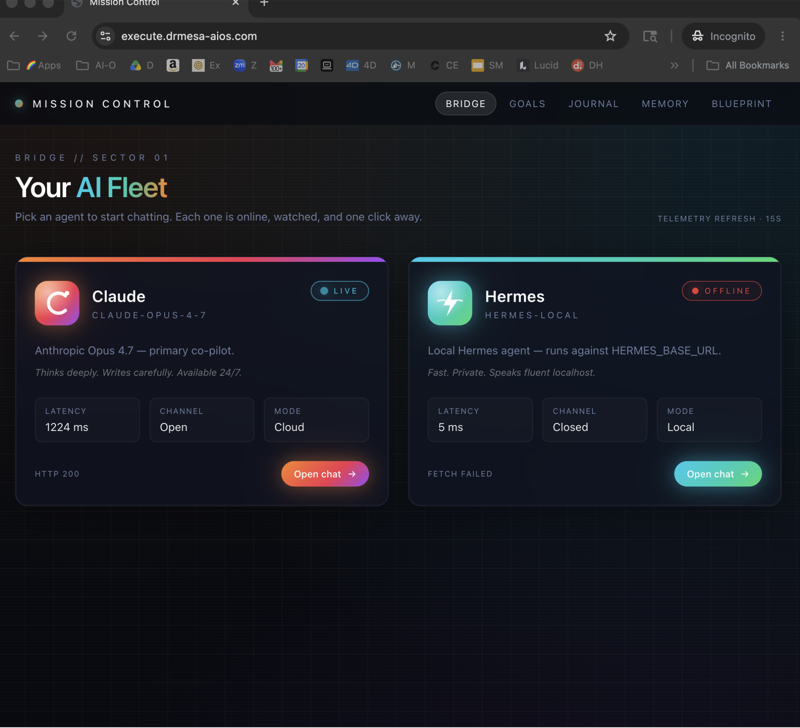
That's the biggest myth about it. The everyday 90% runs on free local models on your own machine, free APIs slot in for more, and for frontier work it drives the CLIs you already pay for — your Claude subscription already includes the Claude Code CLI, and the Agent OS plugs straight into it, so you're never paying twice.
And inside the AI Profit Boardroom there are full token-optimisation tutorials, so usage drops to the bone and stays there.
The most famous lab in the world was stuck for two years.
The foundation wouldn't scale, and the industry decided the ceiling was real.
Then a rival punched hard enough to trigger Code Red.
They hunted the real problems, found bugs, and fixed them.
Now a respected research firm says their biggest model ever is actively in the works.
Doug by November — if the reports hold.
"The real question is what you'll have built by then."
Before you go →
Join 4,000+ founders building before Doug lands.
The AI Profit Boardroom is where the Agent OS lives — model-swapping, the 30-day roadmap, the prompt library, and live walkthroughs of every big release the week it drops.