The Agent LoopsFive Claude agent loops that run without you.
You don't write prompts anymore — you write loops. Each one acts, checks its own work with an independent judge, and repeats until it's actually done. Inside the Agent OS there are five: one builds anything to a spec, one works a kanban board, one takes an idea from inbox to shipped, one watches the news, and one writes your SEO — all running on one shared memory that makes them smarter every time. Here's every loop, with real screenshots and examples.

For a year, I was the loop.
Before
I'd type a prompt and wait.
Read the answer, spot what was wrong, type again.
And again. Nothing moved unless I was sitting there driving it.
My output was capped at how long I could stare at a screen.
Then I stopped prompting and started building loops.
After
Now I define what "done" looks like, once.
An agent acts, a separate judge checks it against the goal, and it repeats on its own until it passes.
Five of these run inside my Agent OS — building, planning, shipping, watching, writing.
They run while I sleep, and I wake up to the work done.
You can run the same five. They're already wired in.
Real operators. Real loops. Running now.
This is the stack the founders in the AI Profit Boardroom run every day — agents that build, verify and ship on their own, not prompts they babysit.
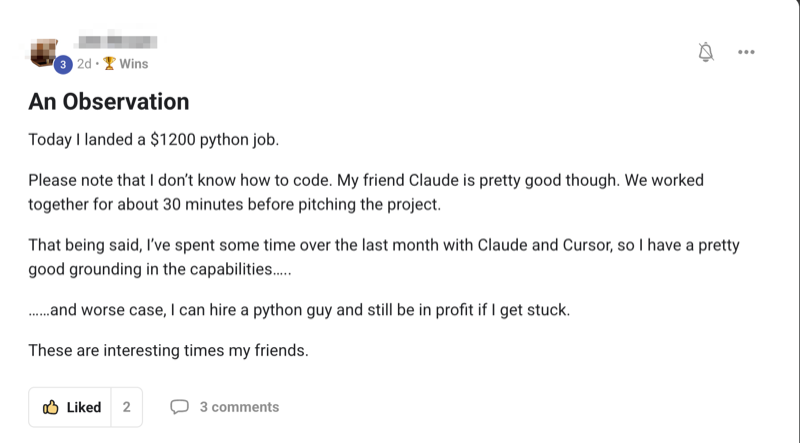
One makes you the engine. The other makes you the architect.
A prompt runs once and stops. It has no idea if it did a good job — that's your job, every single turn. A loop closes that gap: it checks its own work and keeps going until the work is right. That one change is the difference between capping your output at your attention and uncapping it entirely.
- You type, wait, read, correct — every turn
- Nothing moves unless you're at the keyboard
- No check on the work but your own eyes
- Output capped by your attention
- You define "done" once
- The agent acts, a judge checks it
- It repeats on its own until it passes
- Runs while you sleep — you wake to it done
Every loop below is that same shape — act → observe → judge → repeat — pointed at a different job.
Five loops. One shape.
Each runs the same act-check-repeat cycle, aimed at a different outcome — from building any single thing to a spec, all the way to publishing SEO content across your sites.
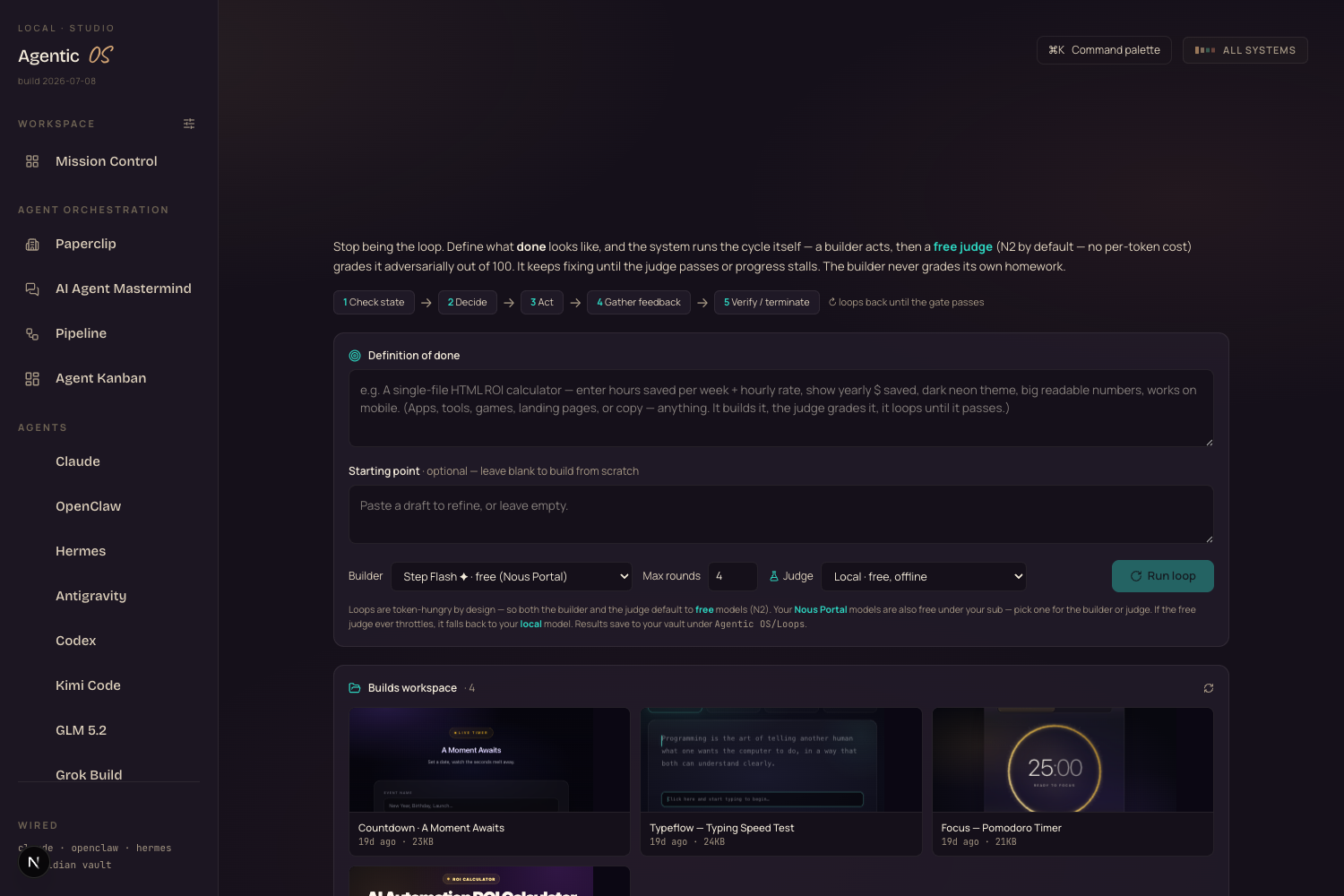
The purest loop. You define what "done" looks like. A builder model makes an attempt, an independent judge grades it out of 100, and it loops until it passes — or stalls, or hits a round cap. The builder never grades its own homework, so "it passed" actually means something.
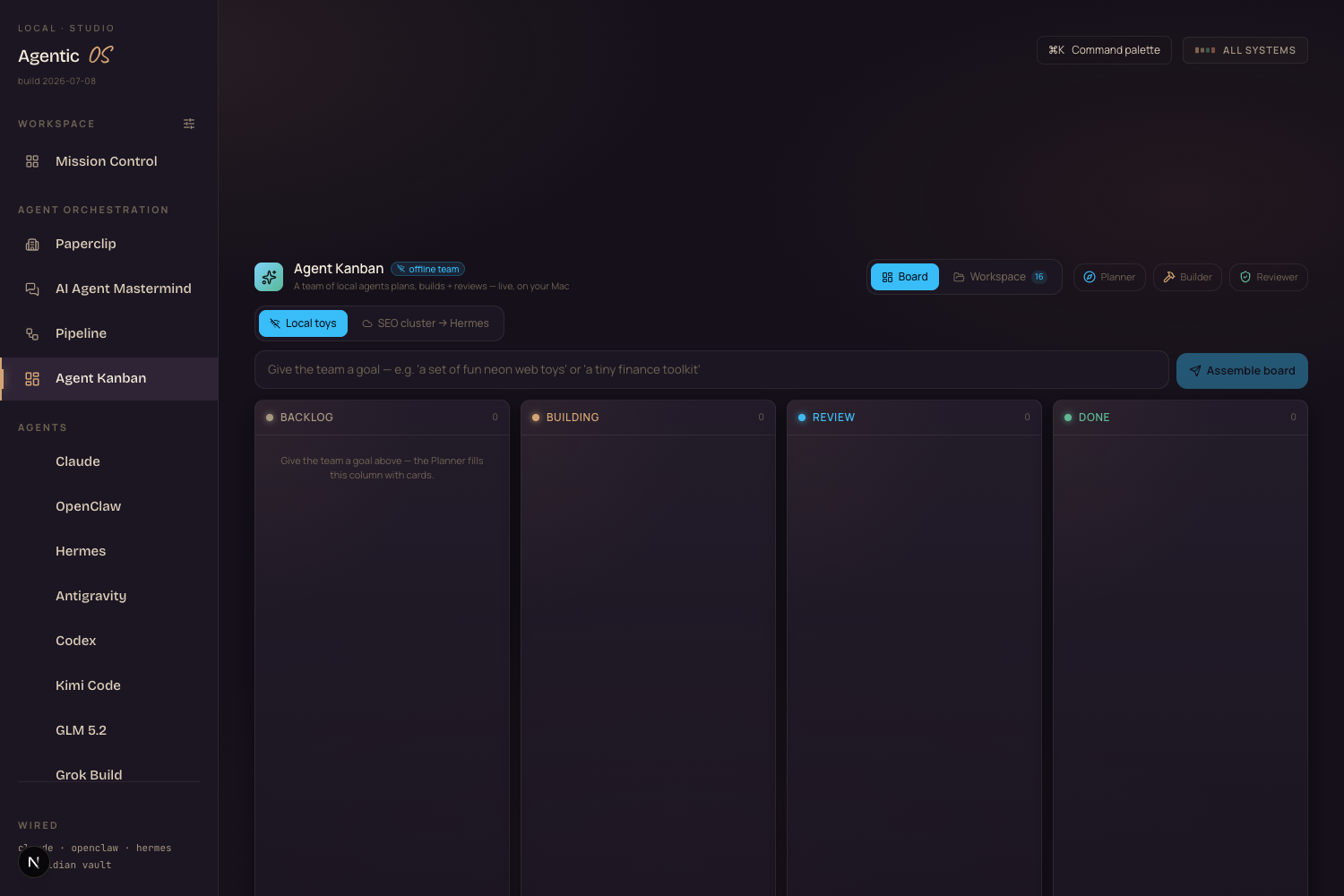
A loop with three roles instead of one. A Planner breaks your goal into cards, a Builder builds each card, and a Reviewer checks it actually landed before the card moves to Done. It's a whole team working a board — and it runs 100% offline on your own Mac, so it's free and private.
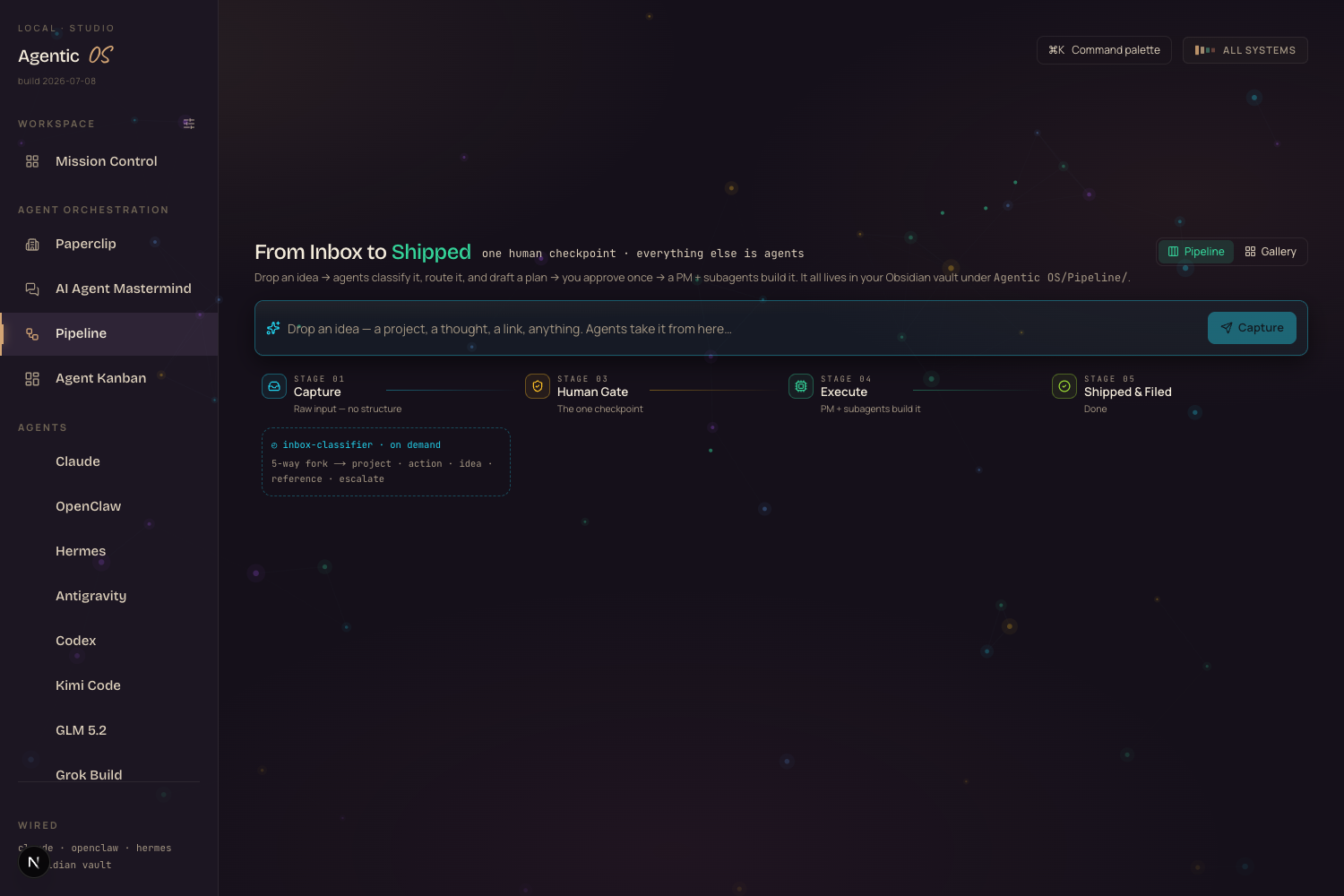
The loop for turning ideas into finished work. You capture an idea, and agents classify it, route it, and plan it. You approve once. Then a project manager and its subagents build it out — and the whole thing lives in your vault, so nothing gets lost between "I had an idea" and "it's done".
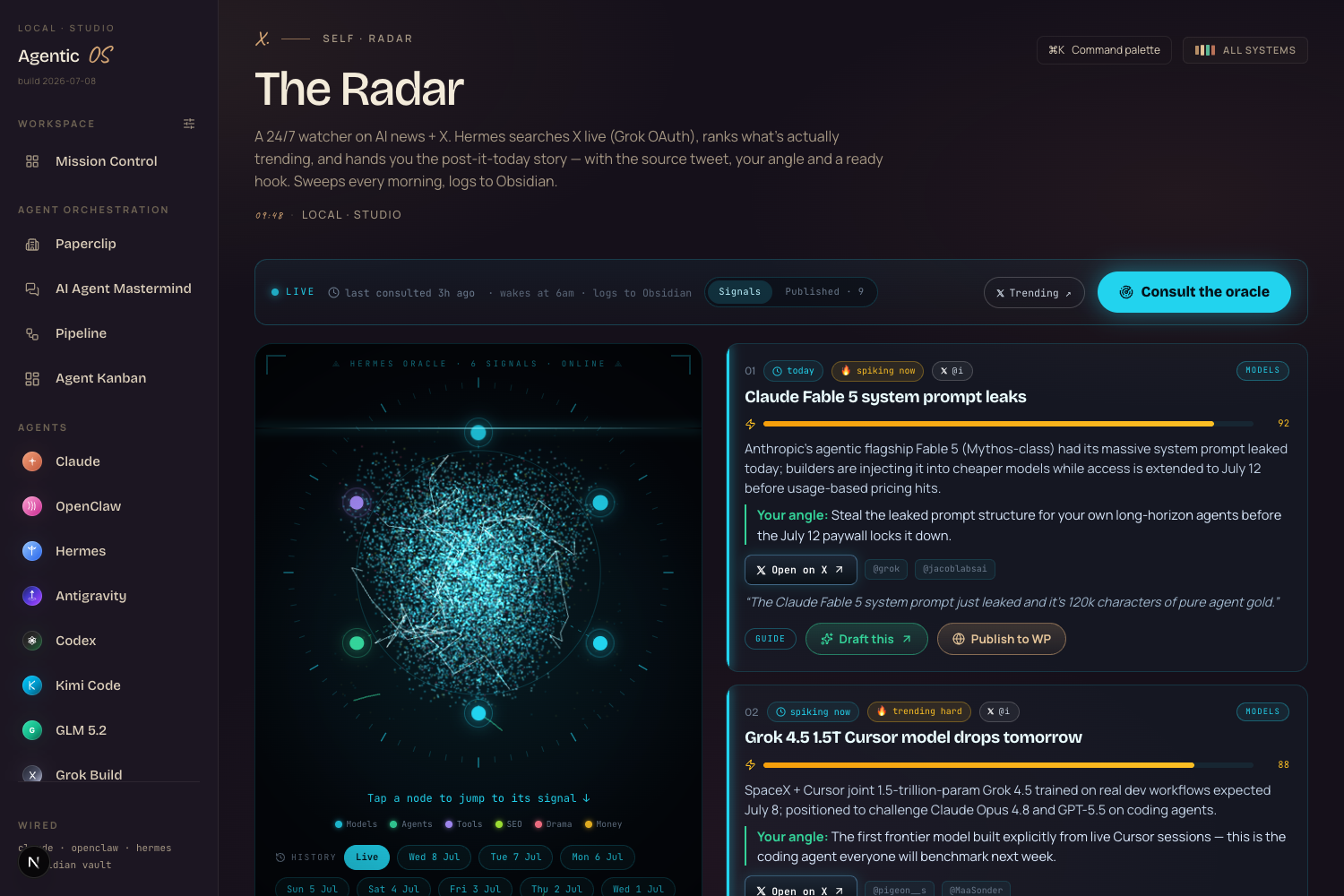
A loop on a timer. Every morning it sweeps X for what's breaking in AI, ranks it by relevance, and hands you the six biggest stories to post about today — each with the source tweet, your angle, and a ready hook. One click turns any story into ranked SEO articles across your sites. It logs every sweep to Obsidian and runs while you sleep.
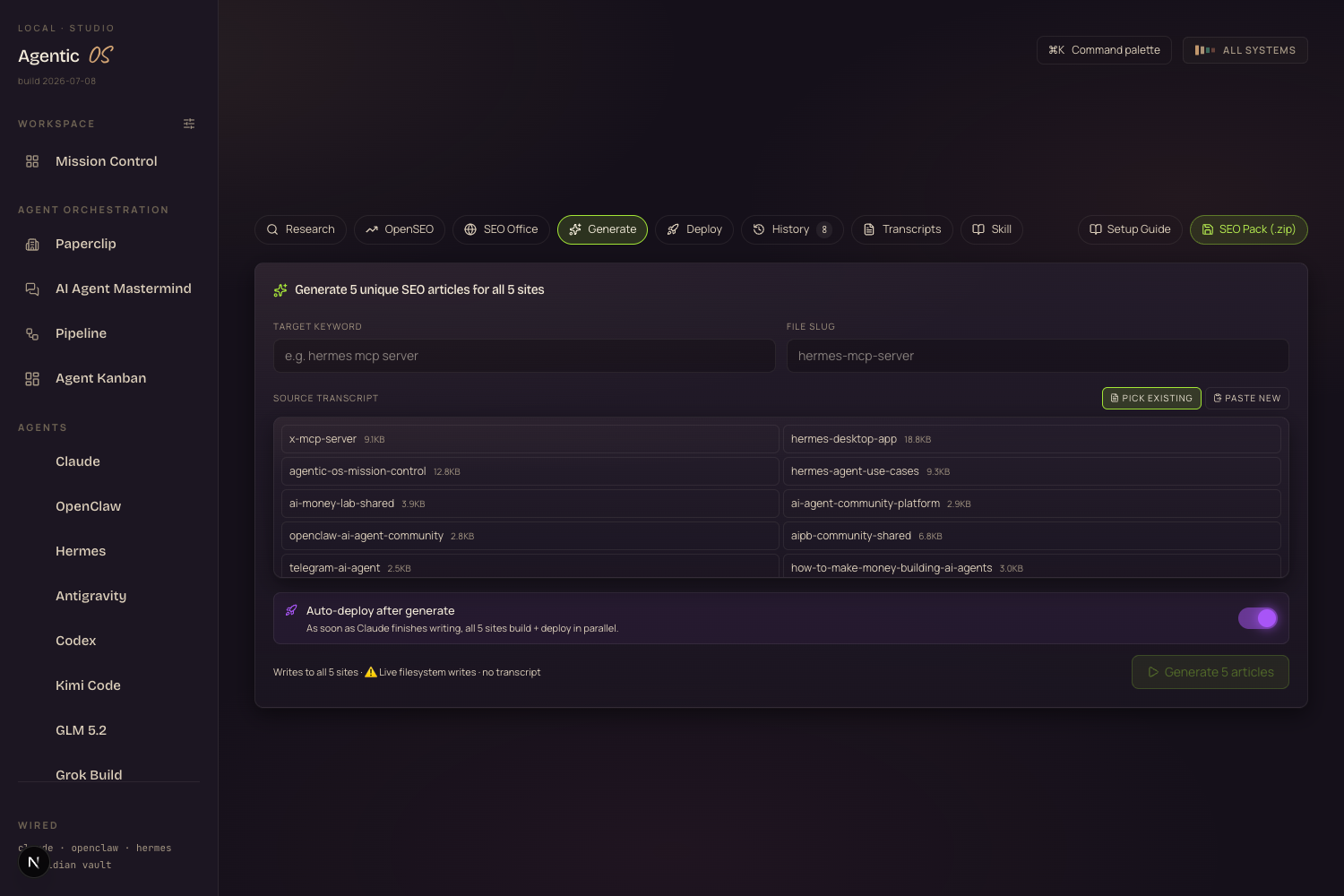
The content loop. You pick a keyword and a transcript. It generates five genuinely unique articles — different angle, intro and structure each — and deploys them straight to your Netlify funnel. One keyword becomes a whole network of pages, without you writing a word or touching a CMS.
The five loops above aren't five strangers — they share one memory. It searches your Obsidian vault and 1,200+ personal memories, so every loop already knows your business, your voice, your goals, and what worked last time. And each loop writes back what it does — so tomorrow's loop starts smarter than today's. That's the difference between five tools and one system that compounds.

Same shape. Different job.
You don't pick a loop by taste — you pick it by what you're trying to get done.
Every one runs on the same principle — an agent acts, a judge checks, it repeats — so once you understand one, you understand all five.
Every loop lives inside the Agent OS.
You don't wire up five separate systems. Loop Engineering, Agent Kanban, the Pipeline, the Oracle and the SEO Pipeline all run inside the Agent Operating System in the AI Profit Boardroom — one dashboard, shared memory, ready to run. You pick the loop that fits the job and let it go.
- All five loops — pre-built, wired in, ready to run
- Shared memory — every loop knows your business + voice
- 4 coaching calls a week + daily tutorials as we ship more
- 3,900+ members across 38 countries running loops
The five, in one line each.
Stop being the loop. Start writing them.
Write the loop once. Let it run.
The people who win the next year won't be the ones with the cleverest prompt — they'll be the ones whose loops run while they sleep. The Agent Operating System inside the AI Profit Boardroom hands you all five, wired in and ready, so you start designing loops today instead of babysitting prompts.
- The full Agent OS — all five loops in one dashboard
- The setup walkthrough, done with you, step by step
- 4 weekly coaching calls, daily tutorials, a 30-day roadmap
- 3,900+ members, a member map, a 24/7 community
- 158 pages of member wins — read them here →