Instead of one AI doing your whole task, you run a team — each agent with one small job, all working at the same time.
Here's the twist: you've already used it without knowing.
Every deep research run fires up 100+ agents behind the scenes.
I'll show you the caching trick almost nobody switches on.
And the one station where cutting corners destroys everything — stick with me for that one.
Beat 2 · you've already used it
Deep research runs 100+ agents behind the scenes.
One agent scopes, a handful gather sources, dozens fetch, dozens more check facts, one writes the report — and Claude writes that whole workflow itself, on the fly.
In July 2026 "graph engineering" went from a post on X — Peter Steinberger of OpenClaw helped kick it off — to the term everyone uses: are we still talking loops, or graphs?
Almost everyone gets that last one wrong — it's coming later.
Beat 4 · the framework
The Agent Assembly Line.
A hundred years ago one worker built one whole car — slow, and when the car was bad, which step failed was a mystery.
The assembly line fixed it: one worker on wheels, one on doors, one on paint, a quality checker at the end — agents are the stations, handoffs are the line.
i. The Stations
One agent, one small job, a clean desk.
ii. The Handoffs
Each station passes finished work down the line.
iii. The Line
Stations that don't need each other run at the same time.
iv. The Inspector
A fresh-eyes checker decides what leaves the building.
Thinking it?"Graphs sound like math I never learned."
The math words are nodes and edges — and you never need them again.
Stations and handoffs. If you've seen a factory, you already think in graphs.
Beat 5 · what it replaced
Loop engineering: one worker, whole car.
A loop is one agent in a cycle — a trigger at 7am, a task, success criteria it checks itself against, re-running until the work is good.
The morning-report loop checks YouTube, then Twitter, then Reddit, then email, then writes the report — it works, until it doesn't.
Beat 6 · why loops break
Context rot: the buried desk.
One agent holds everything at once — and its context window is a desk that every extra job covers a little more.
Soon the agent is buried, loses track, and quality drops — context rot is the number one reason long AI tasks fall apart.
Beat 7 · the line fixes it
Three wins: speed, quality, and you see where it breaks.
Same morning report — but one agent only does YouTube, one only does email, results get handed down the line, and a separate checker decides if it's good enough to send.
Four at once beat one doing four in a row, a clean desk does better work, and a bad report stops being a mystery — you look at the station. It's why companies have departments.
animated recreation of a real dispatcher pattern
What you're watching: a dispatcher spawns six workers in parallel, each reports back, the checker flags one fix — then stamps APPROVED.
"A bad report stops being a mystery. Look at the station."
Beat 8 · the shortcut
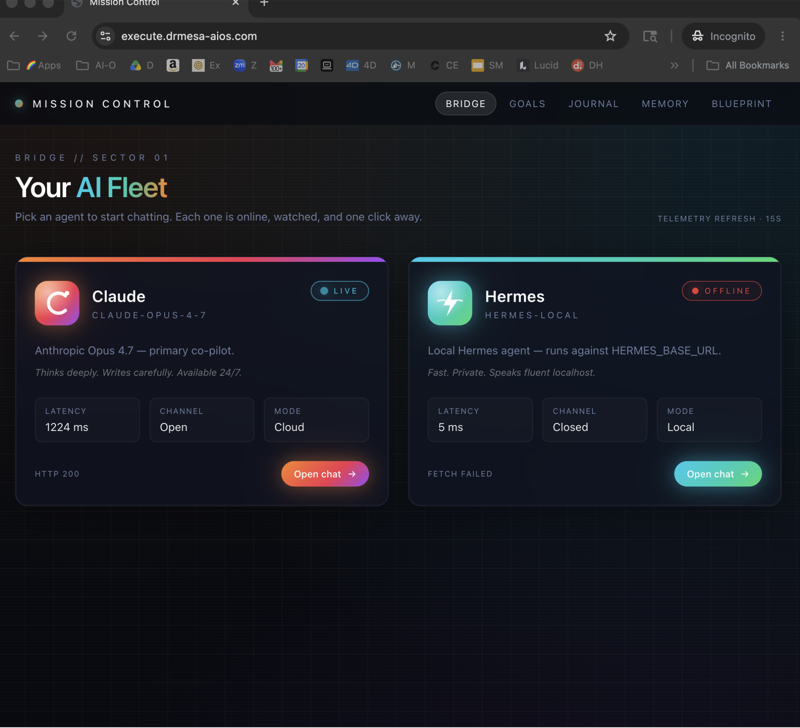
My Agent OS runs on this exact setup.
A dispatcher + worker system — the assembly line — with a Kanban board where you drop tasks and agents pick them up in parallel.
recorded live · my Agent OS Kanban
What you're watching: my real Agent Kanban board — a Planner breaks the goal into cards, a Builder builds each one, a Reviewer checks it landed, and the Workspace tab holds the finished work.
A single agent burns about 4× the tokens of a chat — multi-agent runs about 15×.
A big deep research job is 100+ agents carrying ~20,000 tokens of instructions each — on Opus 5 pricing, that's about $10 of input per task.
Beat 10 · the caching trick
$10 becomes about $1.
Prompt caching means agents sharing the same instructions don't pay full price to reload them — the system remembers.
The second lever is model-per-station: cheap fast models on the simple stations, the expensive brain only where it's needed — you can't do that with one giant agent.
Thinking it?"Doesn't running an Agent OS burn a fortune in tokens?"
No — that's the biggest myth about it. The everyday 90% runs on free local models on your own machine, free APIs slot in for more, and for the frontier work it drives the CLIs you already pay for — your Claude subscription already includes the Claude Code CLI, and the Agent OS plugs straight into it, so you're not paying twice.
Add the caching trick and model-per-station from this section, and inside the AI Profit Boardroom there are full token-optimisation tutorials — so you cut usage to the bone and never think about it again.
Beat 11 · two gotchas
The 16-core ceiling and the burst that kills a run.
Claude Code ties parallel agents to your core count, capped at 16 — the rest queue, so there's no thousand-agent blastoff.
And a big burst in the same instant trips provider rate limits and the batch dies together — the fix is sending in small groups of about six, so bursts never stack.
animated recreation · the pacing gotcha
What you're watching: 20 requests fired at once — 14 die on the rate limit. The same 20 sent in groups of six all land. Pacing is often the difference between a failed run and a perfect one.
Beat 12 · the first doubt
You never write the workflow.
Ask for deep research and Claude Code generates the entire assembly line — hundreds of lines — runs it, and throws it away.
Anthropic calls it dynamic workflows; it ships inside Claude Code, and on paid plans it's sitting there right now — on Pro you switch it on.
Wrong: "I can't use this — I don't code."
Right: Claude Code writes the workflow, runs it, and throws it away. Your job is describing what you want — and what "good" looks like.
Beat 13 · the smartest objection
The name might die. The method won't.
In 1736 Euler solved the seven bridges of Königsberg by inventing a way to draw problems as dots and lines — the graph — and in 1974 Kahn and Dennis wrote this exact shape down for computing.
Even Harrison Chase, the LangChain co-founder, posted that he doesn't really know what "graph engineering" means — and days later his own company published a piece calling it the latest name for an approach that's been around for years.
Wrong: "Graph engineering is just a buzzword — I'll wait for it to blow over."
Right: The name might die. The method is 290 years old, and it just became something you can use by asking for it.
Beat 14 · why now
The line existed. The workers were useless.
In 2023 Microsoft's Autogen and LangGraph gave us the blueprints — but each station was a basic AI call with no tools, no memory, no self-checks, and ten weak workers wired together made ten weak results.
LangChain's own take: what changed isn't the graph, it's what each node can do — today one node is a full agent that searches, reads files, runs checks and verifies, so connecting them multiplies power instead of mess.
Wrong: "One good AI agent is enough."
Right: That was the ceiling in 2024. The workers got good — and the ceiling moved.
Don't take my word for it
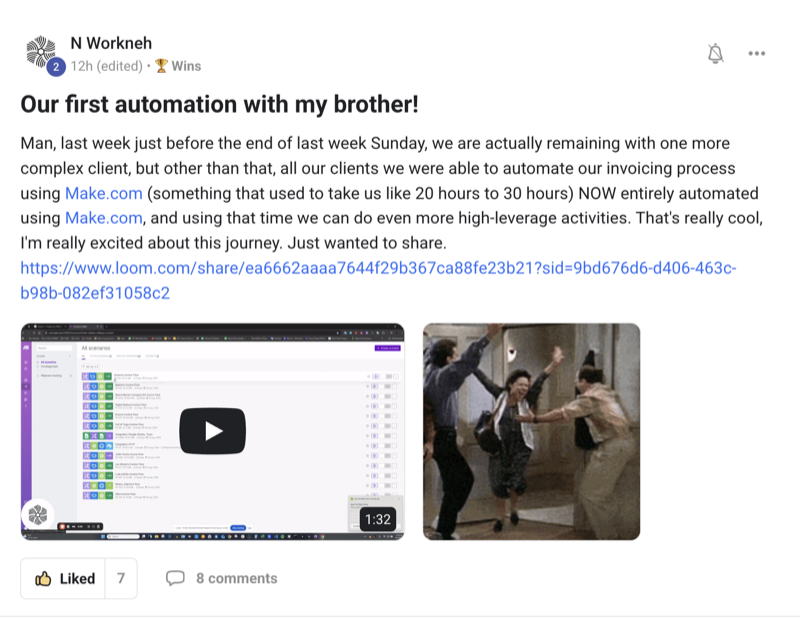
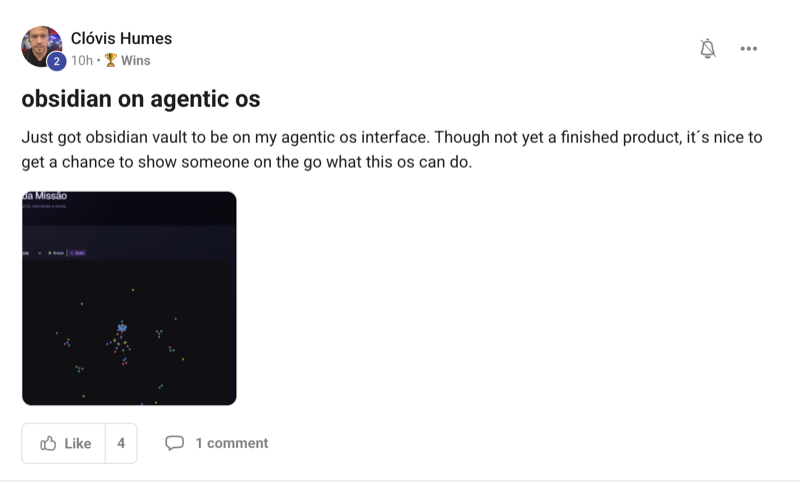
Members post their wins every day — agency owners, ecom founders, course creators, solo operators across 38 countries. In their own words.
Rule one: the agent that built it never checks it — that's a student grading their own exam — so Claude Code can spin up a separate clean-context session just to review.
Rule two: put your best model on the checker even if you go cheap everywhere else — a cheap checker flags everything, including deliberate choices, and a dozen stations start burning tokens "fixing" unbroken work. A weak checker also reports "all clear" on broken work — a clean report proves nothing unless the checker really tried to break it.
Beat 16 · when to build the line
Three signals — otherwise a loop is fine.
If the run pays for itself daily, the line pays for itself the first week.
Beat 17 · your first move
Ten minutes and a pen.
Draw one business process as boxes, one per step — then arrow by arrow ask: does the next step actually need to READ what the last one produced?
Yes means a real arrow that runs in order; no means cross it out and it runs in parallel — most people find 2-3 steps that never needed to wait. Hand that drawing to Claude Code, describe it, and the AI builds the rest.
Beat 18 · old way vs new way
A week of babysitting, or a morning.
Old way · one agent~ a week
One agent, one long conversation
You babysit every step
Quality falls apart as the task grows
A bad result is a mystery
Start over and hope
New way · the line~ a morning
A small team of focused agents
Every station has a clean desk
They run in parallel
A real inspector checks the end of the line
Bad output? Look at the station
You review finished work
Most business owners don't know this shift is happening — that's exactly why now.
The only question is whether you build your assembly line now — or watch your competitors build theirs first.
"Stations. Handoffs. An inspector at the end. That's the whole line."
Before you go →
Join 4,000+ founders building with this stack.
The AI Profit Boardroom is where the actual Agent OS lives — the dispatcher + worker system, the prompts, the daily rooms, the weekly walkthroughs. The same assembly line you just read about, taught hands-on inside.